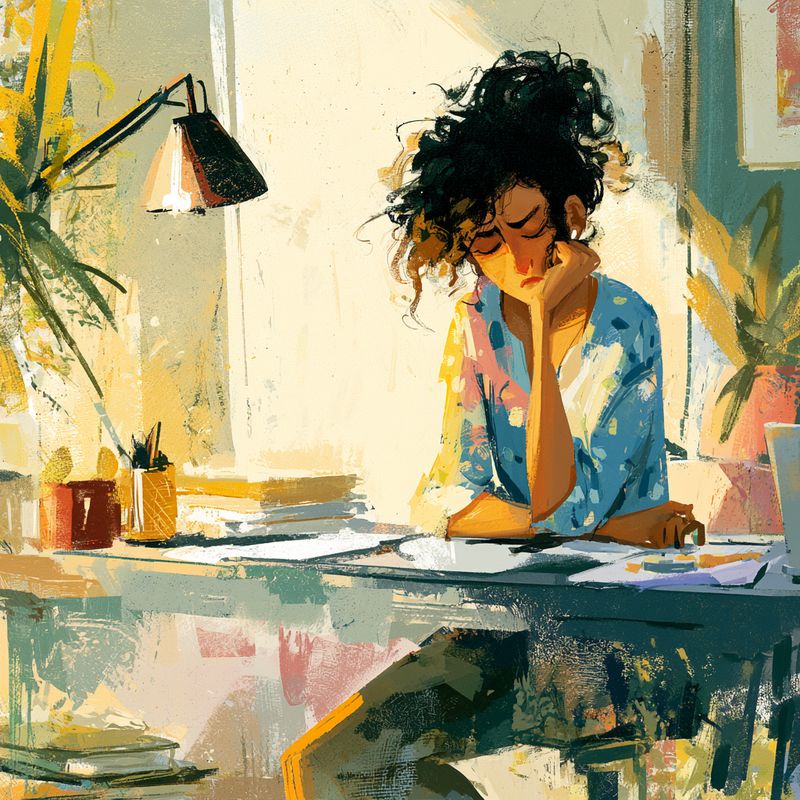
The angle is there. The headline is there. You know exactly what you want to say. And yet you can’t start writing.
This isn’t writer’s block in the traditional sense. Research and writing psychology make a crucial distinction: creative paralysis that arrives after clarity is a different beast entirely, and it requires a different fix. Approximately 50% of people report experiencing writer’s block at some point in their writing career, according to meta-analyses cited by the American Psychological Association. But a significant subset of those people aren’t stuck because they don’t know what to write. They’re stuck because they know exactly what to write, and that knowing is the problem.
What Actually Happens When You Know What to Write But Can’t Start?
When cognitive clarity doesn’t produce physical action, it usually means pressure has replaced curiosity. The moment you identify a strong angle, the stakes shift. Before the idea solidified, failure wasn’t possible. After it solidifies, it is. Your brain registers that shift, and it responds accordingly.
This is where the phrase “know what to write but stuck” becomes so maddening. The knowledge feels like it should be the hard part. It isn’t. Execution under perceived stakes is the hard part. And the body knows this before the conscious mind admits it.
Neuroscience research on performance anxiety shows that when the brain anticipates high-stakes output, it can activate threat-detection systems that effectively compete with the motor systems needed to initiate action. You sit at the keyboard. You open the document. Nothing happens. This isn’t laziness. It’s a competing neurological signal that registers the task as risky before you’ve typed a single word.
Writer’s block and creative paralysis affect about 20 to 30% of professional writers as a chronic condition, according to surveys cited in writing psychology literature from the 2010s. Among that group, a significant proportion are experienced writers who know their craft well. Skill, in other words, doesn’t protect you. Sometimes it makes things worse, because skilled writers have a more developed internal critic.
Why Does Knowing Your Angle Make the Paralysis Worse?
Counterintuitively, a clear angle raises the threshold for what counts as an acceptable first sentence. That’s the trap.
When the idea is vague, any sentence is a step toward clarity. When the idea is sharp and fully formed, every sentence gets measured against the ideal version that exists in your head. The gap between what you want to produce and what you’re actually producing in real time feels enormous, even if the first draft is objectively fine. This is creative paralysis in its most specific form: not an absence of ideas, but an excess of expectation.
In The War of Art (2002), author Steven Pressfield named this force directly:
“Resistance is the most toxic force on the planet. It is the root of more unhappiness than poverty, disease, and erectile dysfunction. If you experience it, you are not crazy. You are not lazy. You are not unmotivated. Resistance is real.”
Pressfield’s framework is worth taking seriously here, not just as motivation, but as a diagnostic tool. He argues in Do the Work (2011) that Resistance is a sign that something important is trying to come through, and that Resistance wants to stop it. By that logic, the stronger your paralysis, the more significant the piece you’re trying to write. The freeze isn’t random. It’s proportional.
How Does the Brain Confuse Importance With Danger?
The short answer: the brain doesn’t distinguish between social risk and physical risk as cleanly as we’d like it to.
Publishing something under your name, especially something you’ve framed with a clear thesis, exposes you to judgment. Your brain files that under “threat.” The amygdala, which processes threat responses, doesn’t care that the threat is a critical editor rather than a predator. It responds with the same basic signal: stop, wait, don’t move.
Research from psychologist James Pennebaker at the University of Texas Austin adds another layer. In his book Writing to Heal (2004), Pennebaker found that writing about emotionally significant experiences can improve cognitive function and reduce stress, because the act of translating experiences into language changes how we think about them. The inverse is also implied: when writing feels emotionally significant before you begin, the anticipatory anxiety can block the very process that would relieve it. You need to write to reduce the pressure. But the pressure stops you from writing.
That’s the loop. And recognising it is genuinely useful, because it shifts the question from “what’s wrong with me?” to “what’s wrong with my starting conditions?”
Is This Actually Different From ‘Normal’ Writer’s Block?
Yes. And treating it the same way leads to the wrong interventions.
Standard writer’s block advice assumes the problem is a lack of material: brainstorm more, outline more, research more. None of that helps when you already have the material. Applying those solutions to pressure-based paralysis is like adding more ingredients to a dish that’s already overcooked. More input isn’t the fix.
Willpower-based advice (just start, set a timer) also fails people more often than productivity influencers admit. Not because timers don’t work, but because they address the symptom without addressing the source. If your nervous system has registered the task as threatening, forcing action through willpower tends to produce low-quality, anxious prose that confirms your worst fears about the piece. Then you’re more stuck next time.
The contrarian take worth stating plainly: the self-help framing of writer’s block as a mindset problem has probably made things worse for a lot of journalists. It locates the failure inside the writer’s character, when the actual mechanism is physiological and situational. You don’t need more discipline. You need a de-escalation strategy.
Pennebaker’s research, cited in his expressive writing studies from UT Austin, found that people who write about their deepest thoughts and feelings show improvements in physical health, immune function, and psychological well-being. The act of low-stakes writing, writing that doesn’t count, appears to reduce the physiological load that high-stakes writing creates. That’s not just a warm observation. It’s an argument for using throwaway drafts as a neurological tool.
What Actually Breaks the Freeze?
The most effective interventions target the perceived stakes, not the writing itself.
In Turning Pro (2012), Pressfield argues that the most important thing about a project is that you start it, because once you start, momentum builds. But starting cold, from a position of high pressure, is genuinely harder than it sounds. The practical move is to lower the temperature of the first action.
One well-documented approach: write a version you’re certain no one will read. Some journalists call this the “zero draft,” written before the actual draft. It contains everything you know about the piece, written without structure or care. The goal isn’t quality. The goal is to trick the threat-detection system by removing the stakes entirely.
Another approach targets the physical entry point. The reason you can’t start writing is partly that “start writing” is too large an action. The brain needs a smaller, non-threatening first move. Opening a document doesn’t count as starting. Neither does reading your notes. Writing a single sentence that you immediately expect to delete, though: that’s small enough to not register as threatening, and it breaks the physical stillness that creates the paralysis loop.
Time-tracking tools can also help, not as pressure devices, but as evidence collectors. When you can see that your actual writing time is shorter than your freeze time, you start to understand that the freeze is the real time cost, not the writing. That’s a useful recalibration. It makes the freeze visible, which makes it easier to interrupt.
FAQ
Is creative paralysis the same as procrastination?
They overlap but aren’t identical. Procrastination usually involves avoiding a task entirely. Creative paralysis, especially the kind that hits when you know your angle, involves being present at the task but unable to initiate. The underlying mechanism (perceived threat, competing cognitive signals) is similar, but the experience and the fix are different.
Why does this happen more with experienced writers than beginners?
Experienced writers have a more developed internal critic and a clearer sense of what good work looks like. That’s an asset during editing. It becomes a liability during drafting, because the gap between a rough first sentence and an ideal published sentence feels larger and more visible. Beginners don’t always know enough to be as afraid.
Does the “write badly on purpose” advice actually work?
Research on expressive writing, including James Pennebaker’s UT Austin studies, supports the idea that low-stakes writing reduces cognitive and physiological load. Writing badly on purpose works not because bad writing is good, but because it lowers the perceived threat level enough to get the physical process started. Once you’re moving, the internal critic has something to edit rather than something to prevent.
How long should creative paralysis last before I try a different strategy?
If you’ve been sitting with a clear angle and haven’t produced a first sentence in 15 to 20 minutes, that’s a signal to change your approach, not push harder. Extending willpower-based effort past that point tends to deepen the freeze rather than break it. Switch the input: change the tool (voice memo instead of keyboard), change the location, or write a zero draft in a separate document explicitly labelled as disposable.
Can tracking my writing time help with this kind of paralysis?
Yes, specifically because it externalises the freeze. When time-tracking shows you spent 45 minutes “working” but only 8 minutes actually writing, you get concrete data that the obstacle is the start, not the writing itself. That reframe tends to reduce shame (which amplifies paralysis) and redirect attention toward the actual bottleneck.