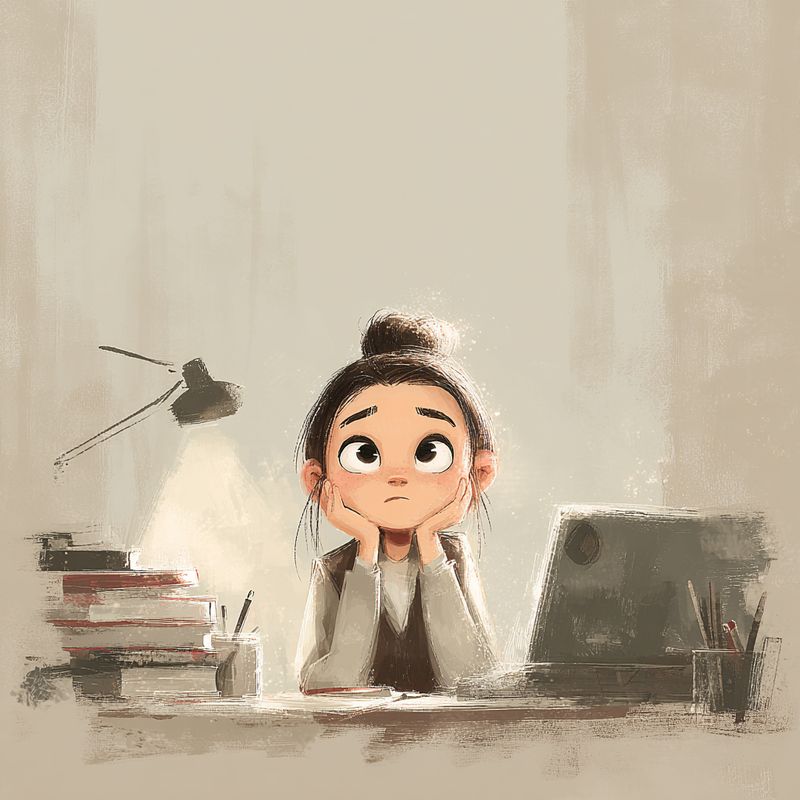
Most people who say they have writer’s block don’t. What they have is something more specific, more treatable, and far less mysterious. The distinction matters because the fix for not starting looks nothing like the fix for being genuinely stuck mid-work.
Research by psychologist Robert Boice (1993) found that initiation difficulty, simply not having started, accounts for 60 to 75% of cases that writers label as “writer’s block.” That number reframes the whole conversation. If three-quarters of creative blocks happen before a single word is written, the problem isn’t the writing. It’s the getting-to-the-writing.
Here’s a cleaner way to think about it: writer’s block splits into three distinct categories, each with a different cause and a different solution.
Is Writer’s Block Real, or Is It Something Else?
The short answer is: it depends on what you mean. Genuine cognitive obstruction exists. So does performance anxiety, perfectionism, and plain avoidance. Grouping them all under one label makes every solution harder to find.
Neuroscientist and author Dean Burnett argues in his 2016 book Idiot Brain that writer’s block might not be a unified phenomenon at all. It could be performance anxiety, perfectionism, or simply not having enough relevant information to proceed. Each of those has a completely different neurological profile.
So is writer’s block real? Yes, but probably not in the form most people imagine it. The romanticised version, where a creative person sits at a desk and finds their well simply dry, describes a minority of cases. The more common experience is one of the following three things.
Category one: initiation hesitation. You haven’t started. The page is blank. You feel “blocked” but what you’re actually feeling is the friction of beginning.
Category two: emotional regulation avoidance. You’ve started, or you’re near a project, but discomfort is pulling you away. This is procrastination with a creative costume on.
Category three: genuine cognitive obstruction. You’re mid-work, the idea isn’t connecting, and no amount of willpower is closing the gap. This one is real and requires a different strategy entirely.
What Causes Writer’s Block in Most Cases? Emotional Discomfort, Not Creative Failure
When writers report feeling blocked, the most common underlying mechanism isn’t a shortage of ideas. It’s an excess of uncomfortable feelings attached to the work.
Psychiatrist and neuroscientist Judson Brewer explains in his 2017 book The Craving Mind that procrastination is fundamentally a form of emotion regulation. We’re not lazy; we’re trying to escape an uncomfortable feeling associated with a task. The brain learns that avoidance provides short-term relief, and it repeats the behaviour.
This is why willpower-based advice (just start, set a timer) fails people so consistently. It addresses the behaviour without touching the discomfort driving it.
The statistics reflect how widespread this pattern is. A 2007 meta-analysis by Piers Steel in Psychological Bulletin found that approximately 50% of the general population reports experiencing procrastination, with around 20% experiencing it chronically. A 2012 study by Pychyl and Coplan in the Journal of Rational-Emotive and Cognitive-Behavior Therapy found that about 39% of college students identify as chronic procrastinators, with academic writing being one of the most heavily affected tasks.
For creative professionals, the emotional triggers tend to cluster around specific fears: fear of producing something bad, fear of judgment, fear that the idea won’t survive contact with the page. These aren’t creative problems. They’re emotional regulation problems wearing creative clothing.
Brewer’s research at Brown University also points to a practical exit: awareness without judgment. When we notice we’re procrastinating without beating ourselves up about it, we can interrupt the habit loop rather than feeding it with shame.
How Does Strategic Delay Differ From Procrastination?
Here’s the contrarian take most productivity advice skips: not all delay is avoidance. Some delay is the work.
Organisational psychologist Adam Grant makes this case in his 2016 book Originals, noting that people often find their best ideas when they’re not actively working on a problem. Procrastination can be the enemy of productivity while simultaneously being a friend to creativity.
The critical variable, according to Grant’s Wharton research on productive procrastination, is intention. The difference between procrastination and strategic delay is intention. One is avoidance, the other is deliberate spacing for better ideas.
A writer who steps away from a difficult paragraph to take a walk, trusting that their brain will keep processing, is doing something categorically different from a writer who avoids opening the document for three weeks because the project feels scary.
The first person knows they’re delaying and why. The second is in avoidance and, often, doesn’t fully realise it.
Recognising which mode you’re in requires honest self-interrogation. Are you giving the problem space to breathe, or are you running from the discomfort of confronting it? The answer changes everything about what you should do next.
What Happens When the Block Is Genuine? Recognising Real Cognitive Obstruction
Genuine cognitive obstruction is less common than the other two categories, but it’s real and it deserves to be treated seriously rather than dismissed as laziness or excuses.
Cognitive scientist Jonathan Schooler’s research in Consciousness and Cognition offers a useful lens here. Mind-wandering is often labelled as a failure of attention, but it plays an important role in creative problem-solving and can be confused with writer’s block. When a writer’s mind keeps sliding off a problem, it may not be avoidance. The brain may be doing something productive underneath conscious awareness.
Genuine mid-work obstruction tends to have specific characteristics. The writer has started and made progress. The block emerges at a particular point, often where the logic of the piece hits an unresolved problem. Sitting down and trying harder doesn’t dislodge it.
This is where strategic delay (as opposed to avoidance-driven procrastination) becomes a legitimate tool. Sleeping on a problem, switching to a different part of the project, or deliberately engaging in low-demand activities that allow the default mode network to process, all of these work precisely because they stop forcing a solution.
The distinction from initiation hesitation is clarity about what’s stuck. A writer experiencing genuine cognitive obstruction can usually point to the specific sentence, argument, or scene causing the problem. Someone experiencing initiation hesitation often can’t, because the discomfort is attached to the project as a whole, not a specific creative challenge within it.
How Can Creative Professionals Actually Tell the Difference?
Three diagnostic questions cut through most of the confusion around creative block vs procrastination.
Question one: have you started? If the answer is no, you’re not experiencing writer’s block in any meaningful sense. You’re experiencing initiation hesitation, which is an emotion regulation problem. The solution involves lowering the cost of beginning, not waiting for inspiration.
Question two: where exactly does the block sit? If you can identify a specific moment in the work where things stopped, that’s a signal of genuine cognitive obstruction. If the discomfort is diffuse and attaches to the whole idea of the project, that’s avoidance.
Question three: what feeling are you avoiding? This question, drawn from Brewer’s research on the emotional mechanics of procrastination, tends to surface the real issue quickly. Writers who sit with this question often discover they’re not blocked creatively. They’re afraid of something specific: looking foolish, failing publicly, not living up to a previous piece.
Naming the feeling doesn’t make it disappear, but it does interrupt the automatic avoidance loop. Resistance and inability are not the same thing, and treating them as the same makes both harder to address.
The creative professionals who work consistently aren’t the ones who never feel blocked. They’re the ones who’ve learned to diagnose what’s actually happening quickly enough to respond to it correctly.
FAQ
Is writer’s block real or just procrastination?
Both exist, but they’re different phenomena. Research by Dean Burnett (Idiot Brain, 2016) suggests writer’s block isn’t a single unified experience. Most cases that get labelled as writer’s block are actually initiation hesitation or emotional avoidance, both of which are forms of procrastination. Genuine cognitive obstruction, being stuck mid-work on a specific problem, is real but accounts for a minority of cases.
What causes writer’s block according to research?
The most common causes aren’t mystical creative failure. According to Judson Brewer’s work in The Craving Mind (2017), most creative avoidance is driven by emotional discomfort: fear of judgment, perfectionism, or anxiety about the quality of the work. The brain treats avoidance as relief, which reinforces the pattern.
What’s the difference between creative block and procrastination?
Creative block vs procrastination comes down to where the difficulty sits. Procrastination is avoidance driven by discomfort, typically occurring before or around the work. A genuine creative block is a specific, identifiable obstruction within work already underway. The two require different responses: emotional regulation strategies for procrastination, and strategic spacing or reframing for genuine cognitive obstruction.
Can procrastination ever help with creative work?
Yes, under specific conditions. Adam Grant’s research on productive procrastination, discussed in Originals (2016), found that deliberate, intentional delay can improve creative output by allowing the brain to continue processing a problem outside conscious attention. The key word is intentional. Purposeful spacing is different from avoidance.
How do I know if I’m genuinely blocked or just not starting?
Ask yourself where the discomfort is. If it’s attached to the whole project and you haven’t opened the document in days, that’s initiation hesitation. If you’ve been working and you can point to a specific moment where the piece stopped making sense, that’s closer to genuine obstruction. Robert Boice’s 1993 research on writer’s block found that 60 to 75% of cases involve the first category, not the second.