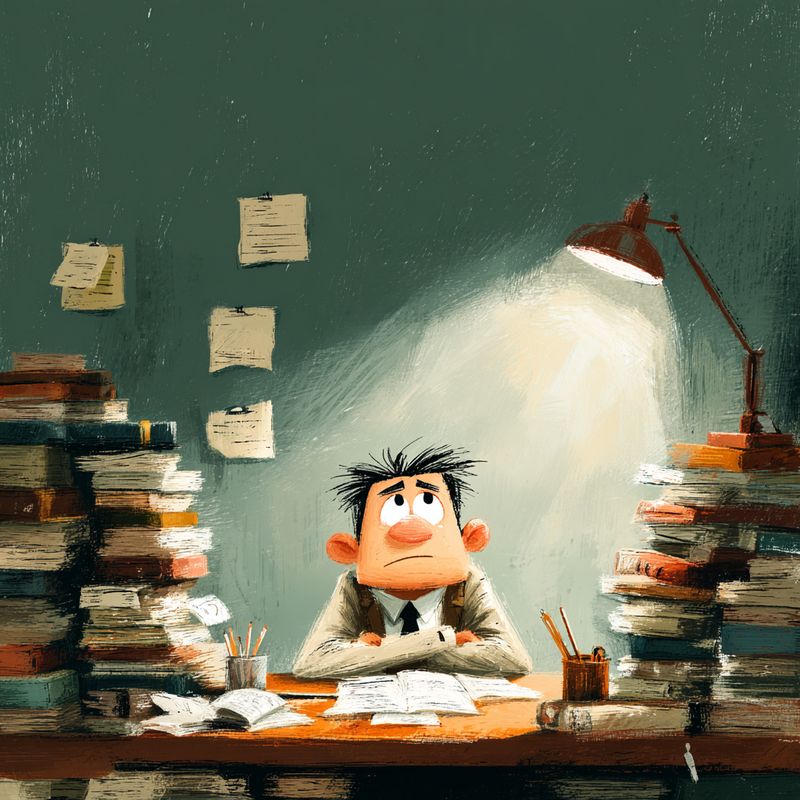
Most writers argue about whether writer’s block is real. That’s the wrong argument. The question that actually helps you write again is this: are you blocked, or have you simply not started yet? These aren’t the same thing, they don’t feel the same in practice, and they respond to completely different interventions. Getting the diagnosis wrong is why so much well-meaning advice about creative block vs procrastination fails to land.
Is Writer’s Block Real, or Is That the Wrong Question?
Writer’s block real as a lived experience? Absolutely. Real as a single, unified phenomenon with one cause and one cure? Almost certainly not. Research consistently shows that 30-45% of authors report experiencing writer’s block at some point in their careers (various creative industry surveys, 2015-2020), yet the causes behind those experiences vary enormously.
The more useful framing isn’t whether it exists. It’s whether what you’re experiencing is resistance (emotional, psychological, fear-based) or unreadiness (lack of clarity, commitment, or permission to begin). These two states feel similar from the outside. They feel quite different from the inside, once you know what to look for.
Neuroscientist Dean Burnett, in his 2016 book Idiot Brain, argues that writer’s block is often misunderstood as a mysterious creative affliction when it’s actually the brain doing exactly what it’s supposed to do: protect us from discomfort. That reframe is worth sitting with. Your brain isn’t broken. It’s working precisely as designed.
What Causes Writer’s Block? The Two Distinct Mechanisms
Understanding what causes writer’s block requires separating two psychological mechanisms that wear the same costume.
The first is resistance: you know what you need to write, you have the ability to write it, but something stops you. Fear of judgment. Fear the work won’t match your internal standard. Anxiety about what the work reveals about you. This is the clinical territory of avoidance, and it has a well-documented neurological signature.
The second is unreadiness: you haven’t fully committed to an idea, you’re unclear on direction, or you haven’t given yourself permission to produce something imperfect. This isn’t avoidance of something known. It’s the cognitive friction of something genuinely not yet formed.
Researcher Judson Brewer, whose work at Brown University has examined the psychology of habitual avoidance, explains that procrastination relies on avoidance of uncomfortable feelings rather than laziness (summarized in his 2017 book The Craving Mind). Critically, he notes that procrastination isn’t a character flaw or a productivity problem to be optimized away; it’s a way the brain manages discomfort.
That distinction matters enormously. Approximately 20% of adults identify as chronic procrastinators, according to Piers Steel’s landmark meta-analysis published in Psychological Bulletin in 2007. And research by Tim Pychyl and Esad Sirois (2016) found that 80% of procrastinators report their behavior is driven by emotion regulation rather than time management. People aren’t avoiding the task. They’re avoiding the feeling the task produces.
Writer’s block that stems from resistance is, at its functional level, a procrastination mechanism. Not-yet-started is something else entirely.
How Do You Tell the Difference Between a Block and Simply Not Having Started?
The diagnostic question is deceptively simple: do you know what you’d write if you weren’t afraid of it being bad?
If yes, that’s resistance. You have the content; you’re managing the emotional risk of producing it. This is creative block vs procrastination in its most actionable form, and it responds to psychological tools: lowering stakes, timed drafts, writing-as-thinking rather than writing-as-performance.
If no, that’s unreadiness. You’re not avoiding a thing; the thing doesn’t exist yet. Forcing yourself to sit at a keyboard and type won’t help much. What you need is a different process: more input, more conversation, more time for the idea to develop.
Jonathan Schooler, whose research published in Consciousness and Cognition examined mind-wandering in creative people, found that unfocused thinking can either be a symptom of procrastination avoidance or a genuine creative process, depending on whether the person is aware they’re doing it. Awareness is the hinge. Staring out a window while avoiding a piece you could write is different from staring out a window while genuinely waiting for an underdeveloped idea to crystallize.
The felt experience can look identical. The underlying mechanism is not.
Why Standard Productivity Advice Gets This Wrong
Most advice about writer’s block treats it as a single problem with a single solution. “Just start.” “Set a timer.” “Write badly on purpose.” These interventions aren’t wrong exactly; they’re just only useful for one of the two conditions.
For resistance-based block, reducing the performance stakes genuinely helps. Giving yourself permission to write something terrible, unfocused, or incomplete removes the emotional charge that makes the blank page feel dangerous. The problem was never the blank page. It was what the blank page asked you to risk.
For unreadiness-based block, “just start” can actually deepen the problem. Forcing production when the underlying idea isn’t formed yet generates anxiety without generating clarity. Worse, it can produce work that’s technically completed but creatively empty, which then creates a new layer of resistance when you read it back.
Organizational psychologist Adam Grant, in his 2016 book Originals, made the counterintuitive observation that procrastination may be the enemy of productivity but can be the friend of creativity. His research found that moderate procrastination allowed ideas to incubate, producing more original outcomes than either immediate action or extended delay. Grant has also noted, speaking on the subject of productive procrastination, that the difference between procrastination and strategic delay comes down to intention and awareness.
The willpower-based advice (just start, set a timer, eliminate distractions) fails people not because it’s useless but because it treats all non-writing as the same failure of discipline. It isn’t.
The Resistance vs Inability Framework: A Practical Diagnostic Tool
The resistance vs inability framework gives creative professionals a two-question diagnostic they can actually use before trying to fix something.
Question one: Do I know, roughly, what this piece needs to say? If yes, proceed to question two. If no, your job is clarification, not production. Talk to someone, fill a page with questions, read adjacent material. You don’t have writer’s block. You have an underdeveloped idea.
Question two: Does the thought of writing it produce anxiety, avoidance, or a sudden interest in reorganizing your bookshelf? If yes, that’s resistance. Your brain is protecting you from the discomfort of creative exposure. The intervention is psychological, not procedural.
This isn’t a perfect framework. Ideas exist on a spectrum of formation, and resistance and unreadiness can co-exist. But it shifts the focus from mystical creativity mythology (“I’m waiting for inspiration”) to something actionable and diagnosable.
Procrastination costs the U.S. economy an estimated $5 billion annually in lost productivity, according to American Psychological Association research from 2018. For individual creative professionals, the personal cost compounds differently: missed deadlines, incomplete projects, and the slow erosion of confidence that comes from repeatedly not producing the work you intended to produce.
Getting the diagnosis right doesn’t just help you write more. It helps you understand your creative process well enough to trust it.
Does Understanding the Source Actually Change Anything?
Yes, and fairly quickly. The reason the writer’s block real debate has dragged on for decades is that it conflates distinct experiences under one label, then argues about whether that label is valid. That debate generates heat without light.
What changes when you diagnose accurately:
- Resistance responds to permission-giving, stakes-lowering, and separating drafting from editing. You stop waiting to feel ready and start writing with the explicit expectation that the first pass will be bad.
- Unreadiness responds to input, conversation, and intentional incubation. You stop punishing yourself for not producing and start treating unclear thinking as a legitimate part of the creative process.
The contrarian take worth stating plainly: most productivity-focused writing advice is designed for resistance-based problems, because those are the cases where pushing harder produces visible results. Unreadiness-based problems are less responsive to effort and more responsive to patience, which is a harder sell. But forcing production from an underdeveloped idea is among the most reliably demoralizing things a writer can do to themselves.
Know which problem you have. Use the right tool.
FAQ
Is writer’s block a real psychological condition?
Writer’s block is a real experience but not a single, unified condition. Research shows 30-45% of authors report it at some point in their careers, but the causes range from emotional resistance and fear of judgment to genuine lack of clarity about what the work needs to be. Treating it as one thing with one cause is why so many standard remedies only work sometimes.
What’s the difference between writer’s block and procrastination?
Procrastination is avoidance driven by emotion regulation: you’re avoiding the uncomfortable feeling the task produces, not the task itself. Writer’s block can include this mechanism, but it can also reflect genuine unreadiness, where the idea isn’t formed enough to write yet. Research by Tim Pychyl and Esad Sirois (2016) found that 80% of procrastinators are driven by emotion regulation rather than time management, which is useful framing for diagnosing resistance-based creative blocks.
How do I know if I’m procrastinating or genuinely blocked?
Ask yourself whether you know what you’d write if you weren’t afraid of it being bad. If the answer is yes, you’re likely managing emotional resistance rather than facing a creative void. If the answer is no, your idea may simply need more development before production becomes possible. These require different responses.
Can procrastination ever help the creative process?
In some cases, yes. Adam Grant’s research, detailed in his 2016 book Originals, found that moderate delay before creative tasks allowed for more original ideation than either immediate action or extended procrastination. The key variable, as Grant notes, is whether the delay is intentional and aware rather than avoidance-driven.
What actually causes writer’s block in most cases?
The most well-supported explanation is that the brain is managing discomfort, whether that’s fear of judgment, anxiety about falling short of your own standards, or uncertainty about direction. Judson Brewer’s work at Brown University frames procrastination and avoidance as habit loops built around discomfort management rather than laziness or lack of discipline. Understanding the emotional driver behind the block is usually more useful than applying generic productivity techniques.