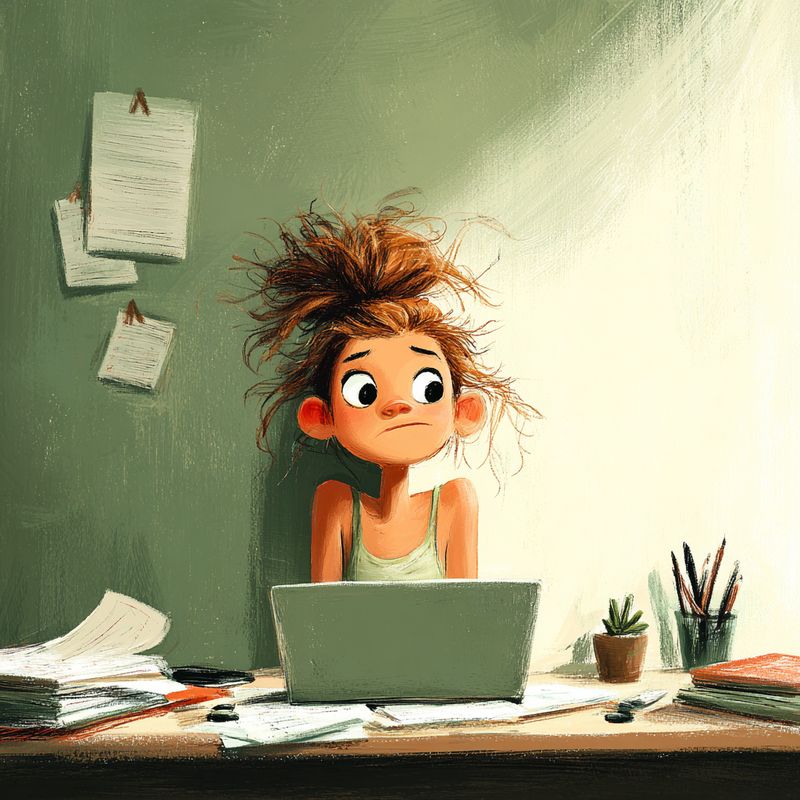
Creative block isn’t a mystical curse. It’s a neurological one. When writers and artists can’t access ideas, it’s almost never because inspiration has abandoned them. It’s because the brain has nothing stored to work with. Creative research and deliberate experimentation aren’t the warm-up act before real creative work begins. They are the work. The research phase builds the cognitive infrastructure that idea generation for creatives depends on. Skip it, and you’re not blocked. You’re just empty.
What actually happens in the brain when you stop experimenting?
The brain doesn’t generate ideas out of nothing. It recombines, remixes, and reframes material that already exists in memory. When you haven’t been actively researching, experimenting, or engaging with new inputs, that raw material simply isn’t there.
Art Markman, a cognitive psychologist at the University of Texas, describes this precisely in his research and Brain Briefs columns: the brain stores knowledge in a particular format, and accessing that knowledge depends on the cues that are present when you need it. If you haven’t loaded relevant knowledge recently, the right cues won’t trigger anything useful.
This is why staring at a blank page feels so physically uncomfortable. You’re not lazy. You’re cognitively under-resourced.
Markman has also argued, drawing on his work including Redirect (2014), that ideas don’t emerge spontaneously. They require the cognitive foundation built through deliberate engagement with material. Inspiration, in other words, is downstream of input. Not the other way around.
Why deliberate practice for artists builds more than skill
Most creatives think of practice as the thing that makes you better at executing an idea. Fewer think of it as the thing that generates ideas in the first place.
Barbara Oakley, in Learning How to Learn (2014), explains the neural mechanics directly: “The more you practice something, the more myelin sheath wraps around the relevant neural circuits, making those neural pathways faster and more ingrained.” What this means for creatives isn’t just faster technique. It means more automatic, more accessible, and more richly connected mental representations of your craft.
Those connected representations are what ideas are made of. A musician with deep practice history doesn’t just play better. They hear more possibilities in a chord progression because their neural network for music is denser and more interconnected.
Research on habit formation from Lally et al., published in the European Journal of Social Psychology (2009), found it takes an average of 66 days of deliberate practice to form a new habit. For creatives, this matters because a consistent research and experimentation habit isn’t just productive, it’s the process of physically building new cognitive architecture.
You’re not preparing to have ideas. You’re constructing the structures that make ideas possible.
How experimentation vs inspiration plays out in real creative work
The romantic view of creativity treats inspiration as something that visits you. The neurological view treats it as something you construct. These two framings lead to very different behaviors.
Creatives who wait for inspiration tend to work in bursts followed by long dry periods. Creatives who treat experimentation as a daily practice report something different: a background hum of emerging ideas, connections, and possibilities that feel almost continuous.
This isn’t anecdotal. Research building on Guilford’s Structure of Intellect work (originally published 1967, with substantial follow-up studies) has found that creative problem-solving improves by 15 to 30% when individuals engage in deliberate experimentation versus passive idea-waiting. The act of experimenting, even without a clear goal, primes the brain’s associative networks in ways that passive reflection simply doesn’t.
Russell Poldrack’s neuroscience research on habit learning, published through the 2010s, adds another layer: habit learning occurs through repeated practice and engagement, activating different neural systems than goal-directed learning. What this suggests for creatives is that regular low-stakes experimentation (sketching, freewriting, making things that don’t need to be good) trains neural systems that goal-oriented work often bypasses entirely.
The creative who says “I work best under pressure” might actually be describing someone who only activates these systems when the deadline forces them into intensive, concentrated engagement. Pressure works. But it’s exhausting, inconsistent, and hard to sustain.
What learning as part of making actually looks like
Learning as part of making is a reframe that changes everything about how creatives approach their time. It means research isn’t pre-work. Experimentation isn’t procrastination. Both are core to the idea-generation process itself.
Oakley’s work in Learning How to Learn (2014) describes how the brain needs time in both focused mode, where you concentrate intently, and diffuse mode, where you let your mind wander and make creative connections. This is why ideas often arrive in the shower or on a walk, not at the desk. The diffuse mode does its best work when it has rich material from focused engagement to recombine.
If you haven’t been doing the focused engagement (the reading, the sketching, the deliberate practice for artists, the intentional research), the diffuse mode has nothing to remix. The shower gives you nothing. The walk gives you nothing. Not because your brain isn’t working, but because it has no raw material.
Practically, this looks like:
- Keeping a research practice that runs parallel to your making practice, not just before a new project
- Treating your sketchbook, notebook, or draft folder as a thinking tool, not a product
- Deliberately studying work that sits outside your comfort zone, not just work in your genre or medium
- Scheduling low-stakes experimentation time with no expectation of output
Students who engage in spaced retrieval practice and active recall show 50% better retention than passive review, according to research by Rohrer and Taylor published in Psychological Bulletin (2007). The same principle applies to creative research: actively engaging with material (writing about it, sketching responses to it, attempting to use it) builds far stronger cognitive scaffolding than reading or watching passively.
How to rebuild idea access when you’ve been in a dry spell
If you’ve hit a wall, the instinct is often to push harder on the creative work itself. That rarely works. A dry spell usually signals that input has dried up, not that output needs more effort.
The most effective approach is to treat creative research as the primary task for a defined period. Not as background activity. Not as leisure. As work.
Specific practices that research supports:
Structured exposure sessions. Set aside focused time (30 to 45 minutes) to engage deeply with work outside your usual sphere. Take notes. Draw connections. Ask questions out loud.
Low-stakes making. Create things that are explicitly not for sharing. The removal of an audience changes what the brain does. It becomes more associative, more experimental, less self-editing.
Constraint-based experiments. Deliberately limit your tools, your time, or your parameters. Constraints force the brain to find novel routes through familiar material, which is essentially what idea generation is.
Cross-domain input. Read about disciplines unrelated to your work. The brain’s associative networks connect across domains. A novelist reading about mycology or a graphic designer studying medieval cartography is doing genuine idea-generation work, even if it doesn’t feel like it.
The 66-day habit formation window from the Lally et al. research suggests that if you commit to a consistent creative research practice, you’ll start to feel qualitatively different access to ideas within roughly two months. Not because you’re more inspired. Because you’ve built new neural infrastructure.
FAQ
Is creative block really just a lack of research, or are there other causes?
Research and idea generation are closely connected, but creative block can also involve psychological factors like fear of judgment, perfectionism, or burnout. That said, even in those cases, a consistent low-stakes experimentation practice tends to reduce the pressure that amplifies those blocks. Rebuilding a research habit addresses both the cognitive and the emotional dimensions.
How much research or experimentation is enough to keep ideas flowing?
There’s no universal threshold, but the habit formation research from Lally et al. (2009) suggests that consistency matters more than volume. Short daily engagement with creative research (even 20 to 30 minutes) tends to outperform occasional intensive sessions because it keeps the brain’s associative networks actively primed.
Does consuming social media or casual browsing count as creative research?
Passive consumption rarely builds the same cognitive scaffolding as active engagement. Research showing 50% better retention for active recall (Rohrer & Taylor, 2007) suggests that doing something with the material, writing about it, sketching a response, attempting to apply it, is what converts input into accessible creative material.
Can you do too much research and not enough making?
Yes. Research without making can become a form of productive-feeling avoidance. The goal is to keep both happening in parallel. Learning as part of making means the research loop and the production loop feed each other continuously, rather than one preceding the other in a linear sequence.
Why do some creatives seem to generate ideas effortlessly without an obvious research practice?
They almost always have one. It’s frequently invisible or informal, absorbed into how they move through daily life: the books they read, the conversations they seek out, the questions they habitually ask. Deliberate practice for artists doesn’t always look structured. But when you look closely at highly generative creatives, the inputs are always there.