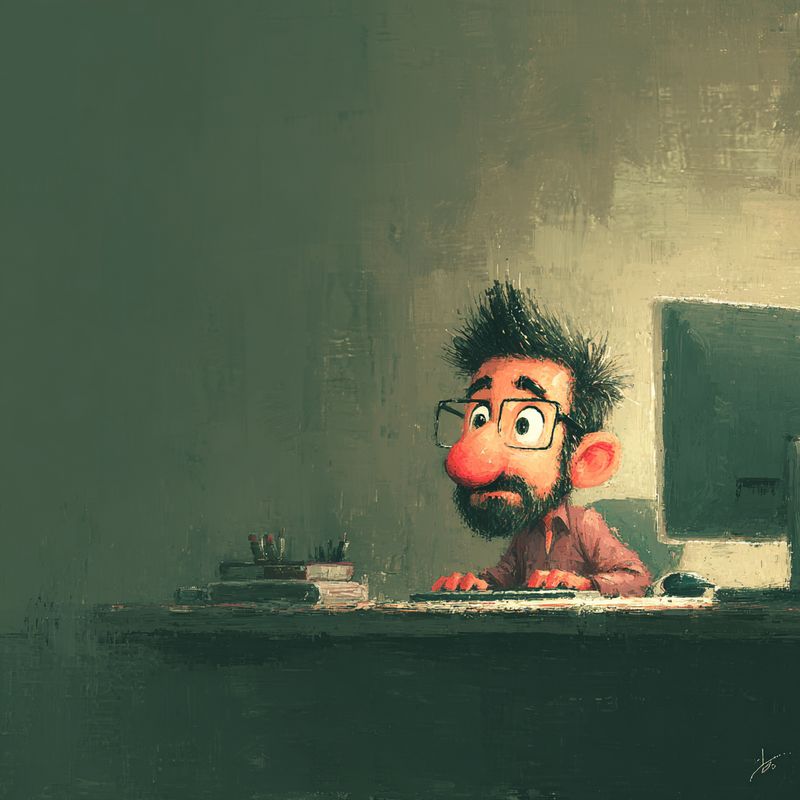
Gaming instead of studying isn’t a discipline problem. It’s a signal. When a student reaches for a controller or opens Instagram the moment homework appears, something emotionally uncomfortable is happening, and the brain is doing exactly what brains do: finding the fastest exit.
The conversation around homework avoidance almost always targets the wrong thing. Parents confiscate phones. Schools block gaming sites. Students set screen time limits they ignore by Friday. None of it sticks, because distractions aren’t the cause of procrastination. They’re the relief valve for it.
Understanding why avoidance happens, at a neurological and psychological level, changes everything about how you address it.
Why Do Students Reach for Games and Social Media Instead of Starting Homework?
Students turn to gaming and social media during study time primarily to regulate uncomfortable emotions, not because they lack motivation or discipline. The homework itself triggers feelings like anxiety, boredom, self-doubt, or overwhelm. Gaming provides fast, reliable emotional relief. The phone fills the same role.
According to research summarized by organizational psychologist Adam Grant, drawing on Wharton-based work on procrastination and emotion regulation: “Procrastination may be an emotion regulation problem, not a productivity problem. We often delay tasks not because we’re lazy, but because we’re trying to avoid negative emotions associated with the task.”
That reframe matters enormously. A student who feels stupid every time they open their chemistry textbook isn’t being lazy when they pick up a game instead. They’re escaping a feeling. The game is working exactly as intended.
According to a 2021 Common Sense Media survey on student digital habits, 67% of students admit to using social media and gaming as avoidance mechanisms during study time. That’s not a fringe behavior. That’s the majority.
What’s Actually Happening in the Brain During Homework Avoidance?
The neuroscience here is uncomfortable for anyone who wants to blame “weak willpower.” Human brains are structurally wired to prefer immediate rewards over delayed ones. That’s not a character flaw. It’s architecture.
In his 2016 book Idiot Brain, neuroscientist Dean Burnett explains that “the brain is drawn to immediate gratification over delayed rewards, which is why distractions feel so rewarding compared to difficult work. This is a feature of human neurology, not a character flaw.”
Gaming and social media are engineered to exploit exactly this preference. Variable reward loops, notifications, likes, level-ups: these are optimized systems for capturing attention. Homework offers no such feedback. A half-finished essay gives you nothing until it’s done and graded, sometimes weeks later.
Research by Gloria Mark at UC Irvine found that the average person is distracted or switches tasks every 3 minutes when working on a computer. That figure comes from her 2012 studies on digital distraction, and it predates many of the more aggressively designed platforms students use today. The actual number is likely worse now.
Phone distractions aren’t winning because students are weak. They’re winning because they’re competing against a fundamentally unfair emotional opponent: deferred academic reward versus instant social validation.
Is Procrastination a Personality Trait or a Learned Response?
This is where the research gets important for parents and educators who assume some students are just “procrastinators” by nature. The evidence doesn’t support that framing.
Piers Steel’s landmark 2007 meta-analysis, published in Psychological Bulletin, found that approximately 50% of students report problematic procrastination on academic tasks. By contrast, only about 20-25% of adults identify as chronic procrastinators in general life contexts. That gap tells you something. Homework avoidance scales with the specific discomfort of academic pressure, not with fixed personality.
David D. Burns, whose clinical work underpins much of modern cognitive behavioral therapy, describes procrastination as “an emotion regulation disorder, not a time management problem,” noting that “people procrastinate to avoid negative feelings associated with a task” (drawing from Feeling Good: The New Mood Therapy and related cognitive therapy research).
This distinction has real practical consequences. If procrastination is a time management problem, you fix it with planners and timers. If it’s an emotion regulation problem, planners and timers don’t touch the root cause. They just give students a more structured way to feel bad about not starting.
Grant’s research reinforces this: “The task itself isn’t the enemy. It’s the emotions we associate with it. Recognizing this distinction changes how we address avoidance behavior.”
Why Removing the Distractions Doesn’t Actually Solve the Problem
Here’s the contrarian take that the productivity advice industry consistently avoids: taking away a student’s phone doesn’t reduce the underlying discomfort of homework. It just eliminates one escape route.
When the game disappears, students find something else. They reorganize their desk. They make food. They stare at the wall. Some research calls this “productive procrastination,” where people complete low-stakes tasks to avoid the high-stakes one. The avoidance behavior shifts form, but the emotional driver stays identical.
This is why willpower-based advice (just start, set a timer, use app blockers) fails so many people consistently. It treats the symptom, not the source.
The more useful question isn’t “how do I eliminate gaming during study time?” It’s “what is the homework making this student feel, and is that feeling addressable?”
Sometimes the feeling is anxiety about not understanding the material. Sometimes it’s perfectionism, where starting means risking failure. Sometimes it’s genuine exhaustion from a school day that asked too much. Each of those has a different intervention. Blocking apps addresses none of them.
How Can Students Actually Address Homework Avoidance at the Source?
Addressing procrastination as an emotional problem rather than a scheduling one requires different tools. The research points in a consistent direction: the goal is reducing the emotional resistance before the work begins, not after.
Several approaches have consistent support in the academic literature:
-
Identifying the specific feeling: Research in cognitive behavioral therapy suggests that naming the emotion driving avoidance (anxiety, boredom, dread, confusion) reduces its intensity. Students who can say “I’m avoiding this because I feel stupid when I read it” have more actionable information than students who just think “I don’t want to do homework.”
-
Shrinking the starting task: The emotional resistance is highest before starting, not during. Studies on task initiation suggest that committing to two minutes of work, not a full homework session, lowers the activation energy enough for many students to continue naturally.
-
Building tolerance for cognitive discomfort: Cal Newport, in his 2016 book Deep Work: Rules for Focused Success in a Distracted World, argues that “deep work is professional activity performed in a state of unbroken concentration that pushes your cognitive abilities to their limit. These efforts create new value, improve your skill, and are hard to replicate.” The capacity for this kind of focus isn’t innate. It builds with deliberate, repeated practice.
Newport also notes in the same book: “The ability to perform deep work is becoming increasingly rare at exactly the time it is becoming increasingly valuable in our economy. As a consequence, the few who cultivate this skill, and then make it the core of their working life, will thrive.”
For high school students, that means the discomfort of sustained focus is worth tolerating not just for grades, but as a genuinely valuable long-term skill.
- Addressing the emotion directly before working: Some students find it useful to acknowledge the avoidance impulse without acting on it. Techniques from Acceptance and Commitment Therapy (ACT), now well-supported in educational psychology, involve noticing “I want to pick up my phone” as a thought, not a command, and choosing not to follow it without suppressing it.
None of this is fast. That’s the honest answer. But it’s more durable than another round of parental app restrictions.
FAQ
Q: Is it normal for students to use gaming to avoid homework? A: Completely normal. Research from a 2021 Common Sense Media survey found 67% of students report using gaming or social media as avoidance during study time. It reflects how the brain manages emotional discomfort, not a character failure.
Q: Does removing phones and games fix homework procrastination? A: Not reliably. Research on procrastination as an emotion regulation problem (from sources including David D. Burns and Adam Grant’s Wharton research) suggests that removing distractions doesn’t address the underlying discomfort driving avoidance. Students typically find alternative avoidance behaviors instead.
Q: Why does homework feel so much harder to start than other tasks? A: Homework often carries high emotional stakes: fear of failure, confusion, or judgment. Dean Burnett’s work in Idiot Brain (2016) explains that the brain naturally prioritizes immediate reward over delayed payoff. Homework offers no immediate feedback, making it emotionally harder to engage with than games or social media.
Q: Is procrastination a sign of laziness or a deeper issue? A: The research consistently says it isn’t laziness. Piers Steel’s 2007 meta-analysis in Psychological Bulletin found roughly half of students struggle with academic procrastination, a figure far too large to explain through individual character deficits. Burns and Grant both frame it as an emotion regulation challenge, not a motivation or character problem.
Q: What actually helps students stop avoiding homework? A: The most evidence-backed approaches target the emotional resistance before the work begins: naming the specific feeling driving avoidance, reducing the size of the starting task, and gradually building tolerance for cognitive discomfort through repeated practice. App blockers and phone bans treat the symptom. Addressing the emotional trigger treats the cause.