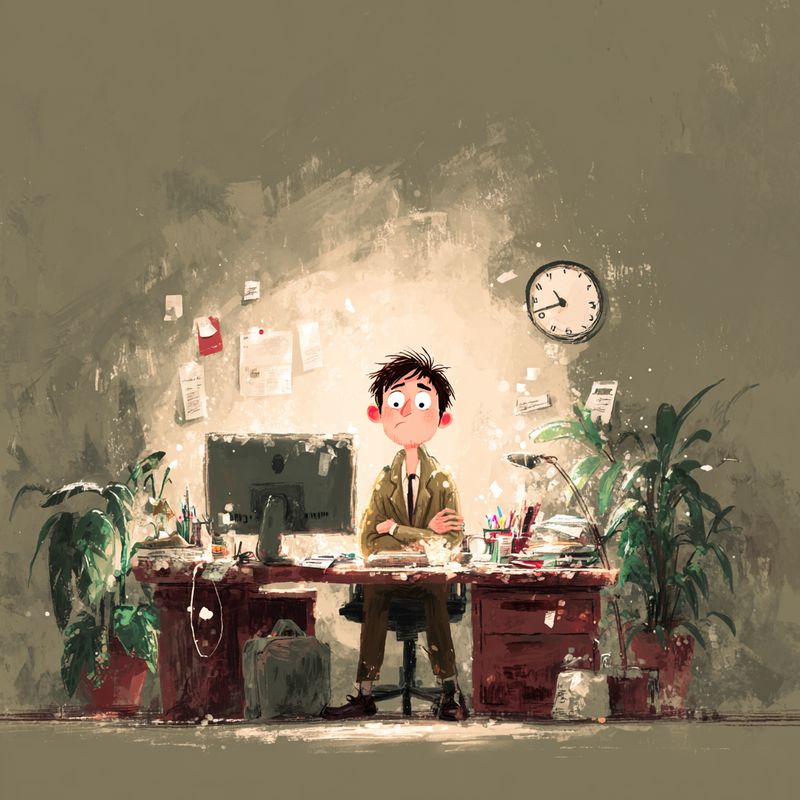
The reason you can’t say no to friends when homework is waiting isn’t weak willpower. It’s biology, social wiring, and a poorly designed environment all working against you at the same time.
Research on procrastination and distraction consistently shows that homework avoidance almost never comes from laziness. It comes from emotional discomfort with the task itself, and friends just happen to offer a very convenient exit. The good news: once you understand what’s actually happening, you can work with it instead of fighting it.
Why Can’t High School Students Say No to Friends?
Peer pressure gets blamed for a lot, but the real culprit is more nuanced than someone daring you to skip studying. The teenage brain is wired to prioritize social belonging above almost everything else, and that’s not a flaw. It’s a developmental feature. Saying yes to friends and no to homework feels safe, even when you know the opposite is true.
Approximately 50% of college students report procrastination as a chronic problem affecting their academic performance, according to a 2016 review by Pychyl and Sirois published in Psychological Bulletin. That pattern almost always starts in high school, and distractions from friends are one of the most consistent triggers.
Parental pressure to study can actually make this worse. When homework feels like someone else’s agenda being imposed on you, the pull toward your friends becomes even stronger. It stops being about the homework and starts being about autonomy.
What’s Really Driving Homework Avoidance?
Here’s the part that changes everything: you probably aren’t avoiding your friends’ invitation. You’re avoiding the discomfort of starting a hard task, and your friends are just the most available escape route.
In his book Indistractable: How to Control Your Attention and Choose Your Life (2019), behavioral designer Nir Eyal makes the case that distraction is fundamentally about an internal trigger, specifically some emotional discomfort, that prompts you to seek relief by turning your attention to something else. The group chat pings and suddenly your chemistry homework feels impossible.
Eyal also argues that true indistractability is the ability to control your attention and choose your life, doing what you actually want to do rather than what you’re distracted into doing. That framing matters. You’re not choosing your friends over your future. You’re fleeing an uncomfortable feeling, and your friends are the exit door.
Knowing this gives you a completely different entry point. Instead of trying to resist your friends, you can ask: what specifically feels uncomfortable about this assignment? Boredom? Confusion? Fear of failure? Naming it shrinks it significantly.
What Happens to Your Brain When You Switch Between Homework and Friends?
Every time you pick up your phone to reply to a message mid-study session, you pay a cost you can’t see.
Gloria Mark, a researcher at UC Irvine, found that the average person takes approximately 23 minutes and 15 seconds to fully refocus on a task after being interrupted. That number is staggering when you think about a typical homework session. Three interruptions and you’ve lost over an hour of real cognitive work, even if you were physically sitting at your desk the whole time.
Mark’s later research, published in 2015, found that students who engage in social media or messaging while studying spend an average of 19% more time on homework while producing lower quality results. You end up with the worst of both worlds: less time with your friends and worse work to show for it.
This is why the all-or-nothing approach actually works in your favor. A clean 60-minute block of focused work produces more than three hours of distracted studying. Cal Newport, in his 2016 book Deep Work: Rules for Focused Success in a Distracted World, argued that to succeed with deep work you must take seriously the task of structuring your work environment to minimize shallow distractions. The environment does the heavy lifting, not your willpower.
How Do You Actually Start Homework When Friends Are Calling?
The goal isn’t to become the person who never hangs out. It’s to become the person who finishes fast and hangs out guilt-free.
The first move is environmental, not motivational. Put your phone in another room before your friends message you, not after. Research consistently shows that the mere presence of a smartphone on a desk reduces available cognitive capacity, even when it’s face-down and silent. You’re not stronger than your environment. Design the environment instead.
The second move is to set a specific end time before you start. Telling yourself “I’ll study until I’m done” is vague and exhausting. Telling yourself “I’m going to work on this for 45 minutes and then text everyone back” is a contract with yourself that your brain can accept. It also gives you something honest to tell your friends: “I’ll be there by 7.” That’s not rejection. That’s a plan.
Third, address the specific discomfort causing the avoidance. If the assignment is confusing, spend the first five minutes just writing down what you don’t understand. If it feels overwhelming, work only on the smallest possible piece of it. Motion creates motivation far more reliably than motivation creates motion.
Can Reframing Peer Pressure Actually Help You Focus?
One contrarian take worth considering: peer pressure and parental pressure aren’t always obstacles. Sometimes they’re information about what you actually value, and you can use that.
Chris Hadfield, the Canadian astronaut and author of An Astronaut’s Guide to Life on Earth (2013), reframes pressure entirely. His perspective is that pressure is a privilege, an opportunity to do something meaningful under challenging circumstances. That reframe works surprisingly well for homework.
The fact that you have friends who want to spend time with you is genuinely good. The fact that you have assignments worth completing is also good. Neither has to cancel the other out. When you treat focused study as something you’re choosing to do so you can show up freely later, rather than something being done to you by teachers and parents, the internal resistance drops.
Newport made a similar point in Deep Work, writing:
“The ability to perform deep work is becoming increasingly rare at exactly the time it is becoming increasingly valuable in our economy. As a consequence, the few who cultivate this skill, and then make it the core of their working life, will thrive.”
That’s not a distant adult concern. Every hour of focused work you build now is practice for a skill most adults never develop.
How to Set Boundaries With Friends Without Losing Them
You can’t say no to friends effectively if you frame it as rejection. The students who handle this best aren’t the ones who opt out of social life. They’re the ones who communicate clearly and follow through.
A simple message like “I’ve got 45 minutes of work to finish, I’ll catch up with you after” does two things. It gives your friends a real timeline, and it commits you publicly to actually finishing. Social accountability works in both directions.
It also helps to build a consistent rhythm your friends learn to expect. If you always work from 4 to 6pm on weekdays, that becomes a known quantity in your social group. Nobody’s surprised. Nobody takes it personally. The friction disappears because the pattern is predictable.
The students who struggle most with distractions from friends are the ones with no consistent structure at all, meaning every homework session becomes a fresh negotiation between study and social life. Build the structure once. Then coast on it.
FAQ
Q: Is it normal to find it harder to say no to friends than to start homework? A: Completely normal. The teenage brain actively prioritizes social connection, and that’s a feature of healthy development, not a character flaw. The challenge is building enough structure around your study time that the decision doesn’t have to be made fresh every single day.
Q: How long should I study before taking a social break? A: Research on focused work suggests 45 to 90 minutes as an effective block for most people before attention meaningfully degrades. Starting with 45-minute blocks and a genuine break afterward tends to work well for high school students. The key is that the break is planned before you start, not negotiated mid-task.
Q: Does putting my phone away really make a measurable difference? A: Yes. Gloria Mark’s research at UC Irvine shows that even a single interruption triggers a 23-minute recovery period before you’re fully refocused. Keeping your phone in another room isn’t extreme. It’s the single most impactful environmental change most students can make.
Q: What if my friends get annoyed that I’m always “too busy”? A: The framing matters a lot here. “I’m too busy” sounds permanent and dismissive. “I’ll be done by 7, want to meet then?” sounds like someone who values their time and yours. Friends who consistently punish you for finishing your work before socializing are worth reflecting on separately.
Q: How do I start homework when I genuinely don’t understand the assignment? A: Confusion is one of the most common internal triggers for homework avoidance. Nir Eyal’s research supports addressing the discomfort directly rather than fleeing it. Spend two minutes writing down exactly what you don’t understand. That act alone often makes the task feel smaller, and it gives you something specific to ask a teacher or classmate rather than a vague sense of being stuck.