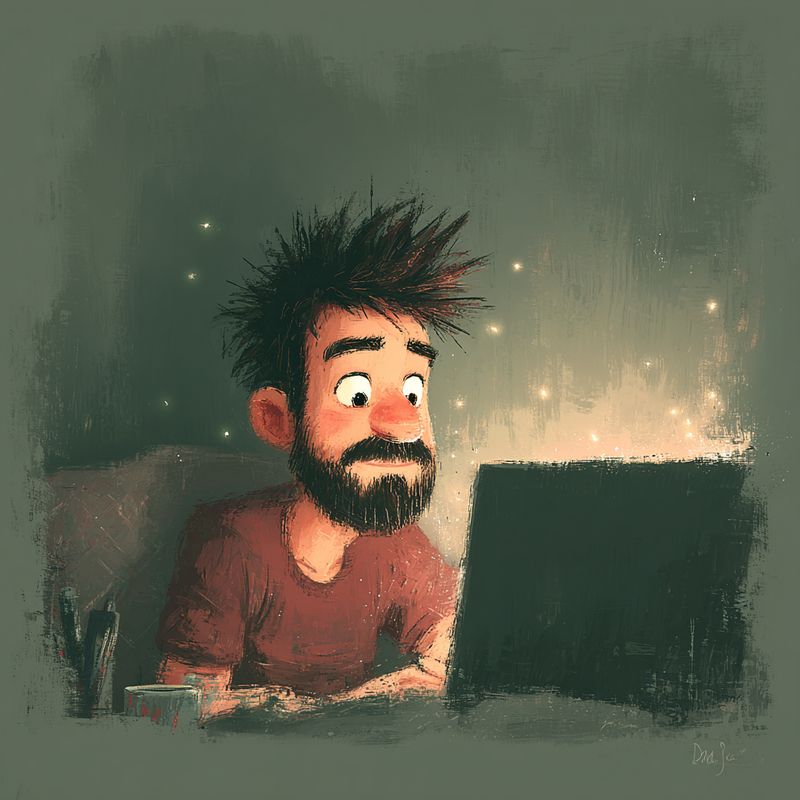
The moment you sense a client pulling away, logic says: act fast, deliver brilliance, prove your worth. Your brain, however, has other plans.
Freelancers caught in at risk job procrastination don’t delay because they’re lazy or undisciplined. They delay because the brain’s threat-detection system has quietly taken the wheel. Research increasingly shows that freelancer job insecurity procrastination is a neurological and emotional phenomenon, not a character flaw. Understanding why that happens is the first step to doing something about it.
Why Does Job Insecurity Make Procrastination Worse?
When your income feels threatened, the rational expectation is urgency. What research actually finds is the opposite: financial threat tends to intensify avoidance. According to a meta-analysis published in Psychological Bulletin by Piers Steel (2007), approximately 25% of adults identify as chronic procrastinators, and that rate climbs sharply when emotional stakes rise.
The reason is rooted in how the brain prioritizes. A perceived threat activates the amygdala, the brain’s alarm system, which floods the body with stress hormones designed for immediate physical danger. Abstract future risks, like losing a client or missing a deadline, don’t get a clean rational response. They get a threat response.
In Idiot Brain (2016), neuroscientist Dean Burnett explains that the brain’s threat-response system can paradoxically trigger avoidance behaviors even when we cognitively know we need to act. Knowing you should start doesn’t override a nervous system that’s already in defensive mode. The two systems simply don’t communicate that cleanly.
This is why survival mode procrastination is so disorienting. You’re not choosing comfort over productivity. You’re experiencing a biological conflict between the part of your brain that understands consequences and the part that just wants the anxiety to stop.
What’s Actually Happening in Your Brain When the Stakes Feel High?
Procrastination under pressure isn’t a motivation gap. It’s an emotion-regulation failure. Organizational psychologist Adam Grant, drawing on Wharton research into procrastination and emotional avoidance, has argued that procrastination may be an emotion-regulation problem, not a productivity problem. The task isn’t the obstacle. The feelings the task generates are.
Grant’s research framing goes further: when the stakes are high and emotions are negative, we’re more likely to procrastinate because we’re trying to escape the anxiety rather than accomplish the task. A freelancer staring at an overdue deliverable for a dissatisfied client isn’t avoiding the work. They’re avoiding the dread, the self-doubt, and the imagined rejection that thinking about the work immediately triggers.
Neuroscientist Judson Brewer, in The Craving Mind (2017), describes procrastination as a way of dealing with emotions: we use it to escape negative feelings in the moment. It functions like any other avoidance behavior, offering short-term relief while compounding long-term risk.
The cruel irony is measurable. Research by Tice and Baumeister published in Personality and Social Psychology Bulletin (1997) found that procrastination increases stress and anxiety levels over time, creating a negative feedback loop. The temporary relief of avoidance generates more anxiety, which generates more avoidance. The freelancer who can’t start the project today will find it even harder to start tomorrow.
Why Losing Clients Triggers More Procrastination, Not Less
Losing clients procrastination is one of the most counterintuitive patterns in freelance work. When someone signals they might leave, or when a project relationship goes cold, the healthy response is proactive communication and strong delivery. What many freelancers actually do is go quiet and stall.
This isn’t irrational from the brain’s perspective. Engaging with a client who might reject your work means risking a concrete, definitive loss. As long as you haven’t submitted, you haven’t failed. Psychologists call this a form of self-handicapping: preserving ambiguity to protect self-esteem from the sting of confirmed failure.
The threat response also distorts time perception. Under acute stress, the brain narrows its focus to immediate survival cues and loses access to long-term planning circuits in the prefrontal cortex. This is why deadlines that are three days away feel abstract and manageable right up until they don’t. The freelancer isn’t failing to understand urgency. They’re temporarily neurologically limited in their ability to act on it.
The contrarian take worth sitting with: productivity advice that treats this as a willpower problem is not just unhelpful, it’s actively counterproductive. Telling someone in threat mode to “just start” adds shame to an already-overloaded emotional system. Shame is itself a threat signal. It makes everything worse.
How Does Mindfulness Break the Survival-Mode Procrastination Cycle?
If the problem is emotional regulation, the solution needs to operate at that level rather than at the level of time management tactics. This is where mindfulness-based approaches have the strongest evidence base.
Judson Brewer’s research at Brown University found that awareness without judgment can interrupt the procrastination habit loop. The key word is “without judgment.” Most freelancers who recognize they’re procrastinating immediately layer self-criticism on top of the original anxiety. That self-criticism is another threat signal, deepening the avoidance spiral.
Mindfulness interrupts the loop not by eliminating the anxiety, but by changing the relationship to it. When you can observe “I’m avoiding this because it feels threatening” without immediately berating yourself, the threat response loses some of its grip. You create a small gap between the stimulus (dread about the project) and the behavior (opening Twitter instead).
Practically, this means building a brief check-in before a work session. Not a meditation retreat. Sixty seconds of naming what you’re actually feeling: “I’m scared this client is unhappy and I don’t want to confirm that.” Naming the emotion activates the prefrontal cortex, the brain region responsible for rational planning, and dampens amygdala activity. Neuroscientists sometimes call this “affect labeling,” and its effect on stress response is well-documented.
How Can Freelancers Reframe the Threat to Start Moving?
Reframing isn’t positive thinking. It’s a cognitive technique that changes which neural pathway a situation activates.
The default framing for a freelancer under pressure sounds like: “If I send this work and it’s not good enough, I’ll lose this client and my income is at risk.” Every word in that sentence activates threat circuitry. The task becomes proof of worth, and failure becomes catastrophic.
A reframe doesn’t deny the stakes. It restructures them. “Sending something imperfect gives the client something to respond to, which is better than silence.” Or: “Starting for twenty minutes doesn’t commit me to finishing; it just gives me information about where I am.” These reframes reduce the perceived size of the threat by breaking the action away from its worst imagined outcome.
Goal orientation research supports this. Studies on approach goals versus avoidance goals consistently show that framing a task around what you’re moving toward, rather than what you’re running from, reduces anxiety and improves follow-through. For freelancers, this means consciously shifting the internal question from “What if this goes wrong?” to “What’s the smallest useful step I can take right now?”
Time-tracking and structured work tools can also help anchor this shift. When the brain is in threat mode, external structure reduces the cognitive load of deciding where to start. An app that breaks work into timed sessions removes the paralysis of the blank starting point. That’s not a hack. That’s working with your neurology rather than against it.
FAQ
Q: Is procrastinating when income is at risk a sign of a deeper problem? A: Not necessarily. Research consistently shows that procrastination under high-stakes conditions is a normal stress response, not a personality disorder. That said, if avoidance behavior is persistent and significantly impacting income or relationships, speaking to a therapist who works with anxiety or executive function challenges is worth considering.
Q: Why do I procrastinate more on work for clients I’m worried about losing? A: Because those projects carry the heaviest emotional weight. The brain encodes them as high-threat situations, and the amygdala responds to threat by prioritizing avoidance over action. The more important the client, the more overwhelming the anxiety, and the stronger the pull toward delay.
Q: Does deadline pressure eventually override survival-mode procrastination? A: Sometimes, but not reliably. Acute deadline pressure can temporarily override avoidance by making the threat of inaction more immediate than the threat of the task itself. The problem is that last-minute working under panic stress rarely produces your best output, which can compound the underlying insecurity with a client.
Q: What’s the fastest way to interrupt the procrastination loop when I know I’m in it? A: Affect labeling, naming what you’re feeling out loud or in writing, is one of the fastest neuroscience-backed interventions. Pair it with a commitment to a two-minute start rather than a full work session. Removing the pressure of completion reduces the threat signal enough to get the prefrontal cortex back online.
Q: Can time-tracking apps actually help with freelancer job insecurity procrastination? A: Yes, when used correctly. The benefit isn’t accountability through surveillance. It’s structure. For a brain in threat mode, having a defined container for work (25 minutes, one task, tracked) reduces the overwhelming open-endedness that feeds avoidance. The structure itself is calming, which is why tools like Time Is Luck are built around timed, intentional work sessions rather than to-do lists alone.