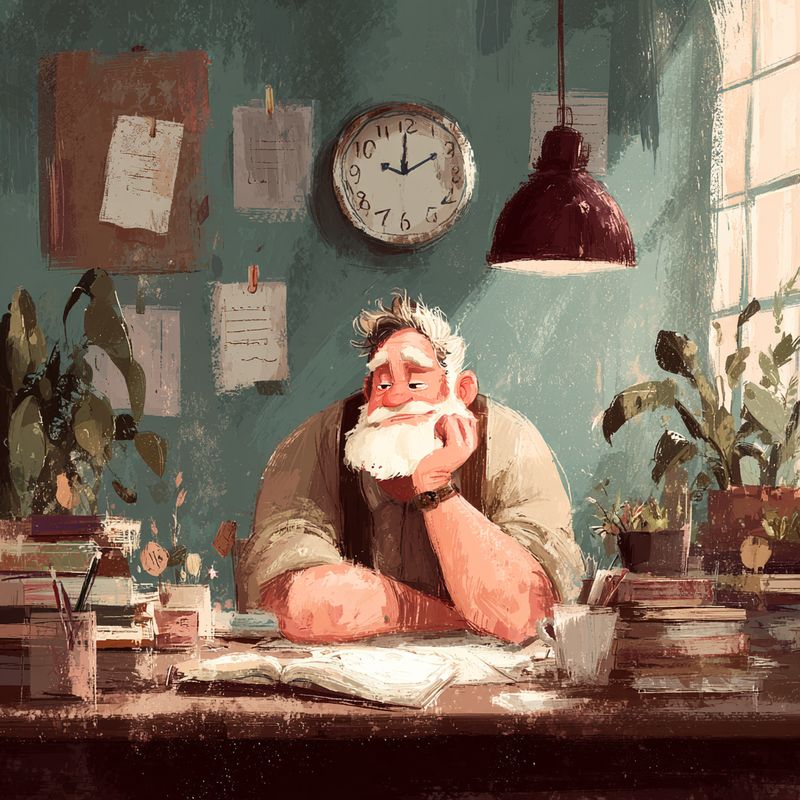
Freelancers procrastinate on new projects when income feels unpredictable because financial uncertainty triggers genuine threat responses in the brain, not laziness. The hesitation isn’t about poor time management. It’s an emotional regulation problem: the brain perceives unstable income as danger, activates loss-aversion circuits, and procrastination becomes the short-term coping mechanism. Understanding this neurological pattern is the first step toward breaking it.
This matters more than most productivity advice acknowledges. Research from Steel (2007), published in Psychological Bulletin, found that 20-25% of the general population identifies as chronic procrastinators, but self-employed workers face compounding pressures that make them uniquely vulnerable to this cycle. According to an Upwork Freelance Forward report, freelancers and self-employed workers report 40% higher stress levels related to income instability compared to traditionally employed workers.
The feast or famine freelancer cycle isn’t just financially stressful. It rewires how you approach work itself.
Why Does Uncertain Income Trigger Procrastination in the First Place?
Uncertain work schedule procrastination has a specific neurological cause. When income is unpredictable, the brain doesn’t file it under “mild inconvenience.” It treats it as a survival threat, activating the same stress systems that would respond to physical danger.
In his book The Happy Brain (2018), neuroscientist Dean Burnett explains that the brain’s loss-aversion system makes uncertainty feel more threatening than it statistically is, which can paralyze decision-making. This isn’t irrationality. It’s an evolved response that served humans well in environments where uncertainty genuinely meant scarcity.
Burnett has also noted, drawing on his BBC Science Focus work on financial anxiety, that when income is unpredictable, the brain treats financial uncertainty as a genuine threat, triggering stress responses that impair executive function. Executive function is exactly what you need to start a new project. It governs planning, initiation, and follow-through.
So the brain creates the very impairment that makes starting harder. Then it offers procrastination as relief.
Is This Really an Emotion Problem, Not a Time Problem?
Yes. And that reframe changes everything about how to address it.
Organic Wharton research by Adam Grant has reframed procrastination as an emotion regulation problem rather than a productivity problem. Grant’s position: people often procrastinate as a way to avoid negative emotions associated with a task, not because they’re disorganised or undisciplined.
For freelancers, the negative emotion isn’t always about the project itself. It’s the ambient dread surrounding it. Starting a new project when you don’t know whether the next month’s rent is covered forces you to confront financial vulnerability directly. Avoidance feels protective.
Grant has also observed, in his 2021 book Think Again, that when we face uncertainty about outcomes, we’re more likely to delay action because the emotional discomfort is immediate while the benefits feel distant. This is the precise trap of unstable income procrastination: the discomfort of financial anxiety hits right now, while the income from completing the project arrives weeks later.
The mismatch between immediate pain and delayed reward is what makes willpower-based advice (just start, set a timer, break it into steps) fail so consistently for self-employed workers in uncertain financial situations.
What Happens Inside the “Feast or Famine” Procrastination Loop?
The feast or famine freelancer pattern creates a particularly vicious procrastination cycle that’s worth understanding in detail.
During feast periods, overwork and exhaustion make it hard to plan ahead or start new projects proactively. During famine periods, financial anxiety activates threat responses that impair the executive function needed to pitch, start, or push through creative work. Both states produce procrastination, but for different emotional reasons.
A 2021 FlexJobs survey found that 59% of freelancers report difficulty with financial planning due to income unpredictability. That’s not just a budgeting problem. Chronic uncertainty about whether work will continue shapes how the brain evaluates every new task.
Judson Brewer, psychiatrist and mindfulness researcher at Brown University, captures the loop precisely in his 2017 book The Craving Mind: procrastination is a way of managing negative emotions in the short term, even though it creates more negative emotions in the long term. The freelancer delays starting a new pitch because doing so feels emotionally overwhelming. The delay creates guilt and more financial pressure. That pressure makes the next attempt even harder.
Self employed job security, or the absence of it, doesn’t just affect your bank account. It reshapes your relationship with work itself.
How Does Loss Aversion Make New Projects Feel Riskier Than They Are?
Loss aversion is the well-documented tendency for humans to weight potential losses more heavily than equivalent gains. For someone with a stable salary, starting a new project carries limited downside. For a freelancer with unpredictable income, every new project carries the implicit risk of wasted time, scope creep, non-payment, or opportunity cost.
The brain doesn’t just calculate these risks rationally. It amplifies them. Burnett’s work on the threat-detection system explains that uncertainty itself gets coded as loss, even before any actual loss occurs. The mere possibility of a bad outcome can trigger the same avoidance behaviour as a confirmed bad outcome.
This is why self employed job security anxiety produces such disproportionate hesitation. A freelancer might have a reasonably full pipeline, yet still find themselves stalling on a straightforward new project because the ambient sense of financial precariousness keeps the threat system activated.
The contrarian point worth making here: most productivity systems are designed for people with stable employment. They assume a baseline of psychological safety that feast-or-famine freelancers simply don’t have. Applying those systems without addressing the emotional substrate is like handing someone a map when they’re too anxious to walk.
How Can Freelancers Actually Break the Procrastination-Uncertainty Cycle?
The research points toward emotional regulation strategies rather than productivity tactics. This isn’t about working harder or having more discipline. It’s about interrupting the brain’s threat response before it converts into avoidance.
Brewer’s Brown University research on mindfulness and procrastination offers a practical starting point. His finding: awareness without judgment is key to breaking the procrastination habit loop. When we notice the urge to procrastinate without self-criticism, we can interrupt the cycle. The mechanism here is specific. Mindful awareness activates the prefrontal cortex, which can override the amygdala’s threat signals. You’re not suppressing the anxiety; you’re giving it less automatic control over behaviour.
For uncertain work schedule procrastination specifically, several evidence-based approaches have traction:
- Name the emotion before the task. Before starting a project, take 60 seconds to identify what you’re actually feeling. Financial dread? Imposter anxiety? Naming the emotion reduces its intensity, a process called affect labelling that’s well-supported in neuroscience research.
- Separate income uncertainty from task quality. The financial anxiety and the project itself are two different problems. Keeping them conceptually separate prevents the threat response from contaminating the work.
- Create micro-certainty where macro-certainty is absent. You can’t control whether clients will continue hiring you. You can control a consistent 90-minute work block each morning. Small, reliable structures calm the threat system even when the larger picture remains uncertain.
- Track completion, not income. During famine periods especially, measuring what you complete (pitches sent, drafts finished) rather than what you earn shifts the brain’s reward system away from the unpredictable variable.
Grant’s broader point about emotion and uncertainty is worth returning to: the discomfort is real, but it’s not informative. Feeling anxious about starting a project doesn’t mean the project is dangerous. Learning to sit with that distinction, without immediately acting on it through avoidance, is the actual skill that unstable income procrastination demands.
Time Is Luck was built with this pattern in mind. Freelancers don’t need another task manager. They need tools that account for the psychological reality of irregular work, helping them build momentum precisely when motivation is hardest to generate.
FAQ
Is procrastination worse for freelancers than for traditionally employed workers?
The evidence suggests yes, specifically because of income instability. Upwork’s Freelance Forward report found freelancers report 40% higher stress levels related to income instability than traditionally employed workers. Since research by Adam Grant and others identifies negative emotions as the primary driver of procrastination, higher baseline stress logically correlates with higher procrastination risk.
Why do I procrastinate more during slow periods, when I have more time?
This is the feast or famine freelancer paradox. During slow periods, financial anxiety is highest, which activates the brain’s threat responses and impairs executive function. You have more hours available but less psychological capacity to use them. The problem isn’t time; it’s the emotional weight that financial uncertainty adds to every task.
Does unstable income actually change how the brain works?
Temporarily, yes. Dean Burnett’s work on financial anxiety, drawing on his research for The Happy Brain and BBC Science Focus writing, explains that financial uncertainty activates genuine stress responses that impair executive function. Executive function governs task initiation, planning, and follow-through, which are exactly the capacities needed to start new projects.
Why doesn’t “just push through it” advice work for income-related procrastination?
Because it misidentifies the problem. Willpower-based strategies assume the obstacle is motivation or discipline. But when procrastination is driven by an activated threat response to financial uncertainty, pushing through requires overriding a neurological alarm system. Judson Brewer’s research in The Craving Mind (2017) shows that awareness and emotional regulation are more effective than force of will for breaking procrastination loops.
What’s the fastest practical step to reduce uncertain work schedule procrastination?
Research supports affect labelling as a fast, low-effort intervention: simply name the emotion you’re feeling before attempting to start work. Studies show this activates the prefrontal cortex and reduces the intensity of the emotional signal driving avoidance. It takes under a minute and doesn’t require any external tools or systems.