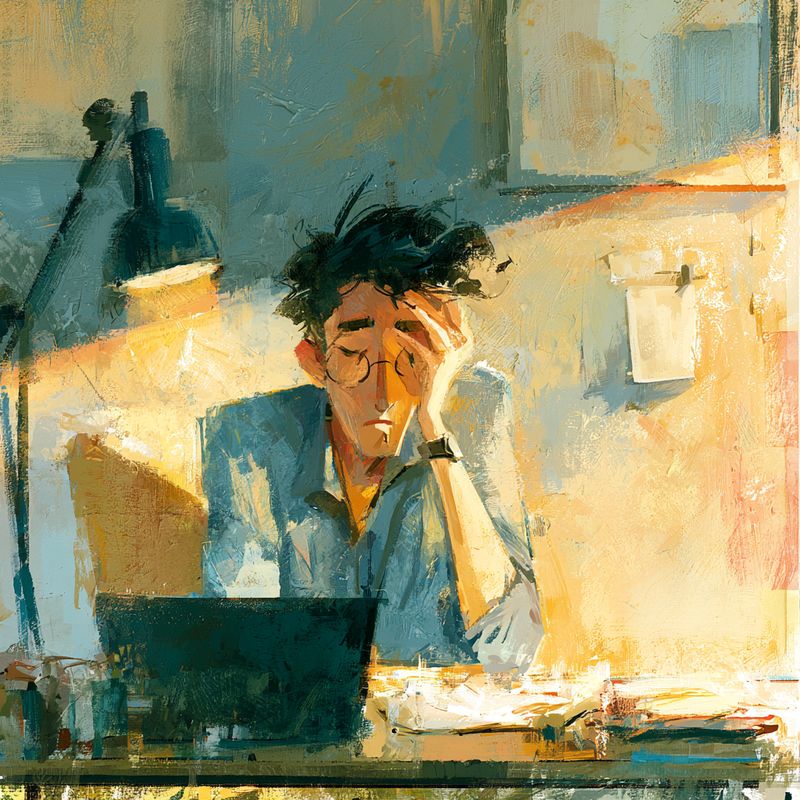
Most college students who procrastinate aren’t lazy. They’re scared.
Research consistently shows that procrastination is driven by emotional avoidance, not poor time management. When students delay starting an essay or keep postponing a study session, they’re often managing anxiety about performance, fear of failing, or even fear of success and the judgment that might follow. According to Steel and König’s 2006 review published in Psychological Bulletin, 46% of people report procrastinating, with task aversion and fear of failure cited as the primary reasons. That’s not a productivity crisis. That’s an emotional one.
Understanding the emotional roots of procrastination changes everything about how you address it.
Is Procrastination Really an Emotion Problem, Not a Time Problem?
The short answer is yes. Researchers have spent decades trying to fix procrastination with better calendars and productivity systems. Those tools help some people some of the time. But they consistently fail the students who need help most, because they treat the symptom without touching the cause.
Organizational psychologist Adam Grant, drawing on Wharton research into procrastination and emotion regulation, has argued that procrastination may be an emotion regulation problem, not a productivity problem, and that people procrastinate to manage negative emotions associated with a task. That framing shifts everything. If the problem is emotional, the solution can’t just be mechanical.
Grant has also noted that the people who procrastinate are not less motivated. They’re more anxious. That observation should genuinely change the way universities, professors, and even students themselves think about chronic delay.
Tice and Bratslavsky’s research, published in Psychological Science in 2000, found that emotion regulation difficulties account for significant variance in procrastination behaviors across populations. In plain terms: the harder you find it to manage uncomfortable feelings, the more likely you are to put things off.
What Are Students Actually Afraid Of?
The fear underneath procrastination isn’t always obvious, even to the person experiencing it. Students who are afraid of bad grades don’t always connect that fear to the fact that they haven’t opened their textbook in two weeks. The avoidance feels like distraction or tiredness. It rarely feels like fear.
But fear is almost always present. Heidi Grant, a social psychologist and researcher at the NeuroLeadership Institute, has written extensively on motivation and goal pursuit. In her book 9 Things Successful People Do Differently (2012), she argues that people often fail at their goals because they don’t understand the psychological obstacles in their way, and that fear of failure is one of the most powerful motivational forces. Her research also shows that when people are afraid of failing, they often avoid the task entirely rather than risk discovering they can’t do it.
That pattern is extremely common in academic settings. A student who hasn’t started their dissertation chapter isn’t procrastinating because they forgot about it. They’re avoiding the moment when they have to confront whether they’re capable of doing it well.
Sénécal and colleagues confirmed this in a 1995 study published in the Journal of Social Behavior and Personality: students who procrastinate report higher anxiety and lower self-efficacy related to fear of negative evaluation. The work feels threatening, so the brain files it under “deal with later.”
How Does the Brain Turn Anxiety Into Avoidance?
Neuroscience helps explain why anxiety and performance worry translate so directly into delay. Dean Burnett, a neuroscientist and author of Idiot Brain (2016), explains that the brain’s threat detection system can be overly sensitive, making people avoid situations that feel emotionally challenging, even when those situations are objectively safe.
A university assignment is not a physical threat. But if a student is worried about their future, carrying anxiety about performance, or dealing with the accumulated weight of academic pressure, the brain can register that assignment as something to be avoided with the same urgency it would apply to an actual danger.
Burnett has also argued, writing in The Happy Brain (2018) and for BBC Science Focus, that procrastination isn’t laziness. It’s the brain trying to protect you from emotional discomfort by delaying the task. That protection is short-term and self-defeating, but it’s not irrational from the brain’s perspective. It works, immediately. The discomfort fades the moment you close the laptop.
The problem is that the assignment is still there tomorrow, and the anxiety returns, compounded by guilt.
What About Fear of Success? Does That Really Exist?
This one surprises people. Fear of success sounds counterintuitive, almost self-indulgent. But it’s a genuinely documented pattern, and it’s particularly relevant for students who are approaching important transitions.
A student finishing their final year might unconsciously delay submitting work because completing it means graduating, entering the job market, and being judged not as a student but as a professional. Someone close to finishing a major project might stall because finishing means being evaluated, perhaps publicly, and that outcome carries real social weight.
The fear of success is really a fear of the consequences of success: higher expectations, greater visibility, less room to hide behind “I was just trying my best.” When students procrastinate on high-stakes work, anxiety about performance isn’t always about failing. Sometimes it’s about what succeeding demands next.
Approximately 20 to 25% of the population experiences chronic procrastination that negatively impacts work and wellbeing, according to research by Pychyl and Sirois published in Advances in Psychology in 2016. For many of those people, the procrastination isn’t random. It clusters around the tasks that matter most, which is the opposite of what laziness would predict.
How Can Students Actually Address This?
The answer isn’t more willpower. Willpower-based advice (just start, set a timer, break it into steps) fails people when the underlying emotional resistance is strong enough. That’s not to say those tools are useless. They’re genuinely helpful once a student has some insight into what they’re avoiding and why.
The most effective approaches combine awareness with action.
First, naming the fear helps. Research in emotion regulation consistently shows that labeling an emotion reduces its intensity. If a student can identify “I’m afraid this essay will confirm that I’m not as capable as people think,” that awareness creates a small but real gap between the feeling and the behavior. The task doesn’t feel less scary immediately, but the avoidance becomes more visible and therefore more resistible.
Second, separating identity from output matters enormously. Heidi Grant’s research highlights that people with a fixed mindset (those who believe performance reflects innate ability) procrastinate more than those with a growth mindset. A bad grade feels less catastrophic when it means “I need to work on this” rather than “I am not smart enough.”
Third, self-compassion outperforms self-criticism as a recovery tool. Studies on procrastination and guilt show that students who forgive themselves for procrastinating are actually more likely to start sooner next time. Beating yourself up for delays tends to increase the emotional weight of the task, which increases avoidance.
Tools that surface task anxiety early, before it calcifies into full avoidance, give students a genuine advantage. The Time Is Luck app is built around exactly this idea: helping students engage with tasks before the emotional resistance becomes overwhelming, using structure that works with the brain’s tendencies rather than against them.
FAQ
Is procrastination a sign of laziness?
No. Research consistently shows that procrastination is driven by emotional avoidance, particularly fear of failing, anxiety about performance, and worry about negative evaluation. Adam Grant’s work on emotion regulation suggests procrastinators are typically more anxious than their peers, not less motivated.
Why do I procrastinate most on the things I care about most?
Because the emotional stakes are higher. When an assignment or project matters deeply, failure feels more threatening. That threat activates the brain’s avoidance system. Procrastinating on low-stakes tasks is common, but chronic avoidance of high-priority work almost always has an emotional root, often fear of failure or fear of judgment.
Can fear of success actually cause procrastination?
Yes. Fear of success is a documented psychological pattern. It typically reflects anxiety about the consequences of succeeding: higher expectations, greater visibility, or transitions that feel threatening. Students approaching graduation or high-stakes evaluations are particularly prone to this form of avoidance.
What actually helps with procrastination if willpower doesn’t?
Emotion-focused strategies tend to outperform pure productivity hacks for chronic procrastinators. These include naming the specific fear behind the avoidance, separating your identity from your academic output, practicing self-compassion after delay rather than self-criticism, and using structured tools that reduce the emotional load of starting a task.
How common is chronic procrastination among students?
Very common. Research by Pychyl and Sirois, published in Advances in Psychology in 2016, estimates that 20 to 25% of the general population experiences chronic procrastination that negatively affects their work and wellbeing. Among college students, who face concentrated performance pressure and fear of negative evaluation, rates are typically higher.