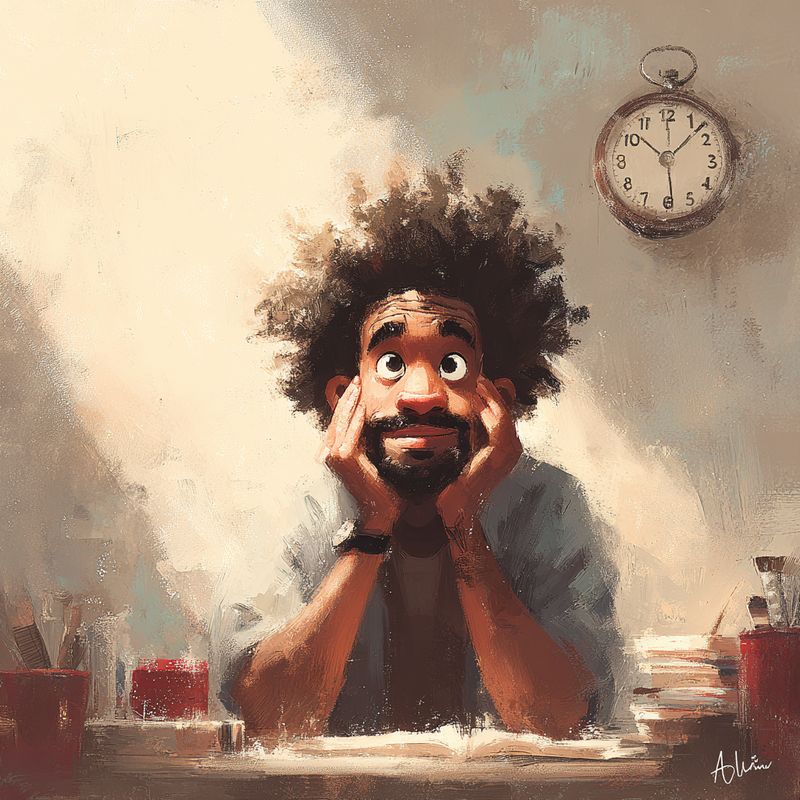
Your most capable students are often your biggest procrastinators. Not because they’re lazy, but because they’re using delay as an emotional coping tool they never learned to replace.
Research consistently shows that procrastination consequences for students extend far beyond a single missed deadline or a rushed essay. According to a 2016 meta-analysis by Pychyl and Sirois, between 80-95% of college students engage in procrastination, with 50% describing it as a genuine problem in their academic lives. The real damage isn’t just a lower grade. It’s the slow erosion of learning quality, sleep, mental health, and the self-regulation habits that determine whether a capable student becomes a capable adult.
Why Do Capable Students Procrastinate More Than Struggling Ones?
High-ability students often have the most complicated relationship with procrastination. Their track record of last-minute success actually reinforces the habit. If you’ve pulled off a strong essay at midnight before, your brain remembers that. It files it under “evidence this works.”
The deeper reason why students procrastinate has less to do with poor planning and more to do with emotion regulation. In his 2017 book The Craving Mind, neuroscientist Judson Brewer argues that procrastination is fundamentally about managing feelings, not time. We delay tasks to avoid the anxiety, self-doubt, or boredom that those tasks trigger, not because we’ve miscalculated how long they’ll take.
For bright students, the emotional stakes are often higher. A genuinely difficult task threatens a self-image built on effortless achievement. Delaying it protects that identity. If the work turns out poorly, there’s always the ready explanation: “I only spent two hours on it.”
As neuroscientist Dean Burnett explains in his book Idiot Brain (2016), the brain’s reward system actively prefers immediate gratification, making procrastination feel like the rational choice in the moment, even when the student consciously knows it’s self-destructive. The capable student isn’t making a logical error. They’re responding to a deeply wired neurological pull.
What Does Last-Minute Work Actually Cost Students?
The most visible cost is grades, but it’s the smallest part of the problem. Research by Steel (2007), published in Psychological Bulletin in his meta-analytic review “The Nature of Procrastination,” found that students who procrastinate receive grades up to 5% lower than peers of similar ability. That’s meaningful. But it understates the total damage.
Last-minute work quality suffers in ways that don’t always show up immediately in a grade. A student who rushes an essay in four hours doesn’t just produce weaker writing. They miss the iterative thinking process where real learning happens: the draft that reveals a gap in understanding, the revision that forces a clearer argument, the re-reading that cements the material. Procrastination skips the learning, not just the effort.
The physical toll is equally significant. Research by Sirois and Pychyl (2013) found that last-minute work completion increases stress levels and negatively impacts sleep quality in 73% of procrastinating students. Chronic sleep disruption compounds into worse cognitive performance, which then makes the next task feel harder, which triggers more avoidance. The cycle accelerates.
Student discipline problems in classrooms are sometimes rooted here too. A student who’s exhausted, stressed, and running on deadline adrenaline isn’t in a state to engage, collaborate, or self-regulate their behaviour. The procrastination consequences for students ripple outward in ways that look like attitude problems rather than what they actually are: the downstream effects of a poor coping strategy.
Is There Any Case for Productive Procrastination?
Fairly, yes. And it’s worth taking seriously rather than dismissing.
In his 2016 book Originals, organisational psychologist Adam Grant writes that “procrastination may be the enemy of productivity, but it can be the friend of creativity.” His research found that people who delayed starting creative tasks sometimes produced more original ideas than those who began immediately, because incubation time allows for divergent thinking.
That’s a real finding. The contrarian take here, though, is that it’s frequently misapplied. Grant’s research describes deliberate, moderate delay on creative tasks, not the anxiety-driven, all-night sprint that most student procrastination actually looks like. The student who avoids an essay for three weeks and then writes it in one panicked session isn’t incubating. They’re catastrophising.
Grant himself has noted, in Wharton research on productive procrastination, that the challenge is that students most often procrastinate on tasks requiring deep, focused work: precisely the ones where quality matters most. That’s where the “creativity” argument collapses. Analytical essays, complex problem sets, research projects. These don’t benefit from a last-minute sprint. They require the kind of sustained cognitive effort that only unhurried time allows.
How Does Repeated Procrastination Damage Long-Term Self-Regulation?
This is the cost that almost no one talks about, and it may be the most serious one.
Self-regulation, the ability to manage impulses, delay gratification, and persist through discomfort, is one of the strongest predictors of professional success, relationship quality, and mental health across a lifetime. It’s also a skill that develops through practice. Every time a student chooses avoidance over engagement, they’re rehearsing the wrong response to difficulty.
The habit doesn’t stay in school. Research on procrastination and adult outcomes consistently shows that habitual procrastinators in academic settings carry those patterns into careers, finances, and health behaviours. The student who never learned to start a hard task when it felt uncomfortable becomes the adult who delays the difficult conversation, the medical appointment, the career pivot.
Brewer’s work at Brown University on mindfulness and habit formation suggests that awareness without judgment is central to breaking the procrastination habit loop. The problem is that most academic environments do the opposite: they increase judgment (grades, comparison, criticism) while offering very little structured awareness-building. Students learn what procrastination costs them. They rarely learn why it happens or how to interrupt it.
This is where the framing of procrastination as a student discipline problem becomes actively counterproductive. Treating it as a moral failing or a willpower deficit pushes students toward shame, which research shows reliably increases avoidance. Shame makes procrastination worse, not better.
What Can Actually Help Students Break the Pattern?
The interventions that work target emotion regulation, not time management. A better calendar system doesn’t fix anxiety about starting. Structure that reduces the emotional weight of beginning a task does.
Breaking tasks into smaller, lower-stakes starting points reduces the threat response that triggers avoidance. A student who won’t write an essay can often write three sentences about what they already know about the topic. The entry point matters enormously.
Implementation intentions, specific “when-then” plans (“when I sit down after dinner, I’ll open the document and write the first paragraph”) have strong research support for reducing procrastination in student populations. They work because they automate the decision to begin, bypassing the emotional negotiation that usually derails it.
Schools and educators can also shift how they frame deadlines. Intermediate checkpoints that reward process, not just product, change the reinforcement structure entirely. They make engagement visible and gradable, rather than leaving students to manage the entire arc of a project alone.
The goal isn’t to eliminate all delay. It’s to help students develop the self-awareness to distinguish between useful reflection and self-protective avoidance. That distinction is what separates a capable student from a capable professional.
FAQ
Is procrastination always a problem, or can it sometimes help students?
Moderate, deliberate delay on creative tasks can support original thinking, as Adam Grant’s research in Originals (2016) shows. But most student procrastination isn’t deliberate. It’s anxiety-driven avoidance that shortens the time available for the deep, iterative work where real learning and quality happen. The distinction matters.
Why do high-ability students procrastinate so often?
Capable students often have strong self-images tied to effortless success. Difficult tasks threaten that identity, triggering avoidance as a protective mechanism. Delay also provides a ready excuse if the work doesn’t go well. Judson Brewer’s research frames this clearly: procrastination is about managing uncomfortable emotions, not managing time.
What are the real consequences of procrastination for students beyond grades?
Research by Sirois and Pychyl (2013) found that 73% of procrastinating students experience increased stress and disrupted sleep from last-minute work completion. Over time, repeated procrastination also weakens the self-regulation skills students need for professional success, health decisions, and relationship management throughout their adult lives.
Does telling students to “just start” actually work?
Rarely, on its own. Willpower-based advice fails because it doesn’t address the emotional trigger driving the avoidance. Implementation intentions (specific plans for when and where to begin a task) and reducing the perceived size of the first step are both better-supported approaches from behavioural research.
How is procrastination different from a student discipline problem?
Framing procrastination as a discipline or attitude problem tends to increase shame, which research shows reliably worsens avoidance behaviour. Procrastination is better understood as a maladaptive emotional coping strategy. Addressing the underlying emotion regulation deficit produces better outcomes than applying pressure or punishment.