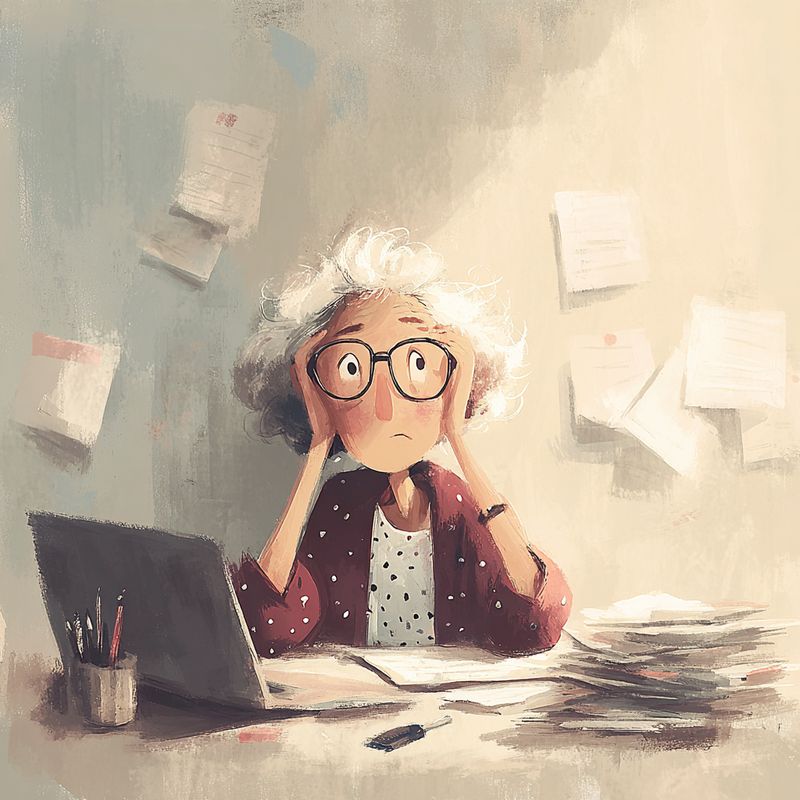
Student procrastination isn’t laziness, and it isn’t a character flaw. It’s your brain doing exactly what brains evolved to do: avoid discomfort and chase immediate relief. Research shows that between 80% and 95% of college students procrastinate, with roughly half saying it causes them real problems (Steel, 2007, Psychological Bulletin). The fix isn’t a better planner or a firmer commitment to “just starting early.” It’s understanding why your brain treats an unfinished essay like a threat, and working with that biology instead of fighting it.
Why Does Procrastination Feel So Unavoidable?
Because it works. At least in the short term. Avoiding a stressful task genuinely reduces anxiety for a few minutes, and your brain logs that as a win. The relief you feel when you close a textbook and open Netflix isn’t weakness. It’s a reward signal, and reward signals are how brains learn.
Neuroscientist and psychiatrist Judson Brewer, whose mindfulness research at Brown University has examined habit loops extensively, argues in The Craving Mind (2017) that procrastination is fundamentally a problem of emotion regulation, not time management. That reframe matters enormously. If procrastination were purely about poor scheduling, a to-do list would fix it. It doesn’t, because the root problem is emotional avoidance, not calendar mismanagement.
The pattern runs like this: you think about a difficult assignment, you feel anxious or bored or inadequate, you switch to something easier, you feel temporary relief, and the cycle locks in. Brewer’s research shows that mindfulness interrupts this loop by helping you observe the urge to escape without automatically acting on it. You notice the discomfort. You don’t have to flee it.
Academic procrastination also has a measurable cost. Research by Tice and Baumeister published in Psychological Science (1997) found that students who procrastinate consistently end up with lower GPAs and higher stress levels than their non-procrastinating peers, even when controlling for other factors.
What’s Actually Happening in Your Brain When You Procrastinate?
Your prefrontal cortex, the part responsible for planning and long-term thinking, is in a constant negotiation with your limbic system, which governs emotional responses and immediate rewards. When a task feels threatening or overwhelming, the limbic system often wins.
Neuroscientist Dean Burnett, in Idiot Brain (2016), explains that the brain’s tendency to underestimate how long tasks will take and to devalue future rewards in favor of immediate comfort isn’t a bug. It’s a fundamental feature of how our brains evolved. Our ancestors didn’t need to think about deadlines three weeks out. They needed to respond to what was happening right now.
This is why procrastinating on assignments feels rational in the moment. Future-you failing an exam is abstract. The discomfort of opening your notes right now is concrete. Your brain weights the concrete discomfort far more heavily, which is why “think about how stressed you’ll be later” is such ineffective advice.
Approximately 25% of adults identify as chronic procrastinators (Steel & König, 2006, Academy of Management Review), suggesting this isn’t a student-specific problem that people simply grow out of. The wiring doesn’t change. The strategies have to.
Is Procrastination Ever Actually Useful?
Here’s the contrarian take most productivity articles skip: sometimes, yes.
Adam Grant, organizational psychologist at Wharton, has researched what he calls the creative upside of delay. His findings, drawn from studies on originality and creative output, produced a striking conclusion.
“Procrastination may be the enemy of productivity, but it can be the friend of creativity.” — Adam Grant, Wharton research on procrastination and creativity
Grant’s research suggests that strategic procrastination, waiting before committing to a first approach, can actually boost creative thinking because you’re more likely to make novel associations and less likely to get locked into the most obvious solution (Adam Grant, Wharton organizational psychology research).
This connects to Jonathan Schooler’s work on mind-wandering, published in Consciousness and Cognition, which found that mind-wandering is both a curse and a feature of human cognition. It can harm focus on immediate tasks, but it may facilitate creative problem-solving when properly channeled.
The distinction worth holding onto: incubation time before starting creative work is different from chronic avoidance that leaves you writing a 3,000-word essay at 2am. One is a deliberate pause. The other is anxiety-driven escape. Knowing which one you’re doing requires more honesty than most procrastination advice asks of you.
How Does Procrastination Studying for Exams Specifically Harm You?
Cram sessions feel productive. That’s part of what makes them so seductive. You’re doing the work, just compressed. But the neuroscience of memory formation doesn’t care about your effort. It cares about spacing.
The spacing effect, one of the most replicated findings in cognitive psychology, shows that information reviewed across multiple sessions over time is retained far more reliably than information reviewed in a single marathon session. When you’re procrastination studying for exams, you’re essentially betting against how memory consolidation actually works.
Solomon and Rothblum’s foundational research in the Journal of Counseling Psychology (1984) found that the average student procrastinates on approximately 40% of their academic work. That’s not an occasional lapse. It’s a structural pattern, and for exam preparation specifically, it consistently produces worse outcomes than distributed study does.
There’s also a stress physiology problem. Cortisol, the stress hormone your body releases under pressure, impairs the hippocampus, the brain region most responsible for forming new memories. So the high-pressure, last-night cramming state is, from a neurological standpoint, one of the worst possible conditions for learning new material. You’re flooding your memory-formation system with a chemical that degrades its function.
What Evidence-Based Strategies Actually Break the Procrastination Cycle?
Three approaches have the strongest research backing, and none of them involve guilt or willpower.
Mindfulness-based urge surfing. Brewer’s work at Brown University found that mindfulness training, specifically learning to observe an urge without reacting to it, meaningfully reduced habitual avoidance behaviors. The technique called “urge surfing” treats the impulse to procrastinate like a wave you can watch without being pulled under. You notice “I want to close this document,” you sit with the discomfort for 60-90 seconds, and frequently the urge passes without you acting on it. This isn’t meditation as a lifestyle. It’s a practical interrupt for a specific emotional loop.
Implementation intentions. Research by Peter Gollwitzer on what he called “if-then” planning showed that being specific about when, where, and how you’ll do a task dramatically increases follow-through compared to vague intentions. “I’ll study” fails. “I’ll review Chapter 4 at the library at 3pm on Tuesday before I open my phone” succeeds at a measurably higher rate.
Temptation bundling. Katherine Milkman’s research at Wharton found that pairing an activity you want to do with a task you’re avoiding, only listening to a favorite podcast while doing problem sets, for example, reduces avoidance and increases task completion. This works because it doesn’t try to eliminate the reward-seeking behavior. It just redirects it.
The thing these strategies share is that none of them demand that you feel motivated before starting. They accept that motivation rarely precedes action. Usually, it follows it.
How Can You Build Study Habits That Outlast Motivation?
Motivation is unreliable. Routines aren’t. The research on habit formation consistently shows that reducing the friction of starting a task matters far more than increasing enthusiasm for it.
Practically, this means a few things. Study in the same location at the same time when possible, because environmental cues trigger automatic behavior. Keep your study materials visible and accessible, because out of sight genuinely means out of mind for the procrastinating brain. Break work into units small enough that starting doesn’t feel like a commitment, because “I’ll work for 25 minutes” is less threatening than “I’ll finish this essay.”
Time Is Luck is built around exactly this insight: the battle against academic procrastination isn’t won by working harder or feeling more disciplined. It’s won by designing your environment and your habits so that starting is the path of least resistance, not the uphill one.
The students who struggle least with procrastination aren’t more motivated. They’ve just made avoiding work slightly more effortful than doing it.
FAQ
Is student procrastination a sign of laziness?
No. Research, including Judson Brewer’s work at Brown University and Piers Steel’s 2007 meta-analysis in Psychological Bulletin, consistently shows that procrastination is driven by emotion regulation difficulties, not laziness or low intelligence. Students who procrastinate often care deeply about their work, which is part of why starting it feels so threatening.
Why do I procrastinate more on important assignments?
Importance raises the emotional stakes, which increases anxiety, which triggers avoidance. The more you care about performing well on something, the more threatening it feels to engage with it before you feel “ready.” This is why academic procrastination peaks around high-stakes deadlines like final exams and major papers.
Does procrastination get worse under stress?
Yes. High cortisol levels, which accompany stress, impair executive function in the prefrontal cortex, which is exactly the brain region responsible for overriding impulsive avoidance. Stress makes the short-term relief of procrastination feel more compelling while simultaneously reducing your capacity to resist it.
Can some procrastination actually help with studying?
For creative or open-ended work, brief incubation periods can improve output quality, as Adam Grant’s Wharton research on procrastination and creativity found. For memorization-heavy exam preparation, procrastination is consistently harmful because it eliminates the spaced repetition that memory consolidation requires.
What’s the fastest way to stop procrastinating on assignments right now?
The most immediate evidence-backed intervention is an implementation intention: write down the specific time, place, and first action you’ll take on the task. Not “I’ll work on my essay tonight” but “I’ll open my outline document at my desk at 7pm and write the first paragraph.” Gollwitzer’s research shows this single step significantly increases follow-through compared to general intentions.