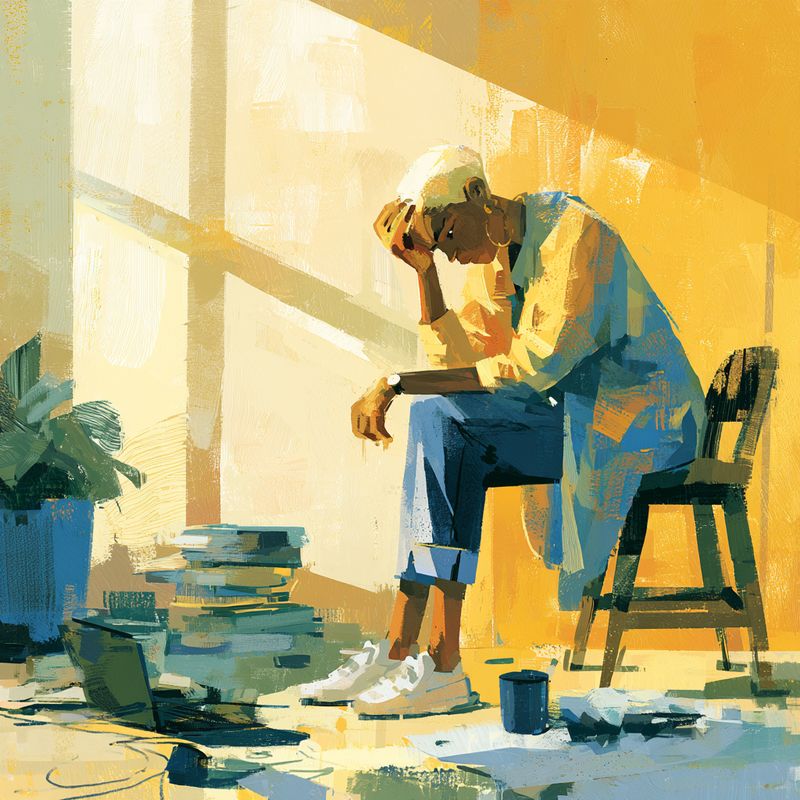
Most advice about how to beat procrastination today tells you to just start, set a timer, or break tasks into smaller pieces. That advice isn’t wrong, exactly. It’s just aimed at the wrong problem.
Procrastination isn’t a time management failure. It’s an emotional one. And until you address the discomfort driving the avoidance, no productivity hack will stick for long. The good news: there are specific, science-backed micro-actions you can take right now that interrupt the cycle at its root. Not tomorrow. Today.
Why does procrastination feel impossible to stop even when you know you’re doing it?
Knowing you’re procrastinating and being able to stop are two completely different things. The cycle persists because avoidance works, at least briefly. Delaying a task genuinely does reduce the anxiety around it in the short term, which reinforces the behavior and makes it more likely to happen again.
Neuroscientist and psychiatrist Judson Brewer states directly in his 2017 book The Craving Mind: “Procrastination is an emotion regulation problem, not a productivity problem. We procrastinate to avoid negative feelings about a task.”
That framing changes everything. It means willpower-based advice (just start, set a timer) fails people not because they lack discipline, but because it doesn’t address the underlying emotional trigger.
Dean Burnett, neuroscientist and author of Idiot Brain (2016), explains that our brains are naturally inclined to avoid tasks that cause discomfort or anxiety, which is precisely why procrastination feels so rewarding in the short term. The brain registers relief as a reward, and rewarded behaviors get repeated.
According to research published in the Psychological Bulletin by Piers Steel in 2007, approximately 20% of adults identify as chronic procrastinators, compared to 80-95% of students who procrastinate occasionally. The difference between occasional and chronic isn’t motivation. It’s the depth of the emotional avoidance loop.
What is the emotional avoidance loop and how does it trap you?
The loop has a reliable structure. A task appears. You feel something uncomfortable: anxiety, boredom, self-doubt, fear of failure. Your brain offers an escape route. You take it. The relief reinforces the escape. Next time the task appears, the loop activates faster.
Burnett, writing in The Happy Brain (2018) and his BBC Science Focus columns, describes procrastination not as laziness but as a failure of self-regulation driven by emotional avoidance. The distinction matters because labeling yourself lazy keeps you stuck. Understanding it as a self-regulation pattern gives you something to actually work with.
Research by Dianne Tice and Roy Baumeister, published in a 1997 longitudinal study on procrastination and self-regulation, found that students who procrastinate experience significantly higher stress and anxiety levels over time, with procrastination-related stress contributing directly to academic performance decline. Short-term relief creates long-term cost.
Understanding how to stop the pattern of procrastinating means understanding that the pattern isn’t about the task. It’s about the feeling the task triggers.
How do you interrupt the cycle without relying on willpower?
This is where neuroscience and mindfulness research offer something genuinely useful. Brewer’s work at Brown University on habit formation suggests that the key to breaking procrastination is becoming aware of the urge to procrastinate without judgment, and then choosing a different behavior. Not suppressing the urge. Observing it.
That shift from suppression to observation is significant. Suppression requires willpower, which is finite and unreliable. Observation requires attention, which is trainable.
Jonathan Schooler, whose research appears in the journal Consciousness and Cognition, has found that mind-wandering is a key factor in procrastination. When attention drifts, avoidance becomes automatic. Catching that drift before it becomes full avoidance is the entry point for change.
Studies on mindfulness-based interventions show a 40% reduction in procrastination behavior in clinical settings, according to research from Brewer’s group at Brown University. That’s not a marginal improvement. It’s a structural shift in the habit loop.
So if you want to know how to get out of the procrastination habit, the answer starts with noticing what you’re feeling before you avoid, not after.
What are the micro-actions that actually work right now?
Here are four actions rooted in emotional regulation and neuroscience. Each one can be applied today, in under five minutes.
1. Name the feeling before you name the task
Before opening the document, the spreadsheet, or the email thread, pause for thirty seconds. Ask yourself: what am I actually feeling right now about this task? Anxious? Bored? Resentful? Overwhelmed?
Naming the emotion activates the prefrontal cortex and reduces the amygdala’s threat response, a process neuroscientists call “affect labeling.” A 2007 study by Matthew Lieberman at UCLA, published in Psychological Science, found that labeling emotions reduced their intensity measurably. You’re not journaling. You’re doing neuroscience in thirty seconds.
2. Do a two-minute discomfort sit
Instead of escaping the uncomfortable feeling, sit with it deliberately for two minutes. Set a timer. Don’t fight the discomfort or try to reframe it. Just notice it. Where is it in your body? Does it shift?
This is drawn directly from Brewer’s RAIN technique (Recognize, Allow, Investigate, Note), adapted from mindfulness-based cognitive therapy. The goal isn’t to feel better. It’s to break the automatic link between discomfort and escape.
Procrastination costs the average person approximately 55 minutes per day in lost productivity, according to time management research from the 2010s. Two minutes of deliberate discomfort to reclaim nearly an hour is a reasonable trade.
3. Shrink the task to its most absurd minimum
Not “work on the report.” Not even “write the introduction.” Write one sentence. Literally one. The goal here isn’t to trick yourself into doing more (though you often will). The goal is to make the emotional cost of starting smaller than the emotional cost of avoiding.
This works because avoidance is proportional to perceived threat. A massive task generates massive avoidance. A single sentence generates almost none. Once you’ve written the sentence, the emotional loop has been interrupted. You can stop there and still count it as a win.
4. Create an “already done” anchor
Write down one small thing you’ve already completed today, no matter how minor. Made coffee. Replied to one message. Read this article. Then physically write the micro-task next to it.
This exploits the brain’s completion bias, the documented tendency to feel motivated by proximity to done. It’s related to the Zeigarnik effect, the psychological phenomenon where incomplete tasks occupy mental space while completed ones release it. You’re not faking momentum. You’re borrowing real momentum from an adjacent task.
Is there ever a version of procrastination worth keeping?
Here’s the contrarian take: not all procrastination is a problem to be eliminated.
Adam Grant, organizational psychologist and author of Originals (2016), makes the case that “procrastination may be the enemy of productivity, but it can be the friend of creativity.” His Wharton research on productive procrastination found that people who allow their minds to wander between focused work periods often produce more creative output than those who grind without pause.
The distinction is between avoidance-driven procrastination (rooted in emotional discomfort) and incubation-style delay (rooted in genuine cognitive processing). One is the cycle you need to break. The other might be doing useful work beneath the surface.
Knowing how to beat procrastination today doesn’t mean eliminating every pause or delay. It means recognizing when a pause is avoidance and when it’s your brain actually working.
FAQ
Is procrastination really about emotions and not laziness?
Yes, consistently across the research. Burnett, Brewer, and Steel all arrive at the same conclusion from different angles: procrastination is a self-regulation failure driven by emotional avoidance, not a character flaw or lack of effort. Chronic procrastinators aren’t lazier than non-procrastinators. They’re more sensitive to task-related discomfort and less practiced at tolerating it.
How long does it take to break the procrastination habit?
Habit research suggests meaningful change in behavioral loops takes anywhere from four to twelve weeks of consistent practice, depending on the depth of the habit and the individual’s baseline stress levels. The micro-actions described here can interrupt a single instance of procrastination immediately, but rewiring the broader pattern takes repetition over time.
Why doesn’t the “just start” advice work for chronic procrastinators?
Because it addresses behavior while ignoring emotion. Telling someone to just start assumes the barrier is inertia. For chronic procrastinators, the barrier is usually anxiety, dread, or self-doubt. Pushing through those feelings without addressing them often increases avoidance over time rather than reducing it.
Can mindfulness really help with how to get out of the procrastination habit?
The evidence says yes, meaningfully. Clinical research associated with Brewer’s group at Brown University found mindfulness-based interventions reduced procrastination behavior by approximately 40%. Mindfulness in this context doesn’t mean meditation sessions. It means building the skill of noticing an urge without automatically acting on it, which is precisely what the procrastination loop requires you to interrupt.
What’s the single most effective first step for someone who procrastinates on everything?
Start with emotion labeling before task starting. Before you attempt any task, name the feeling the task is triggering. This one habit, practiced consistently, builds the gap between stimulus and response that the entire emotional regulation approach depends on. It takes thirty seconds and requires no tools, apps, or elaborate systems.