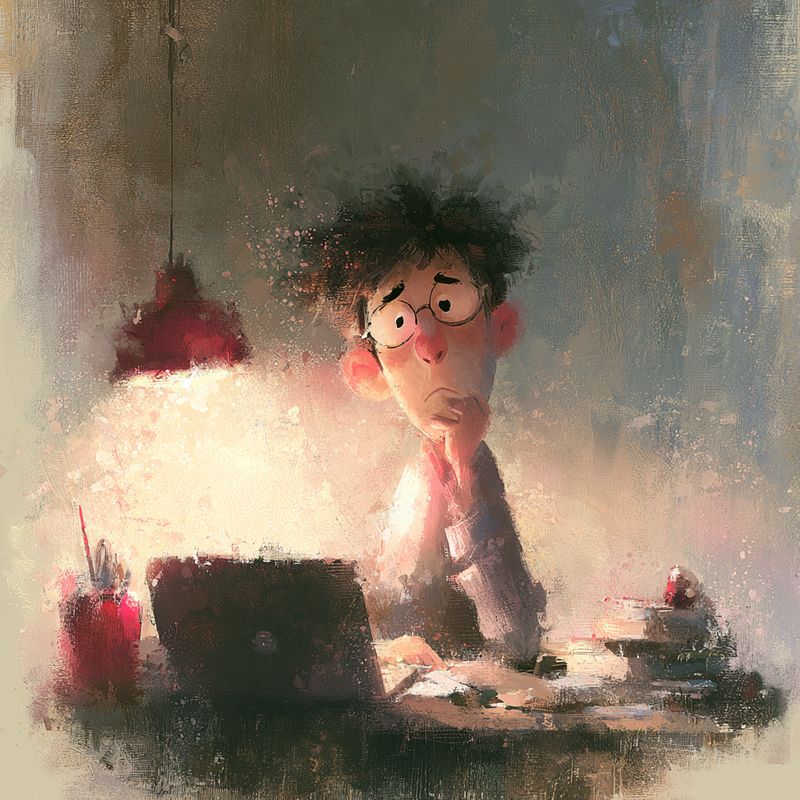
If you’ve noticed that working alone makes it dramatically harder to start difficult tasks, you’re not weak-willed. You’re missing a biological mechanism your brain actually depends on.
Research consistently shows that isolation at home doesn’t just feel harder; it structurally removes the social and neurological scaffolding that helps humans regulate the negative emotions that trigger avoidance. According to a 2021 American Psychological Association remote work study, 80% of remote workers report increased procrastination compared to office-based work. That’s not a coincidence. That’s a pattern pointing directly at environment, not character.
The fix isn’t to try harder. It’s to understand what your brain is actually doing when you push a hard task to tomorrow, and then redesign the system around it.
Why does working alone make procrastination so much worse?
Procrastination spikes in isolation because the brain’s primary strategy for managing task-related discomfort relies heavily on social context. Remove that context, and avoidance becomes the path of least resistance almost automatically.
Adam Grant, organizational psychologist at Wharton, put it plainly in his widely cited TED Talk on procrastination: “Procrastination is an emotion regulation problem, not a productivity problem.” That reframe matters enormously. It means the question isn’t “why can’t I just start?” It’s “what emotion am I avoiding, and what would normally help me tolerate it?”
In office environments, that tolerance often comes passively. A colleague nearby, a shared deadline energy, the subtle social pressure of being visible. Working from home strips all of that away. According to Grant’s Wharton organizational psychology research, when we work alone without social accountability, we lose a key mechanism for emotional regulation that helps us push through difficult tasks.
Solo work avoidance, in other words, isn’t a personal failing. It’s a predictable response to a broken environment.
What’s actually happening in your brain when you delay a hard task?
The neurological sequence behind procrastination is better understood now than it’s ever been, and it has very little to do with laziness.
Judson Brewer, psychiatrist and neuroscientist at Brown University, describes the mechanism clearly in his 2017 book The Craving Mind: “Procrastination is a way to regulate negative emotions in the moment, even though it backfires in the long run.” Your brain detects an unpleasant feeling, whether that’s anxiety about a project’s complexity, fear of failure, or just the friction of getting started. It then reaches for the fastest available relief. Checking your phone, making another coffee, reorganizing a folder you don’t need to reorganize.
The relief is real. That’s the trap.
Neuroscientist Dean Burnett, writing in his 2018 book The Happy Brain, adds another layer: the brain’s reward system is biased toward immediate gratification, which makes isolation particularly problematic because there’s no external social reward to counteract the avoidance instinct. In an office, starting a hard task carries micro-rewards: visible effort, potential praise, the ambient sense of belonging to a working group. Alone at home, starting the same task offers nothing immediate, while avoidance offers instant relief.
The math your brain is doing isn’t irrational. It’s just optimizing for the wrong timeframe.
Why does remote work loneliness make task avoidance worse over time?
Remote work loneliness isn’t just an emotional inconvenience. It actively degrades the cognitive resources needed to push through difficult work.
A 2021 report combining Stanford’s Work From Home Research data with Owl Labs’ State of Remote Work findings showed that remote workers report 36% higher rates of loneliness compared to in-office workers, and that elevated loneliness directly correlates with increased task avoidance. Chronic loneliness narrows attention, increases threat sensitivity, and makes the emotional cost of hard tasks feel higher than it actually is.
This creates a compounding cycle. Isolation at home produces loneliness. Loneliness increases the emotional weight of difficult tasks. Heavier emotional weight triggers more avoidance. Avoidance produces guilt and inertia. Guilt makes the next hard task feel even more threatening.
Working alone procrastination isn’t just a daily annoyance for many people; it’s a slow-building system failure. And according to Steel’s 2007 meta-analysis published in Psychological Bulletin, approximately 20 to 25% of the population already experiences chronic procrastination before adding the compounding pressure of remote work isolation.
What does having no accountability partner actually cost you?
The most underestimated variable in remote work productivity isn’t focus time or task management tools. It’s the presence of another person who knows what you’re supposed to be doing.
Harvard Business School research on procrastination and social context published in 2019 found that workers without accountability partners are 65% more likely to delay high-difficulty tasks. Sixty-five percent. That’s not a marginal effect. That’s a structural disadvantage that no amount of to-do list redesign will overcome.
Here’s the contrarian take worth sitting with: most productivity advice aimed at remote workers is solving the wrong problem. Time-blocking, Pomodoro timers, digital minimalism, they’re all willpower-based solutions to what is fundamentally a social regulation problem. They assume the bottleneck is attention, when the actual bottleneck is emotional tolerance for discomfort.
Having no accountability partner means having no external nervous system to borrow from. In neuroscience, this concept connects to co-regulation: the process by which humans use other people’s calm, focused presence to regulate their own emotional state. It’s why libraries work. It’s why coffee shops with ambient noise work. It’s why body doubling (working alongside someone even on video, in silence) is one of the most evidence-supported interventions for procrastination in isolation.
The absence of co-regulation isn’t a soft problem. It’s a hard neurological one.
How can you redesign your system to work with your brain, not against it?
The good news is that the system can be changed, even when your physical environment can’t.
Judson Brewer’s Brown University research on mindfulness and procrastination suggests that awareness can interrupt the procrastination habit loop by helping us notice the urge to avoid without automatically acting on it. That noticing creates a gap. And in that gap, a different choice becomes possible. This isn’t about positive thinking; it’s about building the fraction of a second between trigger and behavior.
Beyond mindfulness, the most effective structural interventions for working alone procrastination fall into a few categories:
- Scheduled accountability check-ins. Even a brief, low-stakes commitment to tell someone what you’re starting and when you finished moves the needle significantly. The social contract activates the same regulatory mechanisms that office proximity provides passively.
- Body doubling or co-working sessions. Virtual co-working, where two or more people work silently on their own tasks via video, reintroduces ambient social presence without the need for conversation or coordination.
- Task-specific commitment devices. Telling someone the specific deliverable you’ll complete by a specific time (not just “I’ll work on the report”) raises the emotional cost of avoidance in a way that private intentions never do.
- Emotion-first task framing. Before starting a hard task, name the feeling you’re avoiding. Anxiety about quality? Overwhelm at scale? Brewer’s research shows that labeling the emotion reduces its regulatory power, making avoidance less reflexively tempting.
None of these are willpower hacks. They’re system designs that replace, partially, what office environments provide automatically.
FAQ
Is procrastination really worse when working from home, or does it just feel that way?
The data says it’s genuinely worse, not just a perception shift. An American Psychological Association study from 2021 found that 80% of remote workers report increased procrastination compared to office-based work. The structural removal of social accountability, ambient co-regulation, and visible peer effort creates real neurological conditions that favor avoidance.
What’s the difference between laziness and working alone procrastination?
Laziness, to the extent it exists as a meaningful concept, implies a general disinterest in effort. Procrastination is task-specific avoidance driven by emotional regulation. Research from Adam Grant at Wharton and Judson Brewer at Brown University both point to procrastination as a response to negative emotions, not a baseline motivation deficit. Most chronic procrastinators report high motivation alongside high avoidance, which is the hallmark of an emotion regulation issue, not a work ethic issue.
Why does having an accountability partner help so much?
Accountability partners reintroduce external social stakes to tasks that otherwise carry only internal consequences. Harvard Business School research from 2019 found workers without accountability partners are 65% more likely to delay difficult tasks. Neurologically, a social witness activates the brain’s social reward and threat systems, which override the short-term relief calculation that drives avoidance. It’s co-regulation by design.
Can remote work loneliness cause long-term procrastination problems?
Yes, and the mechanism is cumulative. Data from Stanford’s Work From Home Research and Owl Labs (2021) shows remote workers experience 36% higher loneliness rates, which correlates with increased task avoidance. Chronic loneliness raises threat sensitivity and depletes the cognitive resources needed for effortful tasks, creating a feedback loop where avoidance feels increasingly justified and increasingly costly at the same time.
Is body doubling actually backed by science, or is it just a trend?
The evidence base is growing. Body doubling draws on well-established neuroscience around social presence and co-regulation, and it’s a recognized intervention in ADHD treatment where its effectiveness is well-documented. For the broader population, the mechanism is the same: ambient social presence reduces the emotional friction of starting difficult tasks by activating mild social reward and accountability circuits. It’s not magic. It’s just putting social scaffolding back into an environment that stripped it out.