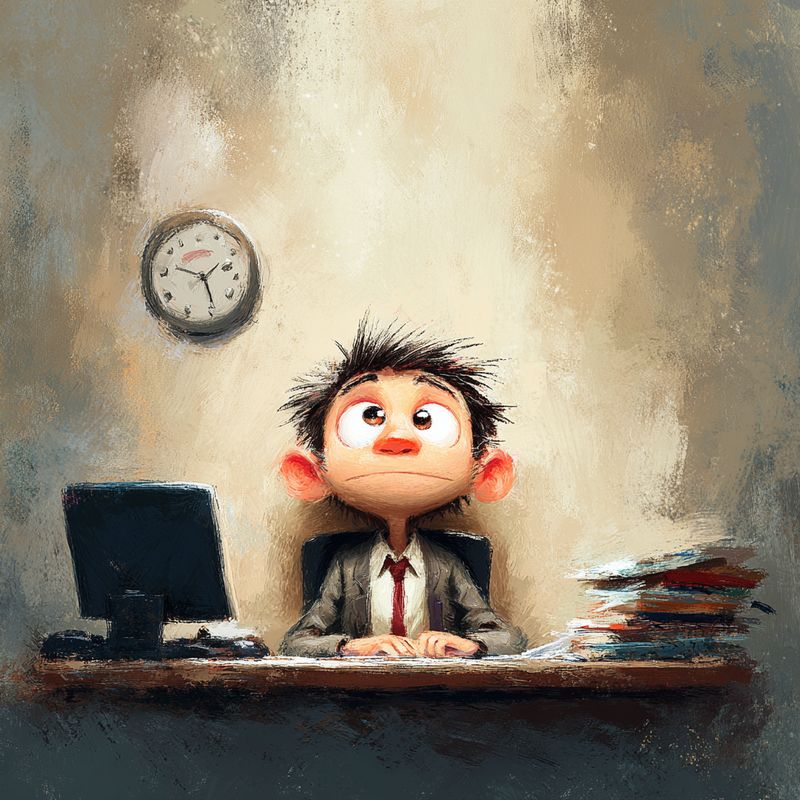
Most teachers can spot it instantly: the student who somehow always produces work the night before a deadline, swears the panic helps them focus, and genuinely believes this is just how they operate. Sometimes it is. Usually, it isn’t.
Research consistently shows that between 80% and 95% of college students procrastinate to some degree (procrastination literature review, 2007-2010), and around 50% do so regularly enough to affect their academic performance (Piers Steel, Psychological Bulletin meta-analysis, 2007). The student procrastination cycle isn’t a personality quirk. It’s a learned brain habit, and the longer it runs, the harder it is to interrupt.
Here’s what the neuroscience actually says, and four interventions that can break the pattern before it calcifies.
Why Does Last-Minute Studying Feel Like It’s Working?
The cramming habit persists for a straightforward reason: it delivers results, at least in the short term. A student pulls an all-nighter, submits the assignment, survives the exam. The brain registers this as a success story.
Neuroscientist Dean Burnett, writing in his book Idiot Brain (2016), explains this clearly. As Burnett describes it, the brain’s reward system finds the immediate relief of procrastination more compelling than the abstract future benefit of preparing in advance, which is why last-minute panic can become self-reinforcing.
The relief of finally starting, combined with the adrenaline of a tight deadline, creates a genuine neurological reward. Dopamine floods in when the work gets done. The brain logs the whole sequence as a functioning strategy.
Repeat this cycle a dozen times across a school year, and the pattern becomes automatic. Avoidance, anxiety, crisis-mode work, relief. The brain doesn’t distinguish between a healthy habit and a harmful one. It just reinforces whatever consistently produces that reward signal.
Active vs. Passive Procrastination: A Distinction That Actually Matters
Not every student who delays is stuck in avoidance. This is one of the most useful distinctions in procrastination research, and teachers rarely make it explicitly.
Organizational psychologist Adam Grant, drawing on Wharton research and developed further in his book Think Again (2021), argues that procrastination isn’t inherently destructive. As Grant puts it, some people genuinely do their best work under pressure, and a degree of time pressure can actually boost creative thinking.
But Grant draws a sharp line. The key, he notes, is distinguishing between active procrastination, which means deliberately delaying in order to work better under pressure, and passive procrastination, which is simply anxiety and avoidance wearing the costume of a strategy.
Active procrastinators make a conscious choice. They understand the trade-off, manage their schedule intentionally, and don’t experience spiraling dread. Passive procrastinators tell themselves the same story, but the underlying driver is emotional discomfort, not strategic planning.
For teachers and students, asking one honest question cuts through the confusion: “Am I delaying because I work better this way, or because starting this task feels bad?”
The answer changes everything about what intervention is actually needed.
How the Procrastination Habit Loop Forms in the Brain
Psychiatrist Judson Brewer’s research at Brown University, detailed in his book The Craving Mind (2017), reframes procrastination not as a time-management failure but as an emotion-regulation strategy.
As Brewer explains it, procrastination is a way of managing negative emotions in the short term, even though it backfires in the long term. Understanding this emotional regulation aspect is the real key to breaking the cycle.
The habit loop runs like this: a trigger (an assignment feels overwhelming, boring, or tied to fear of failure) produces an uncomfortable emotional state. The behavior (avoidance, distraction, doing something easier) delivers immediate relief. The reward cements the loop. Next time the same trigger appears, the brain already knows its preferred escape route.
Neuroscience researcher Jonathan Schooler, whose work on mind-wandering appears in the journal Consciousness and Cognition, adds another layer. As Schooler’s research suggests, attention failures and mind-wandering actively contribute to procrastination cycles, but understanding how attention works can help students develop better focus strategies before crises occur.
The problem isn’t willpower. Students who try to white-knuckle their way out of passive procrastination usually fail because they’re fighting a conditioned neurological response with conscious effort alone.
4 Interventions That Actually Break the Cycle
These aren’t generic study tips. Each one targets a specific mechanism in the procrastination habit loop, informed by the research above.
1. Name the Emotion Before the Task
Brewster’s framework points to emotional discomfort as the ignition point for avoidance. The first intervention is also the simplest: before starting any avoided task, take thirty seconds to name the feeling driving the delay.
“I’m avoiding this essay because I’m scared it won’t be good enough.” Or: “This feels boring and I can’t see why it matters.”
This isn’t journaling for its own sake. Labeling emotions reduces their intensity in the brain, a process called affect labeling, documented in neuroimaging research from UCLA. When the emotional trigger loses some of its charge, the avoidance behavior becomes less automatic.
2. Run a Habit-Loop Audit
Brewer’s mindfulness-based approach, tested across multiple studies at Brown University, teaches people to map their own habit loops explicitly. For students, this means identifying three things: what triggers the procrastination (which subjects, which task types, which times of day), what the avoidance behavior looks like in practice, and what reward it’s actually delivering.
Most students discover the reward is relief from anxiety, boredom escape, or the feeling of control that comes from choosing when to engage. Once the reward is visible, it becomes possible to find a less costly way to get it.
3. Shrink the Starting Task Until Resistance Drops
Passive procrastination almost always involves an inflated mental image of the task. The brain doesn’t resist writing a paper; it resists the imagined hours of concentrated effort, the possibility of failure, the ambiguity of where to start.
Research on habit formation consistently shows that reducing the size of the initial action lowers the activation energy required to begin. The intervention isn’t “just start.” It’s making the start so small that avoidance feels more effortful than action. Open the document. Write one sentence. Read one paragraph of one source.
This isn’t a trick. It’s working with the brain’s resistance rather than against it.
4. Interrupt the Reward, Not the Behavior
The most counterintuitive intervention targets the reward phase of the loop rather than the avoidance itself. Students who cramp report lower grades and higher stress levels than those who study consistently (educational psychology research, 2015-2020), but many don’t register this as a cost in the moment because the emotional reward of finishing feels so good.
The intervention is structured reflection immediately after completing a crammed task: write down the stress level experienced during the process, the quality of the work compared to what was possible, and what the next 48 hours felt like. Over time, this builds an honest record that competes with the brain’s selective memory of “it worked out fine.”
Breaking a dopamine-driven habit requires making the actual consequences of the habit emotionally real, not just intellectually acknowledged.
Why This Matters Most During Formative Academic Years
The stakes here are higher than a single grade. Clinical psychology research from 2018 documents that the procrastination-stress cycle can contribute to lasting anxiety disorders when the pattern becomes chronic during formative academic years.
A student who builds their entire study identity around last minute studying isn’t just developing a bad habit. They’re potentially wiring a stress-response pattern that follows them into university and professional life.
The good news is that habit loops formed during adolescence and early adulthood remain malleable. The brain retains significant neuroplasticity through the mid-twenties. Catching and interrupting the breaking procrastination habit in students before it solidifies is genuinely possible, and the window for doing so is wide.
Teachers who can name the distinction between active and passive procrastination, and who understand the emotional regulation function underneath avoidance, have real leverage. Not as enforcers of better time management, but as people who can hand students a more accurate map of what’s actually happening in their own heads.
FAQ
Is cramming ever actually effective as a study strategy? Cramming can produce short-term recall sufficient to pass an exam, but educational psychology research consistently shows that students who cram report lower grades overall and significantly higher stress levels compared to those who study consistently over time. Information encoded under crisis conditions also tends to fade faster, making cramming particularly poor preparation for cumulative assessments.
How do I know if my child is an active or passive procrastinator? The clearest indicator is emotional state during the delay period. Active procrastinators generally feel calm and in control during the time they’re waiting to start. Passive procrastinators experience mounting anxiety, guilt, and avoidance of thinking about the task. If your child seems distressed in the days before a deadline but can’t bring themselves to start, that’s passive procrastination driven by emotion regulation, not strategic scheduling.
At what age does the procrastination habit become hard to change? Habit loops can form at any age, but research on brain plasticity suggests that patterns established during adolescence are particularly sticky because the habit-forming regions of the brain are highly active during this period. That said, the brain retains meaningful plasticity into the mid-twenties, and awareness-based interventions like those developed by Judson Brewer at Brown University have shown results across all age groups.
Why don’t standard time-management tips fix student procrastination? Most time-management advice treats procrastination as a scheduling problem. Neuroscience research, particularly Brewer’s work documented in The Craving Mind (2017), shows it’s primarily an emotional regulation problem. Students already know when things are due. What they need is help with the discomfort that makes starting feel impossible, not a better calendar system.
Can a procrastination tracking app genuinely help break the habit? Apps work best when they make the habit loop visible and create structured moments of reflection after avoided tasks. The research on habit interruption suggests that awareness of the trigger-behavior-reward sequence is a prerequisite for change. An app that simply sends deadline reminders addresses the symptom. One that helps students recognize their own patterns and the emotional costs of avoidance addresses the actual mechanism.