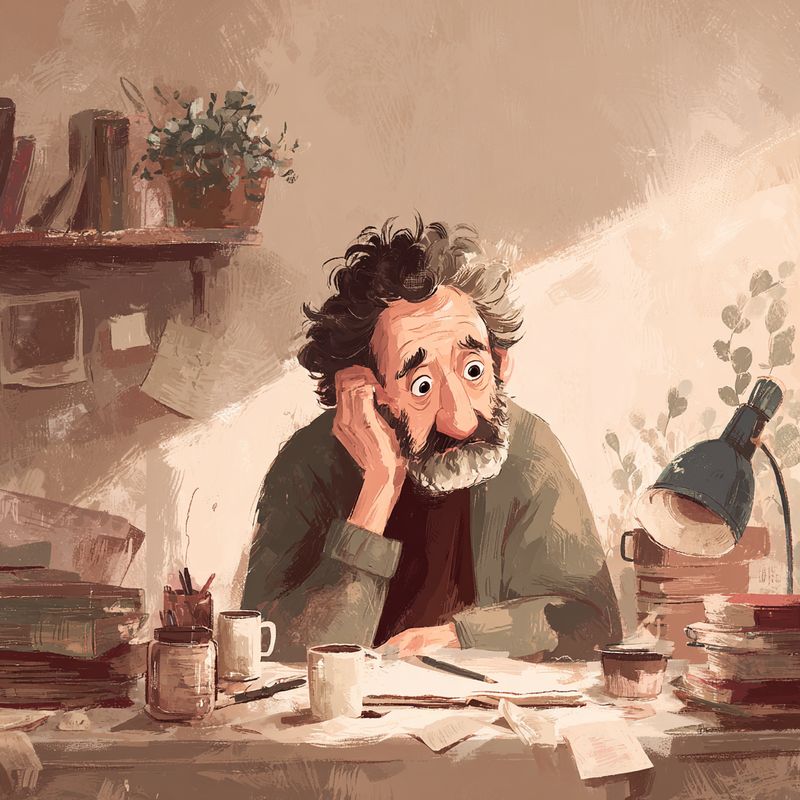
Your side hustle isn’t failing because you don’t have enough time. It’s failing because working on it feels emotionally risky in ways that answering work emails simply doesn’t.
Personal project avoidance is one of the most frustrating forms of procrastination precisely because it makes no logical sense. You want to write the novel, build the app, launch the Etsy shop. Yet the hours slip by and you don’t. Research consistently shows that people procrastinate more on self-directed tasks than on externally mandated ones, and the reason has far less to do with scheduling than most productivity advice acknowledges. Approximately 20% of adults are chronic procrastinators, according to psychologist Piers Steel writing in Psychological Bulletin (2007), and passion projects are disproportionately where that pattern plays out.
The real culprit is emotion regulation. Or rather, the failure of it.
Why Do We Procrastinate More on Things We Actually Care About?
Passion project procrastination follows a cruel logic: the more something matters to your sense of self, the more threatening it feels to actually attempt it. A task you don’t care about carries no identity weight. A side hustle you’ve been dreaming about for three years carries everything.
Adam Grant, organizational psychologist at Wharton, has argued in his research on procrastination and motivation that procrastination is fundamentally an emotion regulation problem, not a productivity problem. He goes further, noting that we often avoid tasks that make us feel bad about ourselves, even when we genuinely care about them. The caring is part of what makes them avoidance-worthy.
This reframe matters enormously. If procrastination were about time management, the solution would be calendars and timers. But if it’s about managing uncomfortable feelings, the solution looks completely different.
“Procrastination is an emotion regulation problem where we use avoidance as a way to deal with negative feelings.” — Judson Brewer, paraphrased from The Craving Mind (2017)
Brewer, a psychiatrist and neuroscientist at Brown University, describes procrastination as a habit loop where discomfort triggers avoidance, avoidance provides temporary relief, and that relief reinforces the avoidance behavior. The side hustle sits untouched. You feel briefly better. The loop tightens.
What Makes Side Hustles and Hobbies Especially Vulnerable to Avoidance?
Three forces converge to make hobby procrastination and procrastination on side hustles uniquely stubborn.
First, there’s no external accountability. Research drawing on self-determination theory shows that personal projects experience higher procrastination rates than work obligations specifically because no one is waiting on the deliverable. Your boss notices when the report is late. Nobody notices when your podcast episode doesn’t get recorded. The absence of consequence removes one of the brain’s most reliable motivators.
Dean Burnett, neuroscientist and author of Idiot Brain (2016), makes the underlying mechanism plain: the brain is fundamentally lazy and will avoid effort when possible, especially on tasks that lack immediate external reward. A side hustle, particularly in its early stages, offers almost no external reward at all. No paycheck, no praise, no deadline pressure. The brain registers this accurately and votes for scrolling instead.
Second, perfectionism. Personal projects are often the one place people feel they can create something truly theirs, which paradoxically makes the stakes feel impossibly high. The first draft of the business plan represents something. Starting badly feels like failing at something that was supposed to prove your potential.
Third, and most underappreciated, is identity threat. When a project is tied to a dream version of yourself, not starting protects that dream. If you never seriously attempt the photography business, you can never seriously fail at it. The procrastination functions as psychological insurance.
How Does the Brain Process Passion Projects Differently?
The neuroscience here is genuinely interesting. Tasks connected to identity and self-concept activate the brain’s threat-detection systems in ways that routine work tasks don’t. The prefrontal cortex, responsible for planning and long-term thinking, knows the side hustle matters. The amygdala, which processes threat and emotional salience, responds to that importance as potential danger.
This is why passion project procrastination can feel so physically uncomfortable. Sitting down to work on the thing you care about can trigger a low-grade anxiety response. Opening the document feels harder than it should. The brain isn’t malfunctioning; it’s protecting you from an emotional risk it has correctly identified as real.
Research on autonomous versus controlled motivation shows that people are actually more likely to procrastinate on tasks they’ve chosen freely than on tasks assigned to them. This counterintuitive finding makes sense once you understand the identity mechanism. Freely chosen tasks reveal something about who you are. Assigned tasks reveal nothing except whether you followed instructions.
The result is a procrastination pattern that looks lazy from the outside but functions, internally, as self-protection.
Does Having a “Passion” for Something Actually Make Procrastination Worse?
Contrary to the motivational poster version of reality, yes. It often does.
The popular idea that passion automatically drives action misunderstands how emotion and motivation interact. Passion amplifies the emotional stakes of both success and failure. It doesn’t neutralize the discomfort of starting; it intensifies it. This is why the writer who desperately wants to finish their novel procrastinates more than the writer doing a paid ghostwriting assignment they feel neutral about.
Adam Grant’s research on procrastination and self-regulation identifies this clearly: we avoid tasks that threaten our self-image, and the more we’ve invested a task with meaning about who we are, the greater that threat becomes. The hobby becomes a referendum on your creativity. The side hustle becomes a test of whether you’re actually entrepreneurial. The pressure calcifies into avoidance.
This doesn’t mean passion is counterproductive. It means passion alone isn’t enough, and treating it as sufficient motivation is a setup for a guilt spiral when the avoidance inevitably arrives.
How Can You Actually Interrupt the Avoidance Loop?
Given that personal project avoidance is an emotional phenomenon, the most effective interventions work at the emotional level rather than the scheduling level. A few approaches have meaningful research support.
Mindfulness-based interruption. Judson Brewer’s research at Brown University found that mindfulness, specifically the ability to notice what’s happening internally without immediately acting on it, can interrupt the procrastination habit loop. The practice isn’t about forcing yourself to work. It’s about noticing the discomfort that precedes avoidance without automatically responding to it with distraction. That pause is where choice re-enters the picture.
Shrink the identity stakes. One of the most practical shifts is deliberately decoupling the project from self-worth before starting. This means framing the work session as an experiment rather than a performance. You’re not writing a great chapter; you’re writing 200 words to see what happens. The side hustle isn’t launching today; you’re spending 20 minutes on one small task. Lower stakes produce less threat response.
Create micro-accountability. Since the absence of external accountability makes personal projects vulnerable, building lightweight accountability structures helps. A weekly check-in with one person who knows about the project, a public commitment to a small deliverable, a habit-tracking system that makes streaks visible. None of these replicate workplace pressure, but they create enough external signal to engage the brain’s reward circuitry.
Use implementation intentions. Research by psychologist Peter Gollwitzer, published across multiple studies in journals including American Psychologist, shows that specifying when, where, and how you’ll work on a goal dramatically increases follow-through. Not “I’ll work on the side hustle this week” but “On Tuesday at 7pm, at the kitchen table, I’ll work on the side hustle for 25 minutes.” The specificity bypasses the avoidance decision entirely.
Acknowledge the feeling first. Before starting a session on a personal project, naming the discomfort out loud or in writing reduces its power. Brewer’s work on affect labeling shows that identifying an emotion, even briefly, reduces the amygdala’s response to it. “I feel anxious about this because it matters to me” is a more productive starting point than pretending the anxiety isn’t there.
Procrastination on personal projects isn’t a character flaw. It’s a predictable response to emotional risk. The side hustle deserves better than a productivity hack. It deserves an honest account of what’s actually getting in the way.
FAQ
Why do I procrastinate on my hobbies even though they’re supposed to be fun?
Hobby procrastination happens because activities tied to your identity carry emotional weight beyond their surface enjoyment. When a hobby represents your creativity, skill, or ambition, engaging with it can trigger anxiety about whether you’re good enough. That anxiety triggers avoidance. Research on emotion regulation shows this is a normal response, not a sign that you don’t actually enjoy the activity.
Is procrastination on a side hustle different from procrastinating at work?
Yes, in meaningful ways. Work procrastination is influenced heavily by boredom, task aversion, and external deadline pressure. Procrastination on a side hustle is more often driven by identity concerns, perfectionism, and the absence of accountability structures. Studies on self-directed versus externally mandated tasks consistently find that people procrastinate more when no one else is watching or waiting on the outcome.
Can perfectionism really cause procrastination on personal projects?
Absolutely. Perfectionism on personal projects operates differently than workplace perfectionism. Because the side hustle or passion project represents something aspirational about who you are, the fear of producing imperfect work feels like a threat to your self-concept. Not starting protects you from that outcome. The solution isn’t to lower your standards but to separate the quality of a given work session from your worth as a person.
How long does it take to break the procrastination habit on personal projects?
There’s no universal timeline, but research on habit change, including Judson Brewer’s work at Brown University, suggests that consistent practice of mindfulness-based interruption techniques alongside small, reliable action steps can begin shifting the pattern within a few weeks. The key is consistency over intensity. Ten minutes of genuine engagement daily builds more momentum than an occasional three-hour session driven by guilt.
Does using a procrastination app actually help with personal project avoidance?
Structured tools can help by providing the external accountability and progress visibility that personal projects naturally lack. Apps that make streaks, time investments, or small wins visible engage the brain’s reward circuitry in ways that purely internal motivation often can’t sustain alone. The best tools work not by adding pressure but by making progress concrete and trackable, which reduces the emotional ambiguity that feeds avoidance.