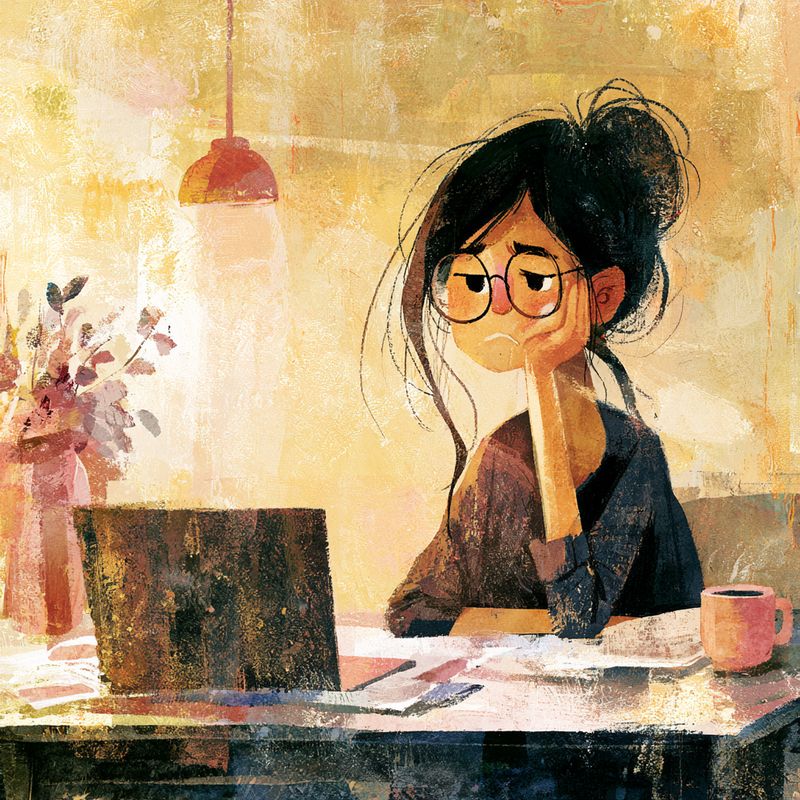
You probably believe you do your best work when the clock is running out. Most journalists do. But the research says something uncomfortably different, and understanding the gap between those two things might be the most useful thing you read this week.
The short answer: pressure creates a powerful sensation of creative clarity, but actual creative output declines under tight deadlines. The feeling is real. The performance boost isn’t. And the longer you’ve been deadline dependent, the harder it becomes to work any other way.
Why do so many journalists genuinely feel more creative under pressure?
The feeling isn’t imaginary. That’s what makes this so tricky to untangle. When a deadline bears down, your brain releases cortisol and adrenaline, sharpening focus and temporarily suppressing the kind of wandering, self-doubting thought patterns that make starting difficult. It feels like being switched on.
A 2011 Harvard Business School study by Amabile and Kramer found that 67% of professionals report feeling more creative when working under deadline pressure. That’s a majority. And they’re not lying about their experience.
But here’s where the paradox kicks in. The same study, published in The Progress Principle, found that when researchers measured actual creative quality rather than perceived creativity, deadline pressure reduced innovative thinking by an average of 22%. The feeling of enhanced performance and the reality of it are moving in opposite directions.
In his 2015 TED Talk on performance under pressure, astronaut Chris Hadfield described this gap precisely: the adrenaline rush from pressure can feel like enhanced performance, but it’s often just enhanced stress responses masquerading as creativity. Your brain reads urgency as competence. It isn’t.
What happens when pressure becomes your drug?
One high-stakes deadline feels productive. Fifty of them, over years, rewires how you work. Psychologist Piers Steel, writing in the Psychological Bulletin in 2007, found that 26% of workers are chronic procrastinators who depend on deadline pressure to initiate work at all. They can’t start without it. The pressure isn’t helping them perform better; it’s become the only thing that makes starting feel possible.
This is what deadline dependency actually looks like. Not laziness. Not poor time management. A genuine neurological habit loop where pressure functions as the trigger for work to begin.
Russ Harris, in his 2009 book ACT Made Simple, describes the mechanism with uncomfortable clarity: pressure creates a narrow focus that can feel like clarity, but it’s actually constraint masquerading as direction. When you’re last minute creative out of necessity, you’re not accessing your best thinking. You’re accessing your fastest thinking. Those are not the same thing.
The dependency compounds over time. Chronic deadline-dependent workers show 32% higher cortisol levels than those with regular work patterns, according to a 2012 stress biomarker study from the Institute for Corporate Productivity. That’s a measurable physiological cost, paid repeatedly, for a performance benefit that the data doesn’t actually support.
Is pressure really just a sophisticated form of procrastination?
This is the contrarian take worth sitting with: deadline dependency and procrastination aren’t opposites. They’re the same behaviour wearing different clothes. One feels chaotic and guilty. The other feels urgent and productive. But both involve avoiding the discomfort of starting before external pressure forces the issue.
In his book The Happiness Trap (2007), Russ Harris frames this through the lens of Acceptance and Commitment Therapy: we often confuse the discomfort of pressure with the productivity it generates. In ACT, this pattern is called experiential avoidance, using pressure as a way to avoid the discomfort of starting earlier.
For journalists especially, this matters. Reporting requires time to let ideas breathe, to notice the angle you missed on the first pass, to return to a source with better questions. None of that is available when you’re working right up to the wire. What you produce might be competent. It won’t be your most original work.
Chris Hadfield made the underlying principle explicit in An Astronaut’s Guide to Life on Earth (2013): “Under pressure, you don’t rise to the occasion. You fall to the level of your training. That’s why preparation matters more than the moment itself.” For journalists, the training isn’t just craft. It’s the habit of giving ideas enough time to develop into something genuinely worth reading.
How do you break deadline dependency without losing your edge?
The instinctive worry is real: if pressure is what makes you sharp, removing it might make you slow and flat. Research doesn’t support that fear, but it does show that the transition requires active design rather than willpower alone.
The goal isn’t to eliminate urgency. It’s to make urgency self-generated rather than externally imposed. Here’s what the evidence suggests works:
Set upstream deadlines for yourself. Not fake ones you immediately override, but structured commitments: a first draft shared with a colleague, a research summary sent to an editor before it’s requested. External accountability at early stages replicates the pressure trigger without compressing your creative window.
Treat your first draft as a thinking tool, not a product. One reason last-minute work feels efficient is that there’s no time for the messy middle stage of an idea. But that messy middle is where original angles emerge. Deliberately bad early drafts, written days in advance, create the raw material that deadline sprints can’t generate.
Redesign your environment before relying on your motivation. The research on habit change consistently shows that willpower-based advice (just start earlier, set a timer) fails people who are deadline dependent because it doesn’t address the underlying avoidance dynamic. Reducing friction for early starts matters more than increasing resolve at the last minute.
Acknowledge the cortisol cost explicitly. Knowing that you’re running 32% higher chronic stress levels than colleagues who pace their work differently isn’t abstract. It affects sleep, health, and ultimately the sustainability of a career. Framing deadline dependency as a physiological habit, not a personality trait, opens up the possibility of changing it.
What does better creative work actually look like without the pressure?
Journalists who shift away from reactive urgency toward proactive work patterns consistently report the same thing: the work feels slower initially, and then becomes faster. The initial drafts aren’t better. But the final pieces are.
This tracks with what Amabile and Kramer’s research in The Progress Principle calls the “progress principle”: small, consistent forward movement on meaningful work produces more sustained creative engagement than intense bursts separated by avoidance. The pressure high feels bigger. The sustained progress produces better output.
The edge you’re worried about losing isn’t actually produced by pressure. It’s produced by caring about the work. Pressure is just the mechanism you’ve been using to access that care reliably. There are less physiologically expensive ways to get there.
Building a practice of earlier, iterative work doesn’t make you a slower journalist. It makes pressure optional rather than mandatory. You can still sprint when a story demands it. You just won’t need to sprint every single time.
FAQ
Does research actually show that deadline pressure hurts creative quality?
Yes. A 2011 Harvard Business School study by Amabile and Kramer found that while 67% of professionals feel more creative under pressure, actual creative quality measured by independent raters declined by an average of 22% under tight deadlines. The subjective experience of pressure and the objective output it produces point in opposite directions.
Why do journalists specifically become so deadline dependent?
Journalism structurally reinforces deadline dependency because the feedback loop is compressed. Stories get filed, published, and replaced quickly. There’s little institutional incentive to work far ahead, and the culture often celebrates last-minute heroics. Over time, this creates the conditions for pressure to become the primary work trigger rather than just a contextual constraint.
Can you work better under pressure in the short term?
For simple, well-practised tasks, pressure can genuinely improve execution speed. The problem is that journalism isn’t a simple task. Original angle development, source synthesis, and narrative structure all require the kind of associative, exploratory thinking that time pressure specifically suppresses. Speed and quality diverge most sharply on complex creative work.
Is deadline dependency the same as procrastination?
Functionally, yes. Both involve delaying meaningful engagement with work until external pressure makes avoidance more uncomfortable than starting. The difference is primarily in how each pattern feels: procrastination tends to carry guilt and anxiety during the delay, while deadline dependency reframes the delay as strategic pressure-building. The underlying avoidance dynamic is identical.
How long does it take to break deadline dependency?
Habit research suggests that behavioural patterns tied to environmental triggers (like pressure) take longer to shift than simple habits, typically eight to twelve weeks of consistent alternative behaviour before the new pattern becomes default. The key variable isn’t motivation but environmental redesign: reducing the conditions that enable last-minute starts, rather than relying on deciding to start earlier.