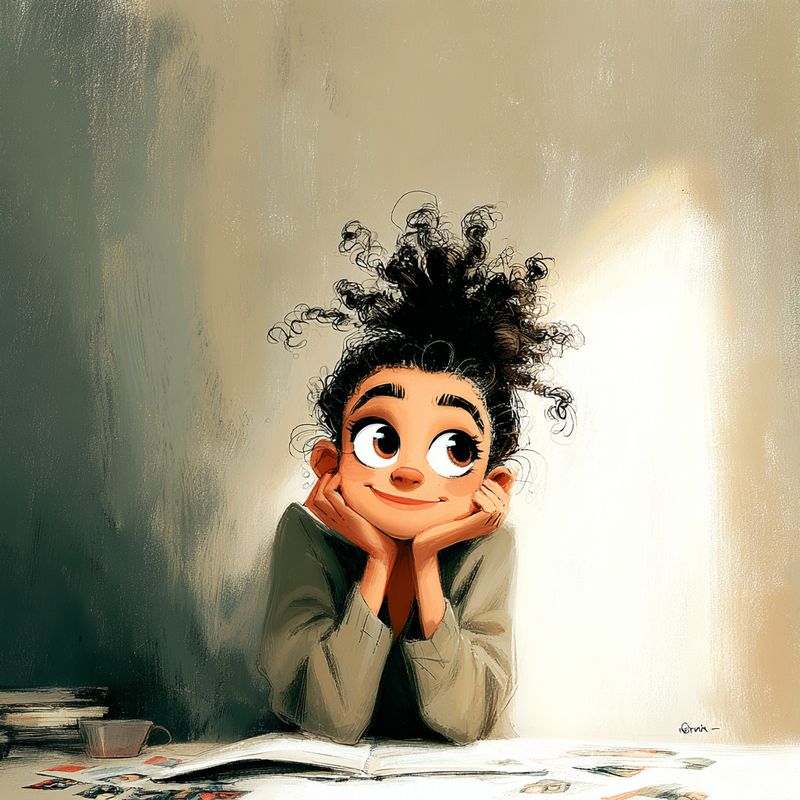
Creative block doesn’t mean you’ve run out of ideas. It means the gap between where you are and where you think you need to be has grown too wide to jump.
The fix isn’t inspiration. It isn’t a better playlist or a cleaner desk. Research consistently shows that creative block breakthrough comes from shrinking the first step until resistance becomes structurally impossible. One sentence. One brushstroke. Two minutes. That’s the entry point. And the science behind why this works is more compelling than most productivity advice gives it credit for.
Why Does Creative Block Feel Physically Impossible to Overcome?
Creative block isn’t laziness, and it isn’t a personality flaw. Cognitive scientists frame it as an activation energy problem: the mental cost of starting feels higher than the available motivation can cover. That gap is where creative professionals get stuck, often for weeks.
About 40% of adults report struggling with creative blocks that interfere with their work and personal projects, according to general estimates drawn from meta-analyses on procrastination and creative anxiety (various studies, 2015-2020). That’s not a niche problem. It’s close to a majority experience.
The cruel irony is that most common advice makes the problem worse. “Just sit down and write.” “Push through it.” “Set a two-hour block.” All of that framing assumes motivation is the missing ingredient. It isn’t. The missing ingredient is a first action small enough to require no motivation at all.
In Redirect: The Surprising New Science of Psychological Change (2014), cognitive scientist Art Markman argued that when you feel stuck, the best approach is to lower the activation energy required to begin, because small, concrete actions rebuild momentum and reconnect you with your motivation. The brain doesn’t need inspiration to start. It needs a ramp, not a cliff.
What Does Neuroscience Say About Tiny Creative Wins?
The reason tiny creative projects work isn’t just psychological comfort. There’s a neurological mechanism driving it.
Neuroscientist Andrew Huberman, in his Huberman Lab Podcast episodes on motivation and neural circuits (2021-2023), explained that the nervous system requires a dopamine-triggering event to maintain motivation toward a goal. Crucially, small wins activate the neural circuits that sustain motivation for larger goals. The dopamine release isn’t reserved for finishing a novel. It fires when you complete the first sentence.
This matters enormously for getting unstuck creatively. Most blocked creatives are waiting for a large motivational surge before they’ll start. But that surge doesn’t arrive on demand. Instead, it’s manufactured by action, specifically by completing something, even something absurdly small.
Research from behavioral activation studies supports this directly. Starting with a task that takes less than five minutes increases follow-through by approximately 65% compared to goals without a clear micro-step (behavioral activation and habit formation studies, 2018-2021). The five-minute version of your creative work isn’t a compromise. It’s the neurological ignition switch.
How Does BJ Fogg’s Tiny Habits Framework Apply to Creative Work?
BJ Fogg’s research at Stanford’s Behavior Design Lab gives the most practical structure for understanding how to start creative work when resistance is high.
In Tiny Habits: The Small Changes That Create Remarkable Results (2020), Fogg wrote directly: “Tiny habits are a practical way to rewire your brain. When you make a behavior tiny, you’re more likely to do it, and when you do it consistently, it becomes automatic.”
Fogg’s model also challenges the cultural obsession with willpower. Drawing on his Stanford Behavior Design Lab research, Fogg argued that the solution is to stop aspiring to willpower entirely, and instead design your environment and break behaviors into tiny steps so that motivation isn’t required.
Applied to creative work, this reframes the entire problem. The goal isn’t to write a chapter. The goal is to write one sentence, attach it to an existing habit (making coffee, opening your laptop), and let the neural reward of completion do the rest.
Fogg’s research shows that individuals who break large goals into tasks under two minutes demonstrate 80% higher completion rates compared to those attempting full projects at once (Fogg Behavior Model research and Tiny Habits studies, Stanford, 2019-2020). That’s not a marginal improvement. It’s a structural redesign of how creative work gets initiated.
What Is the One-Sentence Rule and How Do You Actually Use It?
The one-sentence rule is exactly what it sounds like: your only obligation when you sit down to create is to produce one sentence, one line, or one mark. Not a paragraph. Not a section. One.
This is the micro-creation for blocked artists approach in its purest form. It works because it redefines success at the session level. You cannot fail to write one sentence. The psychological weight of “I need to make progress on my project” dissolves when the bar is that low.
Here’s the practical version:
- Writers: Open the document. Type one sentence about anything related to the project. Stop if you want to.
- Designers: Open the file. Place one element. Adjust one color. Stop if you want to.
- Musicians: Open the session. Play one chord progression. Record it or don’t. Stop if you want to.
The “stop if you want to” clause is not a loophole. It’s the point. Removing the pressure to continue means the brain doesn’t treat starting as a commitment to an overwhelming task. And in practice, most people don’t stop after one sentence. Momentum builds naturally once activation energy is overcome.
Organizational psychologist Adam Grant, writing in Think Again: The Power of Knowing What You Don’t Know (2021) and drawing on Wharton research on productive procrastination, made an adjacent argument: starting before you feel ready is how you overcome creative paralysis, and procrastination on the execution phase (rather than the ideation phase) can actually be productive. The one-sentence rule sidesteps the execution barrier entirely by making execution almost laughably accessible.
Why Abandoning the “Finished Piece” Mindset Is the Real Creative Block Breakthrough
Here’s the contrarian take: the finished piece is the problem.
When creative professionals sit down with the mental model of “I need to produce something complete and good,” they’ve already lost. The brain registers the distance between nothing and finished-and-good as enormous. It responds with avoidance.
Getting unstuck creatively requires a different framing entirely: you’re not here to finish anything. You’re here to generate raw material. One sentence isn’t chapter one. It’s evidence that you can still make things.
This shift has measurable behavioral consequences. Research on behavioral activation consistently shows that action changes emotional state more reliably than waiting for emotional state to change before acting (behavioral psychology literature, multiple sources). Blocked creatives who wait to feel inspired are working against the direction of causality. Action generates the feeling. The feeling doesn’t generate the action.
This is why professional writers, composers, and designers almost universally report that their best work didn’t arrive when they felt inspired. It arrived after they showed up anyway, often after a terrible first draft or a throwaway sketch that nobody ever saw.
That throwaway sketch is the point. Tiny creative projects aren’t lesser versions of real work. They’re the mechanism by which real work becomes possible.
FAQ
Does the one-sentence rule work for all creative disciplines, not just writing?
Yes. The underlying mechanism is neurological, not format-specific. The rule is about reducing activation energy to the point where starting requires no motivation. For visual artists, that might mean one pencil mark or one layer adjustment. For musicians, one recorded loop. For designers, one frame or one typeface choice. The format changes; the psychology doesn’t.
How is creative block different from procrastination?
They overlap significantly, but creative block tends to involve an identity component that standard procrastination doesn’t. Blocked creatives often believe something is wrong with them specifically, not just with their workflow. Research on creative anxiety suggests this self-referential dimension raises activation energy even higher than task-based procrastination does. The one-sentence rule addresses both: it lowers the task barrier and quietly disproves the identity story by generating evidence of creative capacity.
Won’t starting with just one sentence result in low-quality creative output?
Quality is irrelevant at the ignition stage. The one-sentence rule doesn’t set the standard for your work; it sets the standard for showing up. Once momentum builds after the first sentence or two, quality becomes something you can pursue. Most professional writers and creatives will confirm that editing a rough draft is significantly easier than generating nothing at all.
How does this connect to apps or tools designed to reduce procrastination?
Procrastination tools work best when they complement a behavioral strategy rather than replace one. An app like Time Is Luck can reduce decision fatigue around when and how to start, but the micro-creation strategy determines what starting actually looks like. Pairing a structural accountability tool with a defined tiny first action (one sentence, two minutes) targets both the environmental and motivational dimensions of creative block simultaneously.
What if one sentence doesn’t generate any momentum and I still feel stuck?
That’s useful information. If the one-sentence attempt reveals genuine creative stagnation rather than activation energy problems, the issue may be upstream: unclear project direction, decision fatigue about creative choices, or simple cognitive depletion. In those cases, the research on creative recovery points toward constraint-based exercises (write one sentence with a specific restriction, like using no adjectives) rather than open-ended generation. Constraints reduce the decision surface and make the first action even smaller.