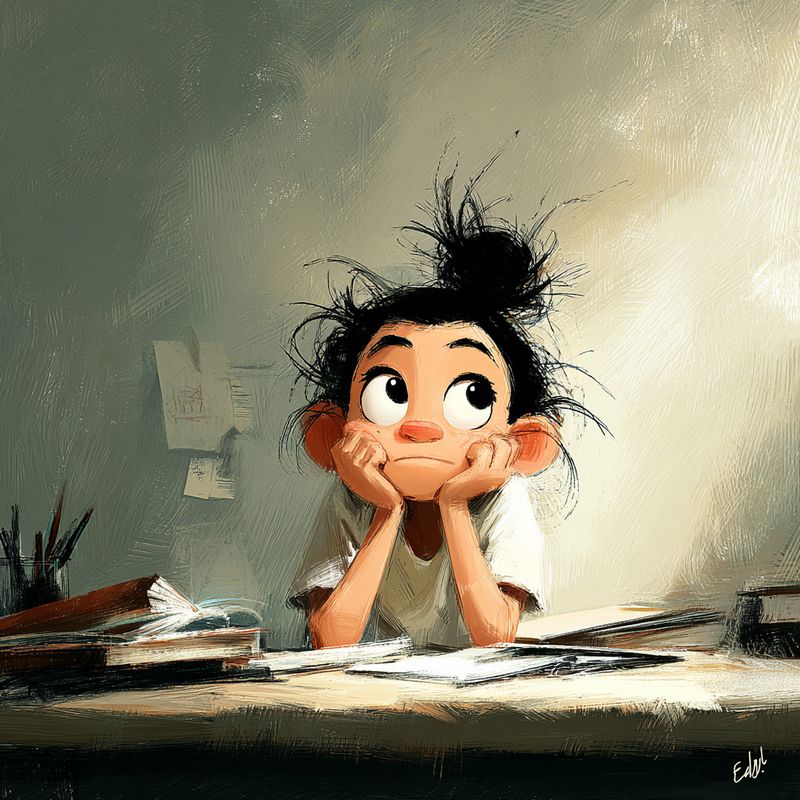
Creative block isn’t a character flaw. It’s a neurological trap, and the advice to “just push through it” is almost perfectly designed to make it worse. The real creative block breakthrough doesn’t come from more willpower. It comes from making the first action so small that your brain’s resistance circuits never even wake up.
Micro-creation, starting with projects or tasks that feel almost embarrassingly tiny, is one of the most research-supported strategies for getting unstuck creatively. Not because it tricks you into productivity, but because it works with how motivation actually builds in the brain.
Why Does Creative Block Feel So Physically Impossible?
Creative block isn’t purely psychological. It has a measurable neurological basis, and understanding that changes how you approach it.
When you face a task that feels high-stakes, uncertain, or overwhelming, your brain’s threat-detection systems activate before your creative circuits get a chance. The result feels like a wall. Not laziness. Not lack of talent. A genuine freeze response.
According to research paraphrased from neuroscientist Andrew Huberman’s Huberman Lab Podcast series on motivation and procrastination (2021-2023), starting with very small, achievable tasks can activate the neural circuits associated with motivation and momentum, making it easier to overcome initial resistance. The key word there is “activate.” Motivation isn’t something you wait for. It’s something the brain generates in response to action, specifically small, completable actions.
Approximately 20% of adults identify as chronic procrastinators, and creative blocks are frequently cited as a barrier to starting work, according to Piers Steel’s meta-analysis on procrastination published in Psychological Bulletin (2007). For creative professionals, that number likely skews higher, because creative work carries an extra layer of identity threat. If you make something bad, it feels like evidence you’re not a real artist.
That identity pressure is exactly why standard advice (set a timer, just start, find your discipline) fails so many people. It doesn’t lower the stakes. It just adds guilt to an already frozen system.
What Does Behavioral Science Say About How to Start Creative Work?
BJ Fogg, the Stanford behavioral scientist behind the Behavior Design Lab, has spent decades studying why people do or don’t follow through on intentions. His findings apply directly to how to start creative work when resistance is high.
In his 2020 book Tiny Habits: The Small Changes That Create Remarkable Results, Fogg states: “If you want to change behavior, you should focus on making it easy to do. The easier a behavior is, the more likely you’ll do it.”
He extends this into a design principle: start by designing for success with tiny behaviors, making the behavior so small that you can’t fail (Tiny Habits, 2020). For creative work, this means your starting unit shouldn’t be “write a chapter” or “finish the illustration.” It should be “open the document” or “put one color on the canvas.”
This isn’t a motivational metaphor. It’s behavioral architecture. Research from Fogg’s Stanford Behavior Design Lab (2009-2020) shows that behaviors become automatic after an average of 66 days, but initial tiny actions create measurable momentum within just 2 to 3 days. You don’t have to wait weeks to feel the shift.
The practical implication for blocked creatives is significant. You’re not building willpower. You’re building a neural pathway that associates starting with reward rather than threat.
How Do Tiny Creative Projects Actually Unlock Flow?
There’s a counterintuitive finding buried in creativity research: constraints don’t limit creative output. They tend to increase it.
Research on creative constraints from Adam Grant at Wharton Business School (2016) found that creative professionals who use constraint-based or limitation-driven approaches report 34% higher completion rates on creative projects. Tiny creative projects are, by definition, constraint-heavy. A one-paragraph story. A single-color sketch. A 30-second melody. The limitation forces the brain to stop searching for the “perfect” version and start solving a concrete, bounded problem.
Cognitive psychologist Art Markman, in research summarized in Redirect: The Surprising New Science of Psychological Change (2014), argues that one of the best ways to overcome creative blocks is to lower the stakes and remove perfectionism from the initial creation process. Micro-creation does exactly this structurally, not just attitudinally. When a project is small enough, perfectionism has almost nothing to grip onto.
This is the real mechanism behind micro-creation for blocked artists. It’s not about lowering your standards. It’s about creating conditions where your creative brain can operate before your inner critic has enough material to work with.
What Do Micro-Creation Practices Actually Look Like?
The concept is straightforward. The application needs to be specific, or it stays abstract and unused.
For writers experiencing a creative block breakthrough, micro-creation might mean writing one sentence. Not a paragraph. Not a scene. One sentence, ideally a bad one, because the point is completion, not quality. Some writers keep a “terrible sentences” document specifically for this purpose. The act of finishing something, even something intentionally rough, re-engages the motivation loop.
For visual artists and designers getting unstuck creatively, the equivalent might be a five-minute thumbnail sketch with no expectation of development, or opening a design file and changing one color. The physical act of handling the tools matters. It sends a signal to the brain that the work is happening, which tends to pull more work behind it.
For musicians or audio creatives, a single chord progression hummed into a voice memo counts. A four-bar loop. A title for a song that doesn’t exist yet.
Angela Duckworth, in her 2016 book Grit: The Power of Passion and Perseverance, frames this kind of action usefully: grit is about passion and perseverance for long-term goals, but it starts with taking the first small step, however imperfect. The imperfection isn’t the obstacle. It’s the point. You’re training your system to associate starting with completion, not with judgment.
The honest contrarian take here: most productivity advice aimed at creatives is secretly about self-discipline theater. It rewards people who were already going to push through. Micro-creation is different because it works for people who genuinely cannot start, not because they’re weak, but because their threat response is calibrated high. That’s not a flaw to fix. It’s a system to route around.
How Do You Build a Micro-Creation Habit That Sticks?
Knowing micro-creation works is different from actually using it when you’re blocked. The implementation layer matters.
The most reliable method draws directly from Fogg’s behavior design framework. Attach your tiny creative action to an existing behavior you already do every day. Coffee in hand, open the sketchbook. Sit down at your desk, write one sentence before checking email. The existing behavior acts as a trigger, and the tiny creative action follows without requiring a decision.
Keep the definition of “done” absurdly low. Not “write for 20 minutes” but “write one word.” Not “practice guitar” but “pick up the guitar.” Research from Fogg’s Stanford lab consistently shows that the size of the starting behavior predicts follow-through far better than motivation levels or stated intentions.
Track completion, not quality or quantity. A simple checkbox noting that you opened the file today builds a streak that has its own momentum. The streak becomes a micro-reward, which feeds the motivation circuit that Huberman’s work identifies as central to overcoming initial creative resistance.
Over time, these micro-sessions naturally expand. Most people find that once they’ve started, the 30-second sketch becomes 20 minutes without any effort. But the system doesn’t depend on that happening. Even on the days it doesn’t, the habit fires, and the creative block loses a little of its authority.
FAQ
Is micro-creation just procrastination with extra steps?
No, and the distinction matters. Procrastination involves avoiding the task entirely, often by substituting something more comfortable. Micro-creation involves engaging directly with the creative work, just at a scale too small to trigger resistance. The behavioral outcome is the opposite: you’re building approach behavior toward the work, not avoidance. Research from Fogg’s Stanford Behavior Design Lab shows measurable momentum building within 2 to 3 days of tiny consistent actions.
How small is small enough for a micro-creative task?
Small enough that you feel slightly ridiculous calling it a task. If you can fail at it, it’s probably still too big. The functional test from BJ Fogg’s Tiny Habits framework: design the behavior so small that you can’t fail. For most creatives, that means one sentence, one mark, one note, or simply opening the tool you work with.
What if I finish the micro-task and still don’t want to continue?
That’s a completely valid outcome, and the system accounts for it. The goal of micro-creation isn’t to trick yourself into a long session. It’s to maintain the neural association between starting and completing. Some days the momentum builds and you work for an hour. Other days you close the document after one sentence. Both outcomes count. The habit fires either way, which is what keeps creative block from calcifying into a permanent identity.
Does this approach work for deadline-driven creative work?
Yes, and it may work better under deadline pressure because the stakes feel higher and standard willpower approaches fail harder. When deadlines activate threat responses, micro-creation gives the brain a way to engage without triggering the full freeze response. Starting with a tiny, unambiguously completable action (writing the document title, sketching the rough layout) reduces the perceived size of the task and helps the brain shift from threat mode to problem-solving mode.
How is micro-creation different from the Pomodoro Technique or timed sprints?
Timed techniques still require you to commit to a block of focused work, which can itself feel like a barrier when creative block is severe. Micro-creation removes the time commitment entirely. There’s no duration. There’s only a single, defined action. For people who are significantly blocked, this difference is meaningful: “work for 25 minutes” and “write one sentence” activate very different responses in the brain’s threat-assessment systems.