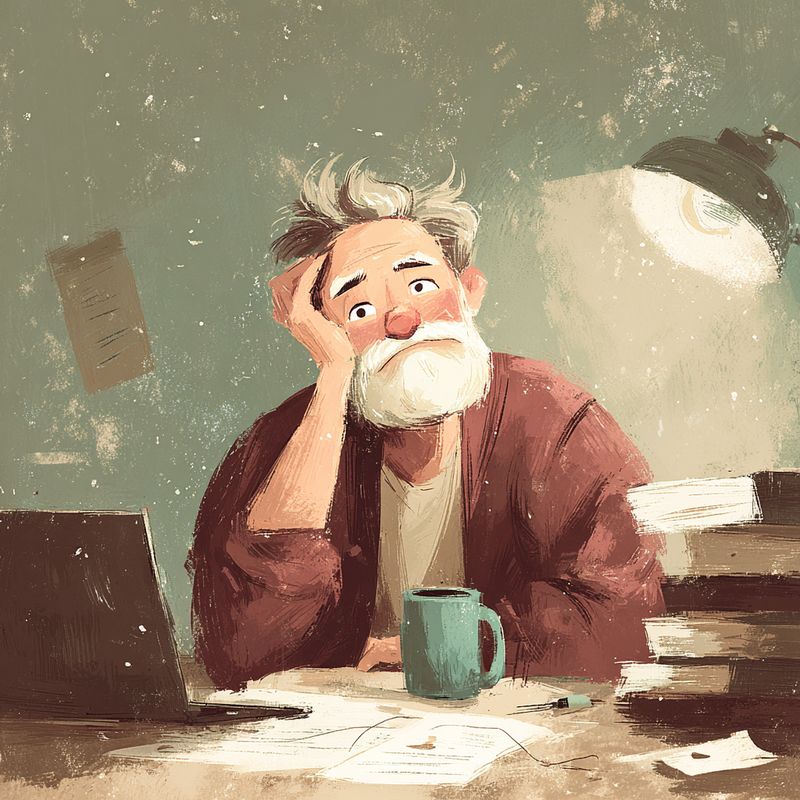
Working alone doesn’t make you lazy. It removes the neurological scaffolding your brain relies on to stay on task.
Remote work procrastination is one of the most misunderstood problems facing freelancers and self-employed workers. Research consistently shows that working alone procrastination rates are significantly higher than in office settings, and the reason isn’t willpower or discipline. It’s biology. When nobody is watching you work, your brain loses the ambient social pressure it has evolved to use as a motivational trigger. The good news: once you understand why this happens, you can build systems to replicate what the office was quietly doing for you all along.
Why Does Working Alone Make Procrastination Worse?
The short answer is that your brain treats social observation as a productivity signal. In office environments, ambient accountability operates constantly and invisibly: colleagues walking past, a manager who might glance over, the visible busyness of other people. Remove that environment, and the brain’s motivation circuitry loses a key input.
According to research from the American Psychological Association workplace productivity surveys, around 50% of knowledge workers report procrastinating regularly. But here’s the sharper statistic: remote workers report procrastination rates approximately 29% higher than their office-based counterparts, according to Stanford Work From Home Research and APA studies on remote work behavior published between 2020 and 2021. That gap isn’t explained by personality. It’s explained by environment.
Neuroscientist Dean Burnett, writing in his 2018 book The Happy Brain and in his BBC Science Focus column, argues that our brains are not wired to work effectively in isolation. We’re social creatures, and the absence of social pressure can paradoxically make us less motivated. The keyword there is “paradoxically.” Most people assume that freedom from oversight would increase output. The opposite is frequently true.
The mechanism is rooted in how social evaluation activates the brain’s threat-and-reward systems. When others can observe our performance, we experience a low-level but consistent arousal that keeps us oriented toward tasks. Without it, that arousal fades, and the path of least resistance becomes very attractive very quickly.
Is Remote Work Procrastination a Character Flaw or a Brain Response?
This is the reframe that changes everything: procrastination isn’t a moral failing. It’s a coping mechanism your nervous system developed for a reason.
Dr. Judson Brewer, a neuroscientist at Brown University and author of The Craving Mind (2017), has studied procrastination extensively through the lens of habit and emotion regulation. His research concludes that procrastination is fundamentally a way of managing negative emotions rather than a productivity problem. We avoid tasks not because we’re idle, but because those tasks trigger discomfort: anxiety about failure, uncertainty about where to start, or the low-grade dread of a project that feels too large to approach.
Brewer’s Brown University mindfulness and procrastination studies also show that the habit loop of procrastination becomes stronger when there are fewer external accountability structures. In other words, the freelancer isolation procrastination cycle isn’t just harder to break than office-based procrastination. It actively reinforces itself over time.
This is worth sitting with. If you’ve spent years working alone and feeling increasingly prone to last-minute scrambles, the pattern isn’t evidence of personal weakness. It’s evidence of a feedback loop that the absence of social structure has been quietly strengthening.
For what it’s worth, there’s a contrarian argument worth acknowledging. In his 2016 book Originals and during a widely-shared TED Talk, organizational psychologist Adam Grant noted that “procrastination may be the enemy of productivity, but it can be the friend of creativity.” His research suggested that when you procrastinate, you’re more likely to think divergently, making unexpected connections and seeing remote associations that immediate action forecloses. So moderate, strategic delay isn’t always the villain. Chronic, anxiety-driven avoidance is a different story entirely.
What Happens to Your Brain When No One Is Watching You Work?
The phrase “no one watching me work” captures something neurologically real. Human beings have what researchers call social facilitation responses: performance changes that occur specifically because others are present. The phenomenon was first documented by Norman Triplett in 1898 and has been studied rigorously ever since.
When social observation disappears entirely, as it does for most freelancers working from home, several things happen simultaneously. The prefrontal cortex receives less activation from social-evaluative cues. Dopaminergic reward signals become harder to trigger through task completion alone. And the default mode network, associated with mind-wandering and self-referential thought, becomes easier to drift into.
Freelancer isolation procrastination is therefore less about lacking motivation and more about lacking the right triggers. The office wasn’t just a place to work. It was a continuous stream of low-level social accountability cues that most workers never consciously noticed until those cues disappeared.
Psychologist Piers Steel’s landmark 2007 meta-analysis, published in Psychological Bulletin, found that approximately 20% of the general population identifies as chronic procrastinators. That baseline matters because it tells us procrastination exists everywhere. Remote work doesn’t create procrastinators from scratch. It amplifies existing tendencies by stripping away the environmental structures that kept those tendencies in check.
How Can You Build Deadlines That Actually Work Without a Boss?
The practical answer is to manufacture the accountability structures that remote work removed. Not through willpower-based advice (just start, set a timer) but through deliberate environmental and social design.
Here are the approaches with the strongest research support:
External commitment devices. Tell someone your deadline. Publicly. Commitment and consistency research, including the foundational work of Robert Cialdini in Influence (1984), shows that people are significantly more likely to follow through on goals stated to others than goals held privately. This is why accountability partnerships work: they recreate social observation in a minimal but neurologically meaningful form.
Body doubling. Working in the physical or virtual presence of another person, even someone doing entirely different work, activates the same social facilitation responses that offices provided. Virtual co-working sessions, focus rooms on platforms like Focusmate, and co-working spaces all function through this mechanism.
Visible deadlines. Research on implementation intentions, pioneered by psychologist Peter Gollwitzer in studies published in American Psychologist (1999), shows that specifying when, where, and how you’ll complete a task dramatically increases follow-through. A deadline written in a calendar you actually open daily functions differently from a vague mental note. The visibility is doing real cognitive work.
Structured check-ins with communities. Apps and communities that provide regular progress check-ins replicate the ambient social accountability of office environments. The goal isn’t surveillance. It’s the gentle, continuous awareness that someone knows what you said you’d do.
One honest caveat: none of these systems work if you design them and then abandon them when inconvenient. The point is consistent exposure to the accountability trigger, not occasional use when you’re already behind.
How Do You Break the Last-Minute Cycle Once It’s Already Entrenched?
The last-minute trap becomes self-reinforcing partly because it sometimes works. You scramble, you finish, you survive. The brain registers this as evidence that urgency is a valid workflow strategy, and the habit loop tightens.
Breaking it requires disrupting the emotional reward, not just the timeline. Dr. Brewer’s mindfulness-based research at Brown University suggests that becoming curious about the feeling that precedes avoidance, rather than immediately acting on it, weakens the habit loop over time. Noticing “I’m avoiding this because it feels overwhelming” is genuinely different from simply feeling overwhelmed and reaching for distraction.
Practically, breaking the cycle also means making the cost of delay more visible before the last minute arrives. Time-tracking tools, progress logs, and regular self-reviews all create the kind of feedback that managers and colleagues would otherwise provide naturally. You’re not replacing human accountability entirely. You’re creating enough of a signal that your brain registers progress (or the lack of it) before a deadline makes the decision for you.
Remote work procrastination isn’t inevitable. It’s a predictable response to a specific environmental change, and specific environmental changes can address it.
FAQ
Why is procrastination worse when working from home than in an office? Remote workers lose the ambient social accountability that offices provide continuously: visible colleagues, potential observation, and the general social arousal of being around other working people. Research published through Stanford’s Work From Home studies and APA workplace surveys found remote workers report approximately 29% higher procrastination rates than office-based workers. This gap reflects environmental differences, not personal character.
Is procrastination a sign of laziness or something else? Neuroscientist Judson Brewer’s research at Brown University characterises procrastination as an emotion management strategy rather than a productivity failure. People avoid tasks primarily to escape discomfort: anxiety, uncertainty, or the overwhelm of large projects. This reframe matters because it shifts the solution from willpower to addressing the emotional triggers that make avoidance feel appealing.
What is “body doubling” and does it actually help with working alone procrastination? Body doubling means working in the presence of another person, physically or virtually, even if they’re doing completely different work. It activates social facilitation responses that remote work removes. Virtual co-working sessions and focus communities replicate the ambient accountability of office environments and have shown consistent effectiveness in helping remote workers maintain task focus.
How do I make deadlines feel real when I’m self-employed? The most research-supported approach is combining public commitment with visible tracking. Tell someone specific about your deadline, write it somewhere you look daily, and build in a midpoint check-in so the deadline isn’t the first moment you assess your progress. Psychologist Peter Gollwitzer’s implementation intention research, published in American Psychologist, shows that specificity about when and how you’ll act significantly increases follow-through.
Can procrastination ever be useful for creative freelance work? In limited circumstances, yes. Adam Grant’s research in Originals (2016) found that moderate procrastination can support divergent thinking and creative connection-making. The distinction that matters is between intentional incubation, allowing ideas to develop before executing, and anxiety-driven avoidance that delays action indefinitely. The first can serve creative work; the second consistently undermines it.