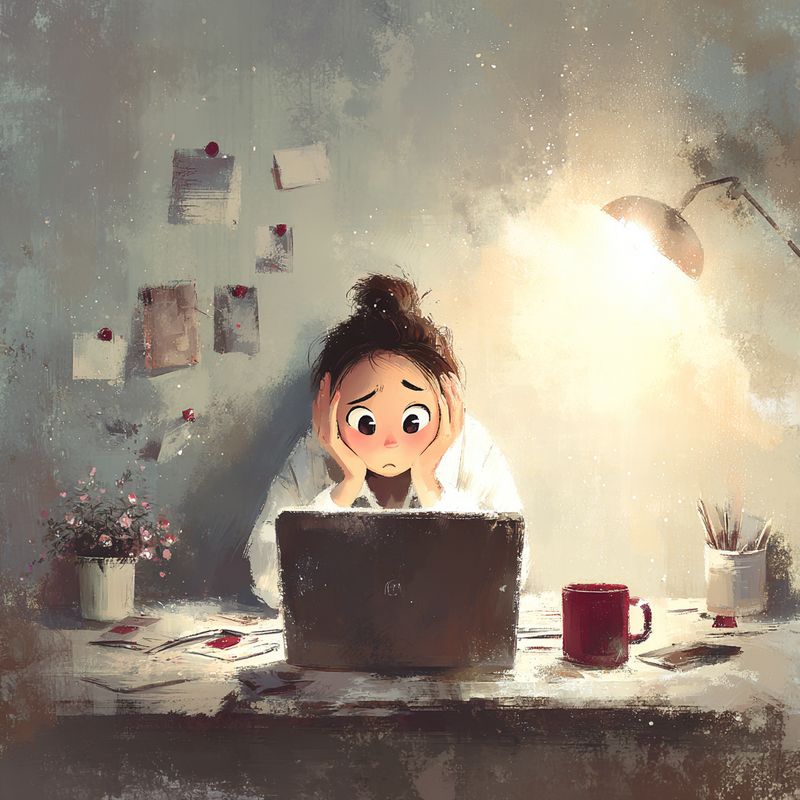
Procrastination feels like a confession. Like admitting something unflattering about your character. But the science tells a very different story.
No, procrastination isn’t weakness. Research consistently shows it’s a neurobiological challenge rooted in emotion regulation, not a procrastination character flaw or a failure of discipline. Around 20-25% of the general population identifies as a chronic procrastinator (Steel, Psychological Bulletin, 2007), and 50% of people experience procrastination-related problems in daily life (Pychyl & Sirois, Emotion-Regulating Technology, 2016). That’s not a moral epidemic. That’s a widespread human experience with real, brain-based causes.
Is procrastination about discipline, or something else entirely?
Most productivity advice assumes procrastination is about discipline. If you just tried harder, cared more, or set a better timer, you’d get started. This framing is not only unhelpful, it’s factually wrong.
Research by Dianne Tice and Ellen Bratslavsky, published in the Journal of Personality and Social Psychology in 2000, found that procrastination is associated with emotion regulation difficulties rather than poor time management skills. The brain isn’t failing to manage your schedule. It’s trying to manage how you feel.
When a task triggers anxiety, boredom, self-doubt, or frustration, the brain steers toward relief. Avoidance feels better in the moment. The task doesn’t get done, but the discomfort temporarily lifts.
That’s not laziness. That’s a very logical, if counterproductive, short-term coping response.
Organisational psychologist Adam Grant, drawing on Wharton research into emotion regulation, has argued that procrastination may be an emotion regulation problem, not a productivity problem. The distinction matters enormously. Because if it’s a productivity problem, the solution is better scheduling. If it’s an emotion regulation problem, the solution is something closer to self-awareness and compassion.
What’s actually happening in the brain when you procrastinate?
The short answer: your brain’s threat-detection system is winning a battle against your prefrontal cortex.
Neuroscientist and psychiatrist Judson Brewer, whose work at Brown University examines the intersection of mindfulness and habitual behaviour, explains in his book The Craving Mind (2017) that procrastination is a way of managing negative emotions in the short term, even though it creates more stress in the long term. The cycle is habit-based. Discomfort triggers avoidance, avoidance brings relief, and the brain files that away as a successful strategy. Next time the task appears, the cycle repeats.
Neuroscientist Dean Burnett, writing in The Happy Brain (2018) and in his BBC Science Focus columns, puts it plainly: procrastination isn’t a character flaw or a sign of laziness; it’s a complex brain function involving emotion regulation and reward processing. The brain’s reward system is simply more responsive to immediate relief than to abstract future benefits like a finished project or a met deadline.
Jonathan Schooler, whose research on mind-wandering was published in Consciousness and Cognition, has found that mind-wandering and procrastination are related to how attention and focus are neurologically regulated, not personal weakness. Your attention system wasn’t designed for sustained focus on tasks that feel threatening or unrewarding. That’s not a character failing. That’s biology.
Why do some people procrastinate more than others?
If procrastination is neurobiological, why does it hit some people far harder? The honest answer is that several overlapping factors increase vulnerability.
Perfectionism is one of the biggest. When the stakes of doing something feel tied to your self-worth, starting becomes genuinely threatening. The task isn’t just a task; it’s a referendum on your competence.
ADHD is another major factor. Attention regulation difficulties, which Schooler’s research connects to procrastination, are central to ADHD. Many people who struggle severely with procrastination are later diagnosed with ADHD and find that framing clarifying: the problem wasn’t character, it was neurology.
Anxiety disorders, depression, and trauma histories also increase procrastination. When the nervous system is already running hot, adding the threat of a difficult task tips the balance toward avoidance faster.
None of this means nothing can be done. It means that asking “am I weak?” is the wrong question entirely.
Does procrastination ever actually help?
Here’s the contrarian take: sometimes, yes.
Adam Grant’s Wharton research on what he calls “productive procrastination” found that waiting until the last minute can improve creativity and reduce over-editing. When you delay starting a creative task, your brain continues processing it in the background. Some of the incubation period is genuinely useful.
This doesn’t mean chronic avoidance is fine. But it does mean that not all procrastination is equal. There’s a meaningful difference between strategic delay (giving an idea time to breathe) and avoidance driven by fear or overwhelm.
Recognising that distinction matters. Beating yourself up for every moment you don’t immediately attack a task misunderstands how the brain actually generates good work.
How can you actually break the procrastination cycle?
Given that procrastination is an emotion regulation problem, willpower-based advice (just start, set a timer, use a to-do list) fails people because it targets the wrong system. Here’s what the research supports instead.
Mindfulness over willpower. Judson Brewer’s Brown University research on mindfulness and procrastination found that the key to breaking procrastination isn’t willpower; it’s awareness and self-compassion. Specifically, noticing the discomfort that precedes avoidance without immediately acting on it. When you can observe “I’m feeling anxious about this task” rather than reflexively fleeing it, the grip of the avoidance habit weakens.
Self-compassion, not self-criticism. This one surprises people. Research by Kristin Neff and others has repeatedly shown that self-criticism after procrastinating makes future procrastination more likely, not less. Shame increases the emotional load the task carries. Self-compassion reduces it. Forgiving yourself for past avoidance is one of the most evidence-supported ways to actually get started next time.
Reduce the emotional stakes of starting. This is why techniques like the “two-minute rule” or “just open the document” work when they do. They’re not productivity hacks. They’re threat-reduction strategies. A smaller starting action carries less emotional weight, so the brain’s avoidance system is less likely to activate.
Address the underlying emotion directly. If a task makes you feel inadequate, bored, or overwhelmed, naming that feeling reduces its power. Labelling emotions, a process neuroscientists call “affect labelling,” dampens activity in the amygdala. It’s not magic. But it genuinely helps.
“The key to breaking procrastination isn’t willpower. It’s awareness and self-compassion.” Judson Brewer, Brown University research on mindfulness and procrastination.
What actually changes when you stop calling it weakness?
The language you use about procrastination shapes how you respond to it.
If procrastination is weakness, the response is shame and self-punishment, which research shows makes the problem worse. If procrastination is an emotion regulation challenge, the response can be curiosity and problem-solving.
Is procrastination about discipline? Only in the very limited sense that developing emotional awareness and regulation is a skill that takes practice. It’s not about gritting your teeth harder. It’s about building a different relationship with the discomfort that precedes difficult work.
The 20-25% of people who are chronic procrastinators (Steel, 2007) aren’t a population of weak-willed individuals. They’re people whose brains are particularly sensitive to emotional threat, particularly responsive to short-term relief, or both. That’s a solvable problem. But only if you start by asking the right questions.
FAQ
Is procrastination a character flaw?
No. Research from neuroscientists including Dean Burnett (The Happy Brain, 2018) and psychologists including Pychyl and Sirois consistently frames procrastination as an emotion regulation challenge, not a character flaw. It reflects how the brain manages discomfort, not a moral failing.
Am I weak if I procrastinate?
No. Asking “am I weak?” misidentifies the problem. Procrastination is linked to how the brain’s threat-detection and reward systems interact, not to personal willpower or strength. Around 50% of people experience procrastination problems in daily life (Pychyl & Sirois, 2016), which makes it a near-universal human challenge, not a personal deficiency.
Is procrastination about discipline?
Not primarily. Tice and Bratslavsky’s research in the Journal of Personality and Social Psychology (2000) found procrastination is associated with emotion regulation difficulties rather than poor discipline or time management. Better scheduling won’t fix a problem rooted in how the brain responds to emotional discomfort.
Why can’t I just make myself start?
Because the part of the brain resisting the task isn’t the part that responds to logical instructions. When a task triggers anxiety, boredom, or self-doubt, the brain’s avoidance response activates faster than conscious intention can override it. Mindfulness and self-compassion, rather than willpower, are the evidence-based approaches that address this.
Does procrastination get worse the longer you avoid something?
Generally, yes. Judson Brewer’s research at Brown University explains that avoidance is a reinforced habit: the relief you feel when you avoid the task teaches your brain that avoidance works. Each repetition of that cycle makes the habit stronger. Interrupting the cycle early, through awareness rather than self-criticism, is more effective than waiting until the pressure is extreme.