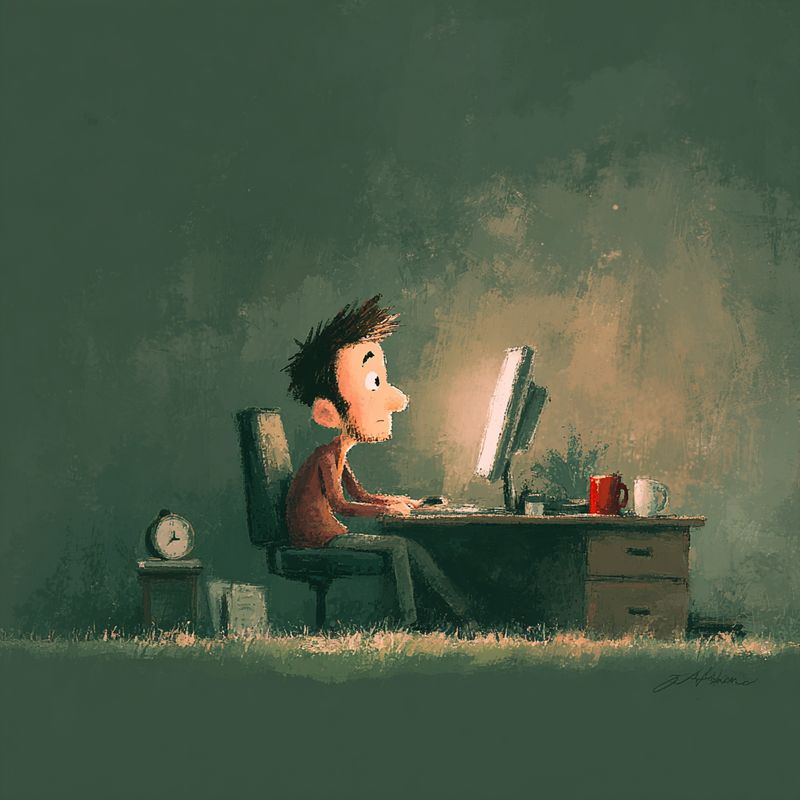
Your phone buzzes. It’s the group chat. Everyone’s heading out, and they want to know if you’re coming. Your homework sits open on the desk. This isn’t a willpower problem. It’s neuroscience.
Homework avoidance when friends are calling isn’t a character flaw. Research consistently shows that the pull toward social connection is one of the most powerful forces in adolescent psychology, and your brain is literally wired to prioritize it. According to a 2007 analysis published in Psychological Bulletin, approximately 50% of students engage in procrastination, with 25% experiencing chronic procrastination issues (Steel, 2007). The reasons go much deeper than laziness. Once you understand what’s actually happening, you can build a system that protects your focus time without sacrificing your friendships or your sanity.
Why Does Peer Pressure Feel So Impossible to Resist?
When your friends are texting and you can’t say no, it’s not weakness. During adolescence, the brain’s social reward circuitry is at peak sensitivity. Belonging feels urgent because, evolutionarily speaking, it was urgent. Rejection from the group carried real consequences for survival. Your nervous system hasn’t gotten the memo that a Saturday study session isn’t actually life or death.
A 2019 General Social Survey on Youth Behavior found that 70% of students report experiencing peer pressure to engage in non-academic activities. That’s not a small group of easily-influenced kids. That’s most students, most of the time.
Parental pressure to study creates its own layer of tension. When adults push hard for academic performance and friends pull equally hard in the opposite direction, students get caught in the middle of two competing demands. The result is often paralysis disguised as procrastination.
Nir Eyal, in his 2019 book Indistractable: How to Control Your Attention and Choose Your Life, reframes this dynamic in a way that’s genuinely useful. As Eyal explains, paraphrasing his core thesis: “The root cause of distraction isn’t usually technology. It’s usually your internal triggers, uncomfortable emotional states that drive you to seek relief.”
The discomfort of being excluded, of missing out, of feeling the social cost of saying no: that’s the internal trigger. Picking up your phone and saying “yeah, I’ll come” is the relief. Understanding that sequence is the first step to changing it.
What Actually Happens to Your Brain When You Switch Between Homework and Texts?
Every time you glance at a notification, even without responding, you pay a cognitive cost that most students massively underestimate.
Gloria Mark, a researcher at UC Irvine who has spent decades studying attention and interruption, found in her studies that it takes an average of 23 minutes and 15 seconds to fully refocus on a task after an interruption (Mark, UC Irvine Studies on Attention Fragmentation, 2006). That’s not a rounding error. That’s nearly half an hour of recovery time for a single distraction from friends.
Mark’s research also found that the average person switches tasks every 3 to 5 minutes in a distracted environment (Gloria Mark, UC Irvine Human-Computer Interaction Research, 2013). In her 2015 book Multitasking in the Digital Age, she further demonstrated, as paraphrased from her findings, that the more frequently people switch between tasks, the more stressed they report feeling and the less productive they become.
Run that math on a typical homework session. Two hours of studying with frequent phone checks might deliver less actual learning than 45 minutes of uninterrupted focus. The distractions from friends aren’t just annoying. They’re structurally destroying the quality of your work.
Cal Newport, in his 2016 book Deep Work: Rules for Focused Success in a Distracted World, captures why this matters beyond just finishing tonight’s assignment:
“The ability to perform deep work is becoming increasingly rare at exactly the time it is becoming increasingly valuable in our economy. As a consequence, the few who cultivate this skill, and then make it the core of their working life, will thrive.”
High school is where that skill gets built, or doesn’t.
How Do You Protect Your Focus Time Without Losing Your Friends?
This is where most advice fails. Telling students to “just put the phone in another room” ignores the social cost of going dark. Your friends notice. They talk. The anxiety of being out of the loop can feel worse than the homework itself, which makes the homework avoidance cycle even harder to break.
A smarter approach borrows from Nir Eyal’s concept of timeboxing your commitments. Rather than leaving your availability permanently ambiguous, you communicate a specific endpoint. “I’m heads down until 7pm, then I’m free” does something that “I can’t, I have homework” doesn’t. It removes the open-ended social uncertainty. Your friends know when you’re back. You know when you’re free. The boundary has a finish line.
This is also the mechanism that makes saying no now create genuine freedom later. When you finish homework without interruption, you’re not carrying guilt into the hangout. You show up present, not half-distracted by the assignment you abandoned. The quality of the social time actually improves.
Newport’s framework in Deep Work is direct on this point:
“To produce at your peak level you need long, uninterrupted stretches of deep work.”
For high school students, “peak level” doesn’t mean groundbreaking research. It means finishing in 45 minutes what would otherwise take three fragmented hours.
What’s the Practical System for Starting Homework When the Group Chat is Active?
Knowing the science helps. Having a repeatable system helps more.
Astronaut Chris Hadfield, in his 2013 book An Astronaut’s Guide to Life on Earth, describes how he managed the psychological pressure of high-stakes environments. As he explains, paraphrasing his approach: “You have to compartmentalize. Focus on what you can control right now and let go of what you can’t.”
The group chat is what you can’t control. Your next 45 minutes are what you can.
Here’s a framework that combines Newport’s deep work principles with Eyal’s internal trigger management:
Step 1: Name the trigger before you act on it. Before you respond to the text or open Instagram, pause for ten seconds and ask: what am I feeling right now? Fear of missing out? Anxiety about the homework itself? Boredom? Naming the trigger breaks the automatic reflex loop.
Step 2: Send one message before you go dark. A single, specific reply: “Working until 7, then I’m free.” This isn’t rejection. It’s a schedule. Most friends respond well to this because it’s respectful of everyone’s time.
Step 3: Use a time block, not a to-do list. Don’t sit down to “do homework.” Sit down to work for a specific duration, say 45 minutes, on a specific task. Time blocks are finite. To-do lists feel infinite. The finite block is far less psychologically threatening to start.
Step 4: Put your phone in a separate room, not face-down on the desk. Research on the “iPhone effect” (Ward et al., 2017, Journal of the Association for Consumer Research) shows that the mere presence of a smartphone on a desk reduces available cognitive capacity, even when it’s off. Out of sight genuinely means better thinking.
Step 5: Honor the end time. When the block ends, stop. Go meet your friends. This is non-negotiable. If you regularly extend the work block, your brain stops believing the finish line exists, and starting the next session becomes harder. The guilt-free hangout is the reward that makes the system sustainable.
Is Homework Avoidance Ever Actually a Sign of a Bigger Problem?
Sometimes, yes. And it’s worth being honest about that.
Homework avoidance that’s rooted in pure peer pressure is a systems problem with a systems solution. But avoidance that stems from genuine anxiety about academic performance, learning difficulties, or mental health pressure operates differently. In those cases, the same techniques help at the margin, but the root issue needs a different kind of attention.
Parental pressure to perform academically, when it feels relentless and disconnected from a student’s actual experience, can make homework feel like a punishment rather than a tool. That emotional framing matters. Students who associate schoolwork with shame or conflict are fighting a much harder internal battle every time they sit down to study.
If the avoidance feels less like social distraction and more like dread, that signal is worth taking seriously. A school counselor, a trusted teacher, or even a conversation with a parent framed around “this is how I’m feeling” rather than “I need less pressure” can shift the dynamic significantly.
For most students, though, the core problem is simpler. The tools above, applied consistently, work.
FAQ
Why can’t I just start my homework even when I know I should?
Because starting requires tolerating discomfort, and your brain is always looking for the easier option. Nir Eyal’s research in Indistractable explains that distraction is almost always driven by internal emotional triggers, not external temptations. The texts from friends give your brain a quick escape from the low-level anxiety of an unfinished task. Recognizing that pattern is the starting point for changing it.
How do I tell my friends I can’t hang out without seeming antisocial?
Specificity is everything. “I can’t, I have homework” sounds like a permanent wall. “I’m working until 7, then I’m free” sounds like a schedule. Give your friends a specific time you’ll be available and follow through on it consistently. Over a few weeks, this actually increases social trust rather than reducing it.
Does listening to music or having the TV on while doing homework help or hurt?
The research is fairly clear on this. Gloria Mark’s studies on attention fragmentation show that background noise with variable information content, like TV dialogue or podcasts, meaningfully degrades focus quality. Instrumental music or ambient sound has a smaller negative effect for many students. For genuinely difficult tasks that require deep work, silence or neutral ambient sound is measurably better.
How long should a homework focus block actually be?
For most high school students, 45 to 90 minutes is the practical ceiling for genuine deep work. Cal Newport’s Deep Work framework recommends building this capacity gradually. Starting with 30-minute uninterrupted blocks and extending over time is more effective than trying to do three hours on day one and burning out.
What if my parents keep interrupting me while I’m trying to study, not just friends?
Parental pressure and parental interruptions are different problems. For interruptions, the same principle applies: communicate a specific window. Tell your parents you’re working for 45 minutes and ask not to be disturbed, the same boundary you’d set with friends. For the broader issue of parental pressure around academics, a direct conversation about your study system, showing them the time blocks and the results, is more effective than asking for less pressure in the abstract.