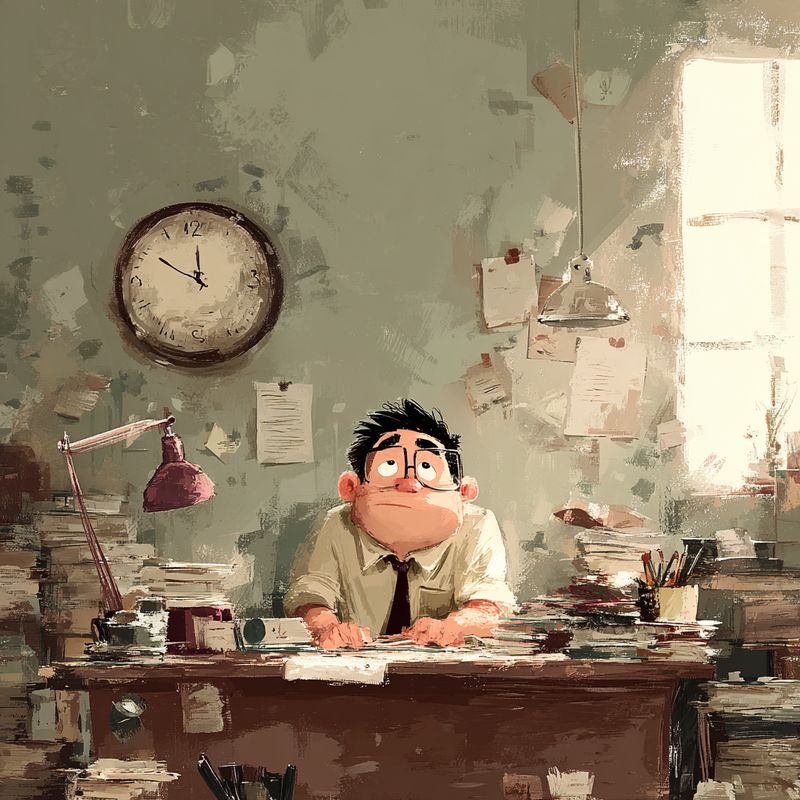
You already know your parents will be angry. You already know the exam matters. And yet, somehow, you still can’t start. That isn’t a character flaw. It’s your brain doing exactly what stressed brains do.
Research consistently shows that procrastination is driven by emotional avoidance, not laziness or defiance. When parental pressure and performance anxiety are high, the brain’s planning systems go offline, and avoidance starts to feel like the only option. Understanding that mechanism changes everything about how you respond to it.
Why Does Parental Pressure Make Procrastination Worse?
Parental pressure doesn’t motivate students the way parents think it will. For many students, the fear of disappointing a parent adds a second layer of threat on top of the exam itself, and the brain responds to both simultaneously. The result is paralysis, not action.
According to research compiled in the 2013 Sirois and Pychyl studies on emotion regulation and procrastination, approximately 80% of students report that fear of negative evaluation from parents or teachers actively increases their procrastination behaviour. That isn’t a small effect. It’s the majority.
The mechanism here is worth understanding. When you anticipate a parent’s anger or disappointment, your nervous system registers that as a social threat. Social rejection and physical danger activate overlapping threat circuits in the brain. Your body doesn’t cleanly separate “dad will be upset” from “something bad is about to happen.”
Stanford neurobiologist Robert Sapolsky, in his lectures on human behavioural biology and in his 2017 book Behave: The Biology of Humans at Our Best and Worst, explains that when we’re stressed, the prefrontal cortex, the part of the brain responsible for planning, prioritising, and impulse control, becomes significantly less active. The part of the brain you need most to start a difficult task is the first part to go quiet under pressure.
So the fear of parents getting mad doesn’t sharpen your focus. It literally reduces your brain’s capacity to begin.
What Actually Happens in Your Brain During Homework Avoidance?
Homework avoidance isn’t a decision. It’s a stress response that gets misread as laziness by almost everyone, including the student experiencing it.
Sapolsky’s broader research, detailed in Why Zebras Don’t Get Ulcers (2004), draws a clear line between chronic stress and cognitive shutdown. When the body’s stress hormones, particularly cortisol, stay elevated, they suppress the prefrontal cortex’s ability to execute goal-directed behaviour. You sit at the desk. You open the textbook. Nothing happens. That’s not weakness. That’s cortisol.
Research on dispositional procrastination published in 2010 found that students who procrastinate show significantly higher cortisol levels during exam periods compared to students who don’t. The procrastination isn’t relieving the stress. It’s compounding it, creating a cycle where avoidance keeps cortisol elevated, which keeps starting harder, which extends avoidance.
Psychologist Sian Beilock, in her 2010 book Choke: What the Secrets of the Brain Reveal About Getting It Right When You Have To, identifies another piece of the puzzle. Under pressure and stress, working memory capacity decreases, making it harder to engage with complex tasks like studying or problem-solving. The brain has a limited bandwidth, and anxiety consumes a significant portion of it.
Beilock’s research on performance anxiety and academic stress also shows that when students feel anxious about parental judgment or their own academic performance, cognitive resources get diverted toward processing that worry. Less mental capacity remains for actual task engagement. You’re not being distracted. Your brain is already full.
Is This a Willpower Problem or a Stress Problem?
Most advice aimed at procrastinating students treats it as a willpower problem. Work harder. Just start. Use a timer. That advice isn’t wrong exactly, but it misses what the research actually says about why willpower-based strategies fail under pressure.
Health psychologist Kelly McGonigal, in her 2011 book The Willpower Instinct, makes the point directly: willpower functions like a muscle, and when you’re stressed or tired, your ability to resist temptation and take deliberate action on important tasks is depleted. Telling a stressed, sleep-deprived student to “just use more willpower” is a bit like telling someone with a broken leg to run faster.
McGonigal extends this in her 2015 book The Upside of Stress, noting that the stress response itself increases procrastination because the body enters a state of self-protection rather than goal-pursuit. When your nervous system is in threat mode, short-term relief (scrolling, watching something, doing anything except the task) wins over long-term goals almost automatically.
This is the procrastination paradox that researchers keep returning to. The brain avoids the task to escape negative feelings. But the avoidance generates more negative feelings, usually guilt, dread, and the particular specific anxiety of knowing your parents are going to find out. The relief is real but temporary. The cost accumulates.
That’s why willpower-based advice fails people in this situation. The problem was never a shortage of effort. It was a nervous system trying to protect itself from a threat it couldn’t distinguish from a genuine emergency.
What Does Last Minute Studying Actually Tell Us?
Last minute studying looks like self-sabotage from the outside. From the inside, it often feels like the only moment when starting becomes possible. That shift is worth examining, because it explains a lot.
Deadline pressure creates a different kind of stress, one with a clear endpoint and a concrete, immediate task. The vague dread of “I should be studying” gets replaced by “the test is in four hours.” Paradoxically, that second version is easier for a stressed brain to act on, because the threat has become specific and time-bounded.
According to the 2016 meta-analysis by Pychyl and Sirois, published in Psychological Bulletin, approximately 50% of students engage in procrastination, with 15 to 20% classified as chronic procrastinators. For those chronic procrastinators, last minute studying isn’t a strategy they chose. It’s the only window that feels psychologically safe enough to work in.
This doesn’t mean last minute studying is fine. It produces worse outcomes, higher exam stress, less retention, and the kind of sleep disruption that further impairs memory consolidation. But judging it without understanding what drives it produces more shame, which produces more avoidance, which produces more last minute studying. The cycle continues.
The contrarian take worth naming here: the popular idea that students just don’t care enough is almost entirely backwards. Many chronic procrastinators care intensely, sometimes too intensely. The anxiety driving the avoidance is often a direct product of how much the outcome matters to them and how much they fear judgment from the people they’re trying not to disappoint.
How Can Students (and Parents) Actually Break the Cycle?
Understanding the neuroscience doesn’t automatically fix anything, but it does change the starting point. Treating procrastination as a stress regulation problem opens different solutions than treating it as a laziness problem.
For students dealing with exam stress and homework avoidance, the research points toward a few consistent findings. Reducing the perceived social threat (the fear of parents) lowers the activation of threat circuitry, which gives the prefrontal cortex more bandwidth to plan. That means the conversations parents have with students about grades matter neurologically, not just emotionally.
Breaking tasks into smaller units isn’t just productivity advice. It works because smaller tasks generate less anticipatory anxiety, which means less cortisol, which means the prefrontal cortex stays more engaged. Starting with five minutes of review rather than “studying for the exam” is a genuinely different cognitive experience for a stressed brain.
For parents, the research offers a clear and somewhat uncomfortable finding. Pressure communicated as threat, criticism framed around disappointment, and consequences emphasising judgment all increase procrastination in students who already struggle with it. Support framed around problem-solving and specific next steps produces better outcomes than fear-based motivation, both in terms of behaviour and in terms of cortisol levels.
Time Is Luck was built with exactly this dynamic in mind: helping students build awareness of when they’re in avoidance mode, and offering the kind of structured, low-pressure entry points that allow a stressed brain to actually begin.
FAQ
Why do I procrastinate more when I know my parents will be angry? Fear of parental anger registers in the brain as a social threat, which activates stress hormones and reduces activity in the prefrontal cortex, the region responsible for planning and starting tasks. Research by Sirois and Pychyl found that 80% of students report fear of negative evaluation increases their procrastination. The pressure meant to motivate you is neurologically making it harder to begin.
Is last minute studying a sign that something is wrong with me? No. It’s a sign that your brain found the deadline pressure more manageable than the ambient anxiety of a looming task. Around 50% of students procrastinate regularly, according to a 2016 Psychological Bulletin meta-analysis. Last minute studying produces worse outcomes, but it’s driven by stress regulation, not character. Understanding that is the first step toward changing it.
What’s the difference between procrastination and laziness? Laziness involves not caring about the outcome. Procrastination almost always involves caring deeply and feeling overwhelmed by the gap between where you are and where you need to be. Sapolsky’s work on stress and the prefrontal cortex shows that avoidance behaviour increases under pressure precisely because the stakes feel high. Lazy people don’t lie awake worrying about the essay they didn’t write.
Why does exam stress make studying harder instead of easier? Because stress impairs the very brain systems you need for studying. Sian Beilock’s research in Choke shows that anxiety during exams reduces working memory capacity and diverts cognitive resources toward processing worry rather than engaging with material. A moderate amount of pressure can sharpen focus, but high exam stress crosses a threshold where it actively degrades cognitive performance.
What can parents do to reduce procrastination in their teens? The research is fairly consistent: reducing threat-based communication lowers the social anxiety that drives avoidance. Conversations focused on problem-solving (“What do you need to get started?”) rather than judgment (“Why haven’t you started yet?”) produce better outcomes. McGonigal’s work on stress responses shows that feeling supported rather than threatened shifts the nervous system out of self-protection mode and into goal-pursuit mode, which is where studying actually happens.