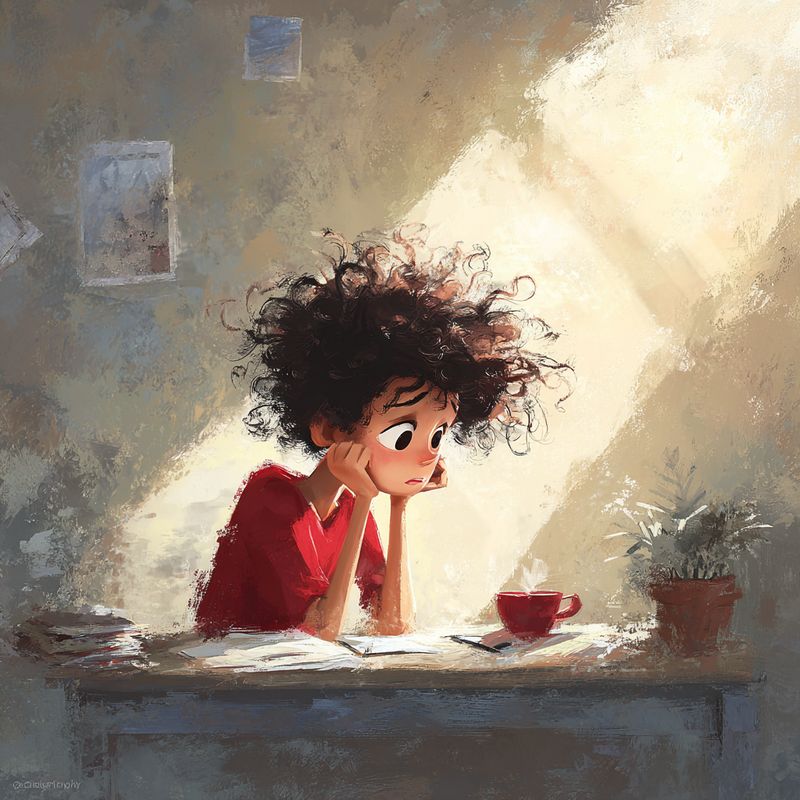
Most creative professionals know the feeling: the project is due, the blank page is winning, and a drink (or two, or something stronger) feels like it might loosen the grip of whatever is blocking you. It doesn’t. Or at least, it doesn’t do what you think it does.
The research is fairly consistent here. What feels like creative self-medication is usually anxiety avoidance wearing a more acceptable costume. And the creative industries have built an entire mythology around it.
Why do creative professionals conflate substance use with inspiration?
The “tortured artist” narrative has been around long enough that it functions less like a stereotype and more like a permission slip. If Hemingway drank, if Coleridge used laudanum, if countless musicians credit substances with their best work, then using alcohol to create starts to feel less like avoidance and more like professional practice.
But the historical evidence is messier than the mythology. Most of those artists produced their best work in spite of their substance use, not because of it. And neurologically, the appeal of substances during creative pressure makes complete sense without any artistic justification.
In his 2016 book Idiot Brain, neuroscientist Dean Burnett explains that when the brain is under pressure, it doesn’t always make rational decisions about what will actually help. Instead, it seeks whatever provides immediate chemical or psychological relief. The blank page creates genuine cognitive discomfort. Substances reduce that discomfort quickly. The brain learns the association, and the ritual gets reinforced.
What doesn’t get reinforced is the actual work.
What does the research actually say about substances and creative output?
The subjective experience of creative self-medication is seductive precisely because it feels true. A drink or two and suddenly ideas feel more fluid, the inner critic gets quieter, and the resistance lifts. That feeling is real. The output quality is a different story.
Research by Mathias Benedek and Aljoscha Neubauer, published in 2013, found that while short-term alcohol consumption may feel like it increases creative thinking, objective measures of creativity actually decline during and after use. The subjective sense of flow and the measurable quality of creative output move in opposite directions.
This matters because it means the feedback loop is broken. Creative professionals using alcohol to create aren’t getting accurate information about whether it’s working. They feel more creative. They produce less.
Approximately 40% of individuals with substance use disorders report using substances specifically to manage performance anxiety and creative pressure, according to the SAMHSA National Survey on Drug Use and Health (2020). That’s not a fringe behavior. It’s a widespread coping strategy built on a false premise.
The drugs and creative block relationship is also more cyclical than most people recognize. Substances that initially reduce creative anxiety tend to increase baseline anxiety over time, which then requires more substance use to manage, which further degrades the quality of work, which generates more anxiety. The block gets bigger, not smaller.
Is this procrastination, avoidance, or something else?
This is where the framing gets important. Organizational psychologist Adam Grant, in his 2016 book Originals and subsequent Wharton research on productive procrastination, draws a critical distinction: procrastination isn’t always harmful to creativity. Strategic delay, the kind that allows ideas to incubate and the mind to wander productively, can genuinely support creative work.
The problem is avoidance procrastination, which looks identical from the outside but functions completely differently. Grant’s research describes the key distinction as the difference between procrastinating on purpose versus procrastinating as a way to escape anxiety. One involves strategic delay; the other is avoidance coping.
Substance use sits firmly in the second category. When someone pours a drink because a creative project feels overwhelming, they’re not incubating. They’re escaping. The project waits, unchanged, while the anxiety temporarily retreats.
Procrastination researcher Piers Steel’s 2007 meta-analysis in Psychological Bulletin found that approximately 20-25% of the general population identifies as chronic procrastinators, with rates significantly higher in creative and knowledge-work professions. The creative industries don’t just have a substance use problem. They have a pressure management problem, and substances are one of the more glamorized responses to it.
What’s the difference between genuine incubation and escape-seeking?
Not all stepping away from work is avoidance. This is a genuinely important distinction, and flattening it doesn’t help anyone.
Jonathan Schooler, whose research appears in Consciousness and Cognition, has found that mind-wandering can facilitate creative insight, but only when it occurs during lower-stakes cognitive activity. When people intentionally use mind-wandering to avoid high-pressure creative work, the benefits diminish significantly. The cognitive state that produces insight requires a particular kind of relaxed, unfocused attention. Anxiety-driven escape doesn’t produce that state.
Genuine incubation looks like this: you’ve worked on a problem, you’ve hit a natural stopping point, and you step away to do something low-demand (a walk, a shower, routine physical tasks) while your brain continues processing in the background. The insight often arrives unprompted.
Escape vs inspiration is the real question to ask yourself. Escape-seeking looks like this: the work feels threatening before you’ve properly started, the discomfort is about the pressure rather than a genuine impasse, and the activity you turn to (substance use, scrolling, anything that numbs rather than rests) is designed to reduce the anxiety rather than allow the mind to wander productively.
In his 2018 book The Happy Brain, Dean Burnett notes that the brain is drawn to immediate relief from discomfort, which is why people often turn to substances or distraction-seeking behaviors rather than facing the actual work. The problem isn’t that the brain is irrational. It’s that the brain’s short-term solution actively interferes with the long-term goal.
Substance use and procrastination interact in exactly this way. The relief is real. The cost is deferred, compounded, and eventually much larger than the original discomfort.
How do creative professionals actually manage pressure without self-medicating?
The evidence-based alternatives to creative self-medication aren’t glamorous, which is part of why they’re under-discussed. Nobody writes memoirs about structured work sessions and sleep hygiene.
But the research points consistently in a few directions:
Time-bounded working sessions reduce the scale of the threat. A project that feels insurmountable becomes more tractable when the question shifts from “finish this” to “work on this for 25 minutes.”
Physical activity (specifically walking) consistently appears in creativity research as a genuine incubation tool, not a substitute for work but a complement to it. Stanford research published in the Journal of Experimental Psychology in 2014 found that walking increases divergent thinking both during and shortly after the activity.
Separating ideation from judgment addresses the inner critic problem that substances are often used to quiet. Tools like free-writing, rough drafts explicitly labeled as such, and deliberately low-stakes first attempts can reduce the threat response without impairing cognitive function.
The contrarian take worth making here: the creative industries’ relationship with substances isn’t primarily about creativity at all. It’s about the social and professional performance of creativity, the identity of the tortured, serious, uninhibited artist. Substances signal belonging to that identity. Evidence-based work habits don’t carry the same social currency. That’s a cultural problem, not a neuroscience problem, and it’s worth naming directly.
Apps like Time Is Luck exist partly because the structural problem (too much pressure, not enough traction, procrastination that feels like it’s protecting you) responds well to external scaffolding. Not because willpower-based advice fails people, but because the brain under creative pressure isn’t making great decisions without support.
FAQ
Q: Can alcohol genuinely help with creative work in small amounts? A: Research by Benedek and Neubauer (2013) found that while low-level alcohol consumption can reduce inhibition and quiet the inner critic subjectively, objective creativity measures decline. The feeling of increased creativity doesn’t match the measurable output. For some people in some contexts, mild relaxation might help access ideas, but the gap between feeling creative and being creative is significant enough to be cautious about using alcohol to create as a regular strategy.
Q: What’s the difference between using substances to relax before creative work versus using them to actually create? A: The distinction matters, but it’s also easy to blur in practice. The research question is whether the substance use is reducing genuine physiological anxiety to a workable baseline, or whether it’s replacing the cognitive engagement required for the work. If someone is using substances before sitting down and then still doing the work, the dynamic is different from using substances instead of sitting down. The latter is avoidance coping regardless of how it’s framed.
Q: Why do so many famous creative figures credit substances with their best work? A: Survivorship bias and narrative construction both play a role. We hear from the artists who used substances and produced significant work; we hear less from those who used substances and didn’t. We also hear retrospective accounts, which are shaped by identity and mythology as much as accurate memory. The historical record on drugs and creative block is more complicated than the highlights suggest.
Q: How do I know if I’m genuinely incubating or just avoiding? A: Jonathan Schooler’s research on mind-wandering suggests a useful test: are you stepping away after genuine engagement with the problem, or before it? Incubation follows work. Escape precedes it. If you’re reaching for a substance or a distraction before you’ve spent real time with the creative problem, that’s avoidance. If you’ve worked, hit a genuine impasse, and need rest, that’s incubation.
Q: Is creative self-medication more common in certain professions? A: Piers Steel’s 2007 meta-analysis in Psychological Bulletin found procrastination rates are higher in creative and knowledge-work professions than the general population. SAMHSA data from 2020 shows that approximately 40% of people with substance use disorders report using specifically to manage performance anxiety. The combination of high-stakes creative output, freelance or irregular work structures, and cultural normalization of substance use makes creative industries a particularly high-risk environment.