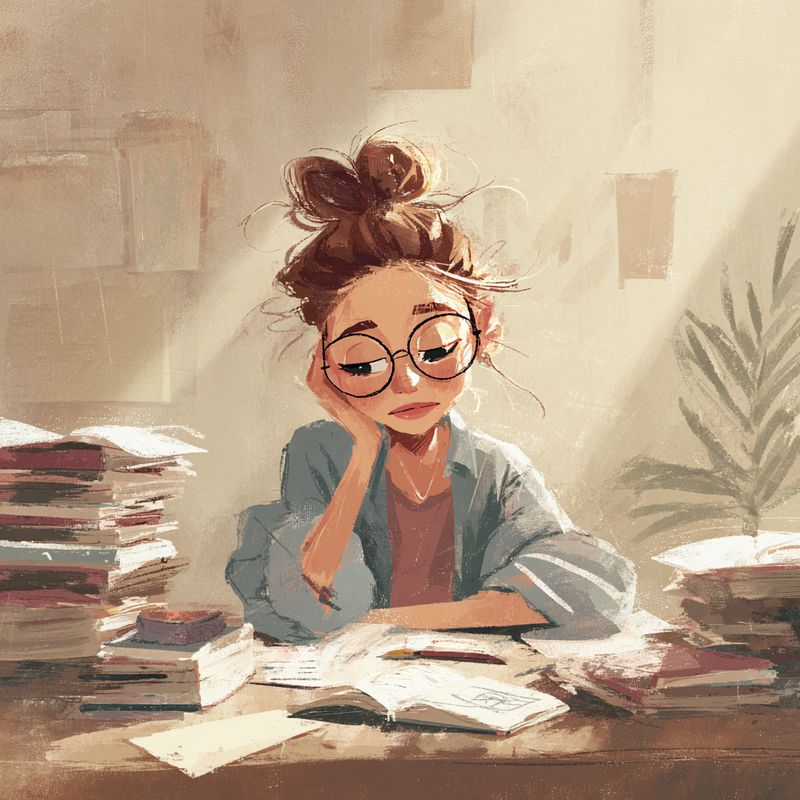
Creative procrastination is real, it’s widespread, and it isn’t simply laziness wearing a beret. For artists, writers, and designers, getting stuck involves a genuinely complex interaction between how the creative brain processes ideas, how we regulate difficult emotions, and the uncomfortable truth that creative success has no objective finish line. Research consistently shows that creative professionals procrastinate at rates 10-15% higher than those in non-creative occupations, according to occupational psychology studies from the 2010s. Understanding why that happens is the first step toward doing something useful about it.
Why Is Creative Procrastination So Much More Common Than Regular Procrastination?
Approximately 20% of adults identify as chronic procrastinators, according to Peel Steel’s landmark 2007 meta-analysis published in Psychological Bulletin. But creative professionals cluster at the higher end of that spectrum by a significant margin. The reason isn’t that writers and artists are less disciplined. It’s that the nature of creative work amplifies every psychological trigger that makes procrastination worse.
Temporal Motivation Theory research from the 2000s and 2010s shows that procrastination increases sharply when a task feels aversive and emotionally negative. Creative work scores unusually high on both counts. A blank canvas or empty document doesn’t just feel hard. It feels like a verdict waiting to be delivered on your worth as a creative person.
Writer’s block procrastination, for instance, rarely stems from not knowing what to write. More often, it stems from knowing that whatever gets written will be judged, including by the writer themselves, against some ideal that exists only in their imagination.
In The Idiot Brain: What Your Head Is Really Up To (2016), neuroscientist Dean Burnett argues that the human brain is fundamentally irrational when it comes to motivation and time perception, which explains why creative professionals struggle with procrastination even when they fully understand its consequences. Knowing you should start doesn’t make starting feel any safer.
Is Some Creative Procrastination Actually Useful?
Here’s the contrarian position worth taking seriously: not all creative project procrastination is a problem to be solved. Some of it is the brain doing exactly what the creative process requires.
Organizational psychologist Adam Grant makes this case directly in his 2016 book Originals: How Non-Conformists Move the World:
“Procrastination may be the enemy of productivity, but it can be the friend of creativity.”
Grant’s research at Wharton found that people who procrastinated moderately before starting a creative task were more likely to arrive at original ideas than those who began immediately. The working theory: a period of delay gives the mind time to wander, and mind-wandering is where unexpected connections get made.
Cognitive scientist Jonathan Schooler’s research, published in Consciousness and Cognition, supports this directly. Schooler found that mind-wandering is associated with increased creative thinking, and that the brain’s ability to disengage from the current task and explore alternative mental representations is crucial for creative insight.
The important distinction here is between incubation and avoidance. Letting an idea sit while your brain quietly processes it in the background is a legitimate part of the creative process. Spending three hours reorganising your desk because you’re terrified of the blank page is something else entirely.
Artist procrastination often involves both at once, which is exactly what makes it so hard to untangle.
What’s Actually Happening in Your Brain When You Avoid Creative Work?
When a creative professional sits down to work and immediately finds seventeen other things to do instead, the behaviour looks like poor time management. It isn’t. It’s emotion regulation.
Psychiatrist and neuroscientist Judson Brewer, in his 2017 book The Craving Mind: From Cigarettes to Smartphones to Love — Why We Get Hooked and How We Can Break Bad Habits, argues that procrastination is not a time management problem. It’s an emotion regulation problem. We procrastinate to avoid negative emotions, and we need mindfulness to break this habit loop.
The mechanics are straightforward once you see them. Creative work triggers anxiety, self-doubt, or fear of failure. Avoidance temporarily relieves those feelings. The brain registers that relief as a reward. So the next time the same anxiety appears, avoidance gets reinforced as the go-to response.
For writers, this can manifest as endlessly researching instead of drafting. For designers, it might look like refining mood boards long past the point of usefulness. The task changes but the loop stays identical: discomfort triggers avoidance, avoidance provides temporary relief, relief reinforces the pattern.
Breaking that loop requires interrupting it at the emotional level, not just the behavioural one. Telling yourself to “just start” doesn’t address the underlying anxiety driving the avoidance. That’s why productivity tips that work in structured jobs often fall flat for creative professionals.
How Can Mindfulness Help With Creative Project Procrastination?
Mindfulness-based approaches work on creative procrastination differently from traditional productivity methods because they target the emotion regulation failure directly rather than trying to brute-force behaviour change.
The core technique Brewer advocates involves becoming curious about the anxious feeling rather than fleeing it. Instead of thinking “I need to start this project” while experiencing dread, the practice involves noticing the dread itself: where it sits in the body, what it actually feels like, whether it’s really as intolerable as it seems. That shift from reactivity to curiosity disrupts the automatic avoidance response.
For writer’s block procrastination specifically, this often means acknowledging the fear of producing bad work rather than pretending it isn’t there. The anxiety doesn’t disappear, but it loses the automatic power to trigger avoidance behaviour.
Research on mindfulness and procrastination consistently shows that even brief mindfulness practice reduces avoidance behaviour by improving the ability to tolerate uncomfortable emotional states. For creative work, that tolerance is the whole game.
A few practical applications:
- Timed low-stakes starts: Set a 10-minute timer and explicitly give yourself permission to produce terrible work. The goal isn’t quality. The goal is contact with the work itself, which reduces the brain’s threat response over time.
- Labelling the feeling: Before sitting down to work, name the emotion present. “I notice I’m feeling afraid this won’t be good enough.” This simple act of labelling activates the prefrontal cortex and reduces amygdala reactivity, a process researchers call affect labelling.
- Deliberate mind-wandering: Schedule unfocused time, actual walks or rest periods with no screen, as a legitimate part of the creative process. This distinguishes productive incubation from guilt-soaked avoidance.
How Do You Tell Incubation From Avoidance?
This is the question creative professionals ask most often, and it’s a genuinely useful one to sit with.
Incubation tends to feel relatively neutral or even quietly energising. You’re not thinking directly about the project, but there’s no spike of guilt when it crosses your mind. Ideas sometimes surface unexpectedly. The delay feels purposeful even if it isn’t consciously structured.
Avoidance feels different. There’s usually an undercurrent of anxiety or shame. The project feels heavier the longer you’re away from it, not lighter. Distractions need to be more stimulating over time to keep the discomfort at bay.
Grant’s Wharton research suggests that moderate procrastination, roughly the zone between starting immediately and extreme delay, produces the most creative output. That framing is useful because it repositions the goal. The aim isn’t zero delay. It’s conscious, bounded delay that serves the work rather than just protecting you from the feeling of starting.
Tracking your patterns over time makes this much clearer. When you notice what triggers your avoidance, how long your incubation periods naturally run, and which distractions tend to precede your most productive sessions, you start to develop genuine self-knowledge rather than just guilt.
That self-knowledge is what distinguishes a creative professional who uses procrastination well from one who is simply stuck.
FAQ
Is creative procrastination the same as laziness?
No. Laziness implies indifference to the work. Creative procrastination typically involves caring deeply about the outcome and feeling significant anxiety about it. The avoidance behaviour comes from that anxiety, not from a lack of motivation. If anything, highly motivated creatives often procrastinate more because the stakes feel higher.
Why does writer’s block procrastination feel worse than other kinds of procrastination?
Writing and other creative work involve subjective evaluation with no clear success criteria. Unlike a spreadsheet that’s either correct or incorrect, a piece of writing can always theoretically be better. That ambiguity makes the anxiety harder to resolve, which intensifies avoidance. Temporal Motivation Theory research confirms that procrastination increases when tasks feel both aversive and uncertain.
Can procrastination actually improve creative output?
In moderate doses, yes. Adam Grant’s research at Wharton, detailed in his 2016 book Originals, found that people who delayed starting a creative task for a moderate period produced more original work than those who started immediately or waited until the last minute. Jonathan Schooler’s research on mind-wandering in Consciousness and Cognition supports this, showing that mental disengagement supports creative insight. The key word is moderate. Extreme procrastination consistently harms both quality and wellbeing.
What’s the most effective mindfulness technique for breaking the creative avoidance loop?
Judson Brewer’s research points to curiosity-based awareness as the most effective entry point. Rather than fighting the urge to procrastinate, you become curious about the anxiety driving it. Naming the specific emotion present (fear of judgment, perfectionism, uncertainty) before starting a session has measurable neurological effects, reducing the threat response that triggers avoidance in the first place.
How common is procrastination among creative professionals specifically?
Very common. While approximately 20% of adults identify as chronic procrastinators overall (Steel, Psychological Bulletin, 2007), creative professionals including writers, designers, and artists report procrastination rates 10-15% higher than those in non-creative occupations, according to multiple occupational psychology studies. The subjective nature of creative success and the high emotional investment involved are the primary drivers of that gap.