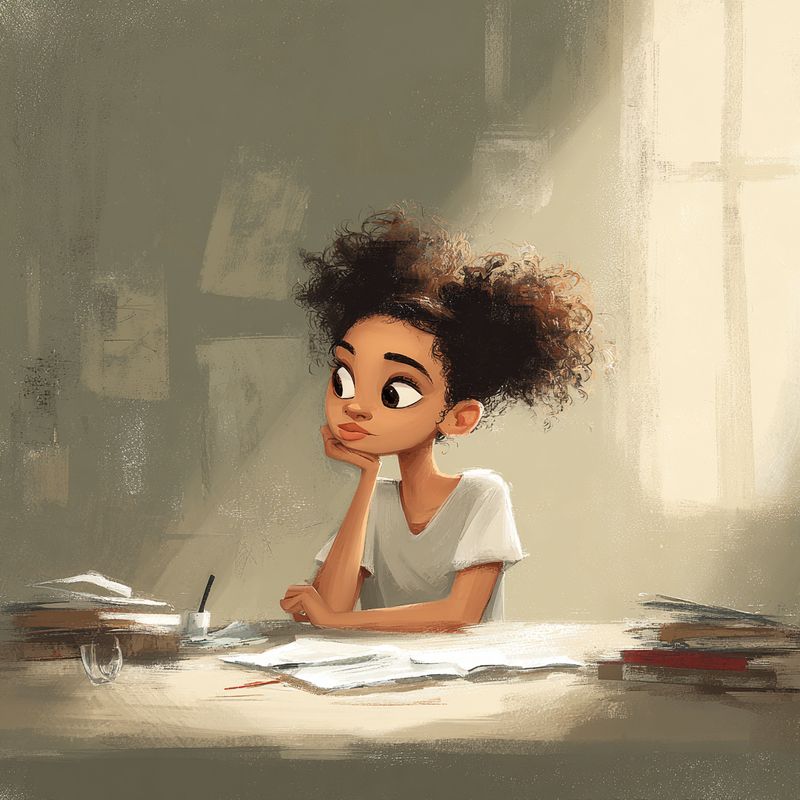
Most people who think they have writer’s block don’t. And most people who dismiss writer’s block as a myth are wrong too. The reality sits somewhere more useful than either camp: creative block and procrastination are two genuinely different phenomena, they feel remarkably similar from the inside, and treating one with the tools designed for the other tends to make things worse.
Here’s the short version: procrastination is an emotion regulation problem rooted in avoidance. Writer’s block is a cognitive-emotional shutdown triggered by fear, perfectionism, or self-doubt. Both stop you from producing work. Neither is a character flaw. But they need different fixes.
Is Writer’s Block Real, or Just an Excuse?
Writer’s block is real. It has a neurological basis, it affects a significant portion of working creatives, and calling it laziness doesn’t make it go away. Studies across writing populations suggest that between 28% and 40% of writers report experiencing writer’s block at some point, depending on the study and sample.
In his book Idiot Brain (2016), neuroscientist Dean Burnett argues that writer’s block is rooted in how our brains process fear, perfectionism, and self-doubt. Burnett points to the brain’s threat detection system: when we perceive judgment or failure as imminent, the brain can actively suppress creative output as a protective measure. The prefrontal cortex, responsible for creative thought and executive function, becomes disrupted by the stress response. You don’t freeze because you’re weak. You freeze because your brain thinks you’re in danger.
This is meaningfully different from simply not having opened the document yet.
What Causes Writer’s Block (And What Doesn’t)
Understanding what causes writer’s block requires separating two experiences that look identical on the surface: the inability to produce work despite genuine effort, and the avoidance of starting work at all.
Burnett’s research points to perfectionism and fear of judgment as the primary neurological triggers. When a writer or designer sits down and genuinely cannot access ideas, cannot evaluate their own output clearly, or feels a kind of cognitive fog despite being present and trying, that’s a real inhibitory state. The brain has, in effect, raised the stakes so high that normal creative function collapses under the pressure.
Researcher Jonathan Schooler, whose work on mind-wandering appeared in Consciousness and Cognition, makes a useful distinction here: mind-wandering isn’t always procrastination. Sometimes it’s a necessary part of creative incubation. Letting a problem percolate below conscious attention is a legitimate stage of creative work. Chronic avoidance of the task itself is something else entirely.
The problem is that both states can look like staring at a blank screen.
How Procrastination Works Differently in the Brain
Procrastination gets called a productivity problem constantly. That framing, according to multiple researchers, is almost entirely wrong.
Wharton organizational psychologist Adam Grant has argued, drawing on research into procrastination and productivity, that procrastination is fundamentally an emotion regulation problem rather than a time management failure. We don’t delay tasks because we’re bad at scheduling. We delay them because the task generates uncomfortable emotions, and we reach for relief.
Neuroscientist Judson Brewer, in his book The Craving Mind (2017) and in his Brown University mindfulness research, describes procrastination as a habit loop. An uncomfortable feeling arises (anxiety about quality, fear of starting something hard, uncertainty about direction), and the brain seeks something that provides relief in the moment, whether that’s scrolling, cleaning, or doing literally any other task. The relief works short-term, which reinforces the loop.
Brewers’s key insight: once we understand that procrastination is about managing uncomfortable emotions rather than managing time, we can address it differently. Productivity hacks that don’t touch the emotional layer tend to fail.
Approximately 20% of adults identify as chronic procrastinators, according to Piers Steel’s landmark meta-analysis published in Psychological Bulletin in 2007. That’s one in five people for whom avoidance has become the default response to discomfort. Critically, research from Wharton’s work on emotional regulation shows that difficulties with emotion regulation correlate more strongly with procrastination than time management skills do. The problem was never the calendar.
Creative Block vs Procrastination: How to Tell Them Apart
The practical question is this: when you’re not producing work, which one is actually happening?
Here’s a rough diagnostic. Ask yourself: if someone removed all consequences, all judgment, all possibility of the work being seen by anyone, could you produce something? If the answer is yes, and you’d happily write or design in a vacuum, the problem is likely resistance to external evaluation, which sits closer to the procrastination spectrum. The blocker is the imagined audience, not the absence of creative capacity.
If the answer is genuinely no, if you sit down in a low-stakes environment and still find your mind blank, your judgment completely impaired, and your ideas inaccessible, that points more clearly toward actual creative block. The machinery itself isn’t running.
A second test: can you produce work you know is bad? Procrastination-driven resistance often melts when the standard drops. Tell a procrastinator to write the worst possible opening paragraph and they’ll usually do it immediately. Tell someone in genuine creative block to do the same thing, and the block frequently persists, because the inhibitory state isn’t about the standard, it’s about the cognitive access to the material at all.
This is a slightly contrarian point worth making directly: a lot of advice aimed at writer’s block (just start, lower the bar, set a timer) is actually procrastination advice in disguise. It works brilliantly for procrastination. For true creative block, it often doesn’t touch the underlying issue.
Why the Distinction Changes How You Intervene
Treatment approaches diverge sharply once you’ve correctly identified which state you’re in.
For procrastination, the lever is emotional regulation, not willpower. Brewer’s research suggests that mindfulness-based approaches, specifically learning to observe the discomfort without immediately reaching for relief, can break the habit loop more effectively than productivity systems. Grant’s research adds another nuance: pre-crastination, doing things immediately without adequate thought, can actually be worse than some strategic delay, because the thinking hasn’t happened yet. Giving yourself permission to sit with a task, rather than forcing immediate output, sometimes produces better work.
For creative block, the interventions look different. Because the block is rooted in threat perception and perfectionism, strategies that reduce the perceived stakes tend to help. This includes environmental changes (working in private, removing feedback loops temporarily), cognitive reframing of the relationship to failure, and addressing underlying anxiety directly rather than trying to power through it.
If you treat procrastination with anxiety-reduction techniques, you might accidentally remove the productive discomfort that motivates completion. If you treat creative block with productivity tools like stricter schedules and accountability partners, you may inadvertently increase the pressure that’s causing the shutdown. Misdiagnosis has real costs.
What This Means for Designers Specifically
Most of this research focuses on writers, but designers face an identical problem with a structural twist: design work is inherently iterative and visual, which makes the blank-screen moment feel particularly exposing.
Designers frequently report what they call creative block when they’re actually experiencing resistance to committing to a direction. The ability to imagine multiple solutions simultaneously, a core design skill, becomes a liability when perfectionism is running the threat detection system. Every possible direction feels equally risky to abandon.
This is procrastination-adjacent territory. The discomfort isn’t cognitive blankness; it’s the discomfort of closing off options and being evaluated on a single choice. The intervention that tends to work here is constraint: reducing choices externally (a tight brief, a single format restriction, a time-boxed sketch session) removes the need to manage the discomfort of optionality internally.
True creative block in designers tends to surface during sustained projects rather than at the start, often emerging after significant critical feedback or during periods of high-stakes delivery. The profile is different, and so is the fix.
FAQ
Is writer’s block real or just procrastination? Writer’s block is real and neurologically distinct from procrastination. Research from Dean Burnett’s work in Idiot Brain (2016) shows it involves the brain’s threat detection system suppressing creative output in response to fear or perfectionism. Procrastination is primarily an emotion regulation habit loop. Both stop you working, but they have different causes and different solutions.
What actually causes writer’s block? The primary drivers are fear of judgment, perfectionism, and self-doubt triggering a stress response in the brain. When the perceived stakes of failure are high enough, the prefrontal cortex’s creative and executive functions become disrupted. This is a genuine cognitive-emotional state, not a euphemism for laziness.
How can I tell if I have creative block or procrastination? A useful test: ask whether you could produce work freely if there were no audience and no consequences. If yes, the blocker is likely resistance to evaluation (closer to procrastination). If you’re still blank in a genuinely low-stakes environment, that points toward actual creative block. Another test: can you deliberately produce bad work? Procrastinators usually can. Creative block often persists even when the quality bar disappears.
Why doesn’t ‘just start’ advice work for writer’s block? Most ‘just start’ advice is procrastination advice, and it works well for procrastination because it bypasses the avoidance loop. For genuine creative block, the inhibitory state isn’t about resistance to beginning; it’s about a disruption in cognitive access to the material itself. Forcing a start under those conditions doesn’t clear the block and can sometimes deepen the anxiety driving it.
Does procrastination affect creative work differently than other tasks? Research suggests that creative tasks carry higher perceived stakes for many people because quality is subjective and judgment feels personal. This means the emotional discomfort that triggers procrastination’s habit loop (as described in Judson Brewer’s The Craving Mind) tends to be more intense with creative work than with routine tasks, making procrastination both more likely and more entrenched in creative contexts.