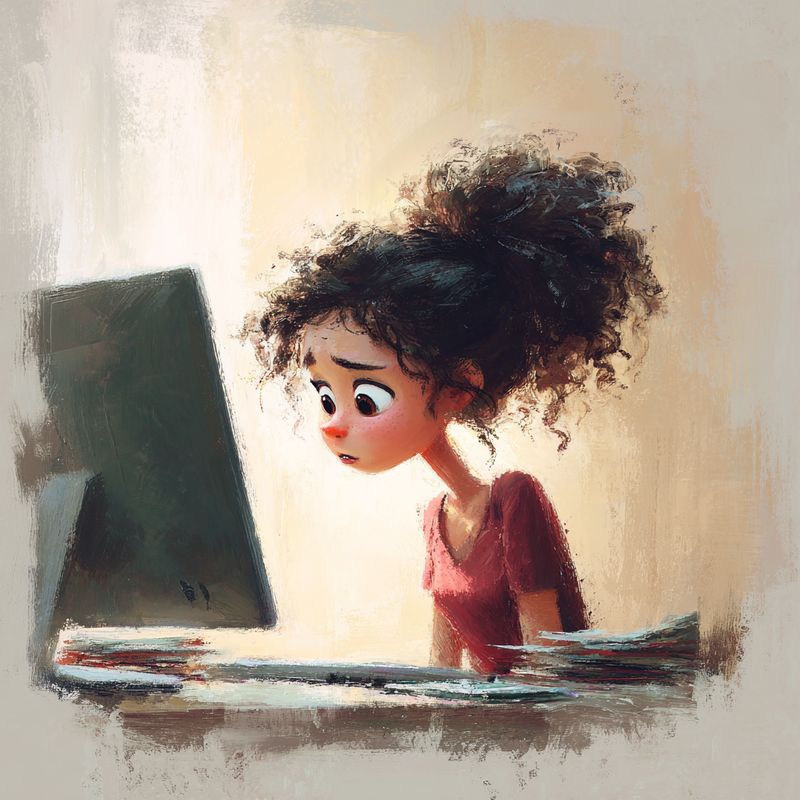
There’s a specific flavor of procrastination that creative professionals almost never catch themselves doing. It doesn’t feel like avoidance. It feels productive, even virtuous. You’re watching a documentary about a filmmaker you admire, deep in a research rabbit hole about typography, or bookmarking forty references for a project you haven’t started yet. It feels like work. It isn’t.
The distinction between consuming vs creating matters enormously, but it’s genuinely hard to see in the moment. Research from neuroscience and behavioral psychology now gives us a clearer picture of why this happens, and more importantly, how to tell the difference between inspiration that fuels you and inspiration that substitutes for the real thing.
Why does consuming other people’s work feel so much like creating?
The brain doesn’t clearly separate “taking in” from “making.” When you absorb a beautifully designed book cover or listen to a record with exceptional production, the same neural reward pathways activate as when you produce something yourself. Neuroscientist Dean Burnett, in his 2016 book Idiot Brain, argues that inspiration is often just the brain recognizing patterns it has encountered before, which can create the illusion of understanding without actual creation.
In other words, your brain gets a hit of creative satisfaction from consuming well-made work. Not a fake hit. A real one. The problem is that it doesn’t require the same vulnerability, effort, or tolerance for failure that making something does.
This is why scrolling instead of making is so seductive. You get the feeling of being creatively engaged without the discomfort of producing something imperfect.
Is this actually procrastination, or is consuming others’ work genuinely useful?
Both things are true, and that’s what makes this so tricky. Seeking inspiration from other artists is a legitimate, necessary part of the creative process. Every working creative professional does it. The question is what’s driving the behavior at any given moment.
Neuroscientist Judson Brewer, whose research at Brown University on habit formation and addiction has been widely influential, argues that procrastination isn’t a productivity problem at all. It’s an emotion regulation problem. He describes how people get caught in a habit loop where scrolling or consuming content becomes a way to manage the discomfort that comes with the act of creating.
That reframe is significant. It shifts the question from “am I being lazy?” to “what am I trying to avoid feeling right now?”
Research published in Procrastination, Emotion Regulation, and Well-Being by Pychyl and Sirois (2016) found that approximately 20% of adults identify as chronic procrastinators. Among creative professionals, anecdotal and survey evidence suggests the number skews higher, partly because creative work involves unusually high levels of self-evaluation and social comparison.
A 2020s empirical survey of creative professionals found that exposure to others’ work temporarily increases self-doubt in 68% of respondents. So the very act of seeking inspiration from other artists can, paradoxically, make it harder to start your own work.
What’s the difference between a research rabbit hole and procrastination through inspiration?
This is where intentionality becomes the only reliable diagnostic tool. The time you spend consuming doesn’t tell you much. The reason you’re doing it tells you everything.
Research with purpose looks like: you have a specific question, a defined scope, and a natural stopping point. You’re consuming to solve a problem that already exists in your work.
Procrastination through inspiration looks like: you opened one tab, which led to five more, and now you’re forty minutes into a video essay about a topic loosely adjacent to your project, with no clear memory of why you started.
Psychologist Jonathan Schooler, whose research on mind-wandering has appeared in Consciousness and Cognition, distinguishes between deliberate reflection and distracted consumption. Deliberate reflection, even unfocused daydreaming, can generate creative connections. Distracted consumption, absorbing content passively without intention, tends not to.
Organizational psychologist Adam Grant makes a related point in his 2016 book Originals and his widely cited TED Talk: “Procrastination may be the enemy of productivity, but it can be the friend of creativity.” His Wharton research found that when people procrastinate, they’re more likely to make creative connections because they’re not immediately fixated on the task. But Grant’s research focuses on open-ended mind-wandering, not passive content consumption. There’s a meaningful difference between letting your mind drift and feeding it a constant stream of other people’s finished work.
Why does the habit loop form in the first place?
Creative work generates anxiety. That’s not a personal failing; it’s structural. Every creative project involves ambiguity, subjective judgment, and the risk of producing something that doesn’t match the vision in your head. The gap between taste and ability, as Ira Glass famously described it, is a real source of psychological discomfort.
According to DataReportal’s 2023 Global Overview Report, the average person spends 3 hours and 15 minutes daily on social media and content consumption. For creative professionals, much of that time carries a self-justifying narrative: “I’m doing research,” “I’m staying current,” “I’m getting inspired.”
Brewer’s habit loop model explains the mechanism clearly. Trigger: the anxiety of starting. Behavior: consuming other people’s work, which feels productive and temporarily soothes the anxiety. Reward: relief, plus the pleasant sensation of being creatively stimulated. The loop reinforces itself every time.
This is why willpower-based advice (just start, set a timer) often fails people. It targets the behavior without addressing the underlying emotion. You can drag yourself away from the research rabbit hole and sit in front of a blank document, but if the anxiety that drove you there hasn’t shifted, you’ll find another way to avoid the discomfort within minutes.
How can you tell, in real time, which mode you’re in?
A few diagnostic questions tend to cut through the self-deception fairly quickly.
First: do you have a specific deliverable this consumption is serving? Not a vague project, but an actual decision you’re trying to make or a gap you’re trying to fill. If you can’t name it, that’s informative.
Second: when did you last produce something, even something small and imperfect? Consumption and creation exist in a natural rhythm for working creatives. When the ratio tips heavily toward consumption for extended periods, it’s worth asking why.
Third: how do you feel after consuming? Energized and ready to work, or vaguely depleted and more convinced than before that other people are doing it better? That emotional residue is data. Genuine inspiration from other artists tends to generate momentum. Avoidance consumption tends to generate comparison and inertia.
Fourth: are you saving things to use later, or just saving things? There’s a meaningful difference between a reference folder with a purpose and a bottomless bookmarks archive that you’ll never revisit.
None of these questions require a brutal self-audit. They just require a moment of honest attention, which is, not coincidentally, exactly the kind of attention that makes creation possible in the first place.
FAQ
Is it bad to spend a lot of time consuming other people’s work?
Not inherently. Consuming other people’s work is a legitimate and necessary part of most creative practices. The problem isn’t the quantity of consumption; it’s whether you’re doing it with intention or as a way to manage anxiety about creating. Research with a defined purpose serves your work. Passive, open-ended consumption that consistently replaces making something is worth examining.
How do I stop falling into a research rabbit hole when I should be creating?
Brewer’s habit loop research suggests that trying to simply resist the urge to consume often backfires. A more effective approach is to acknowledge the anxiety driving the behavior, rather than fighting the behavior itself. Some practitioners find it useful to set a defined research window with a clear question before they start, so the consumption has a boundary and a purpose. When the question is answered, the session ends.
Can inspiration from other artists genuinely help, or does it just create more self-doubt?
Both effects are real and well-documented. A 2020s survey of creative professionals found that 68% experience a temporary increase in self-doubt after exposure to others’ work. At the same time, cross-pollination of ideas is central to how creative thinking works. The key variable tends to be timing: consuming others’ work mid-project, when you’re in a vulnerable state about your own output, tends to increase comparison. Consuming it at the beginning, when you’re building context, or at the end, when you’re pressure-testing your thinking, tends to be more generative.
What’s the difference between productive procrastination and procrastination through inspiration?
Adam Grant’s research on productive procrastination focuses on open-ended mind-wandering and incubation, where the mind makes unexpected connections during unfocused time. Procrastination through inspiration is different: it involves actively feeding the brain a stream of other people’s finished work, which stimulates the reward system without generating the cognitive space for your own ideas to form. Jonathan Schooler’s research on mind-wandering similarly distinguishes between deliberate, open reflection and distracted passive consumption.
Does using an app or productivity tool actually help with this kind of procrastination?
Tools can help, but only if they address the emotional driver rather than just restricting access to content. Because procrastination is primarily an emotion regulation problem (as Brewer’s research makes clear), tools that build awareness of your patterns, help you clarify intention before a work session, or create structured accountability tend to be more effective than blunt blocking mechanisms. The goal is to make the choice conscious, so you’re deciding to consume with purpose rather than drifting into it by default.